“Elf’s Hat” here refers to the liberty cap, Psilocybe semilanceata, a small mushroom of damp meadows whose conical cap bears a sharp nipple. The nickname describes its silhouette. Its first solid European reference appears in a London medical case from 1799, when a family accidentally consumes mushrooms gathered in Green Park. The mystery begins with a mistake, a sudden change in perception, and the need to recognize the limit.
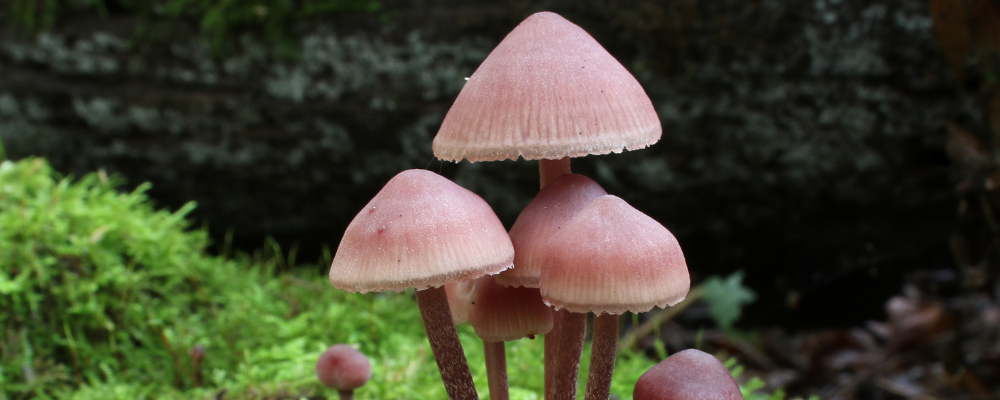
The title “Elf’s Hat” functions as a descriptive nickname, without the status of a stable scientific name. The French Society of Emergency Medicine uses this image to describe the cap of Psilocybe semilanceata. The entry therefore adopts this precise identity and excludes aconite as well as mushrooms of the genus Mycena.
This mushroom contains psychoactive substances and, in France, is classified among hallucinogenic mushrooms as a narcotic. No specimen is used in practice. The magical work focuses on the threshold of perception, the quality of the witness, and returning to the facts.
A Shape-Based Nickname, a Precise Species
Psilocybe semilanceata is a small mushroom with a conical or bell-shaped cap topped by a point. Its color varies with humidity, from yellowish brown to ochre buff. The stem remains thin, pale, and flexuous.
The French Society of Emergency Medicine describes a cap measuring 0.5 to 1.5 centimeters, shaped like an “elf’s hat,” with gills that become purplish brown. The mushroom grows from late summer through autumn in lawns and pastures. SFMU, Psilocybe semilanceata.
An evocative name can shift from one species to another in commerce or online. A pointed shape is not enough to identify a mushroom. The gills, spores, habitat, season, and expert examination remain necessary.
The first magical function of this entry is therefore discerning the name. An appealing image opens the investigation, then the scientific identity establishes the material concerned.
The 1799 Green Park Poisoning
In October 1799, a father gathers mushrooms in Green Park, London, then cooks them for his wife and four children. An hour after the meal, several family members develop dizziness, visual disturbances, cramps, and cold extremities.
The eight-year-old child is seized by bouts of uncontrollable laughter. In 1800, physician Everard Brande reported the case as the harmful effects of a common agaric that had previously attracted little suspicion. The episode is now associated with Psilocybe semilanceata. Medical account of the 1799 Brande case.
This scene establishes a European story centered on a foraging mistake and collective intoxication. The family is looking for food and encounters a mushroom whose potency they do not know.
The door opens through a mistake. The first reliable account of Psilocybe semilanceata in Europe reminds us that altered perception can begin with poisoning.
From the half spearhead to the liberty cap
The epithet semilanceata describes a half-lance-shaped form. Elias Magnus Fries published the species under the name Agaricus semilanceatus in 1838, and Paul Kummer later placed it in the genus Psilocybe in 1871.
In English, the name liberty cap links the mushroom’s cap to the Phrygian cap, which became a symbol of political freedom. This visual association belongs to the history of the common name, not to a medieval European mushroom cult. Encyclopedia of Life, taxonomy and names of Psilocybe semilanceata.
The elf and freedom are therefore two images placed on the same point. The first evokes a small figure from wonder tales; the second, a civic emblem. The shape attracts stories that provide no evidence of ritual use.
This shift in names constitutes its true cultural mystery. A tiny cap receives entire worlds, while the real mushroom remains toxic, psychoactive, and difficult to identify.
Perception, witness, and return to the facts
An intense perception may seem truer because it occupies the entire field of consciousness. Psilocybe reminds us that intensity and accuracy are two different measures.
The witness then becomes central. In the 1799 account, the physician observes several people, compares the symptoms, and records the chronology. Bringing the accounts together transforms an incomprehensible scene into a case file.
The safe magic of the “Goblin Cap” guides this return. It separates what was seen, what was felt, what was interpreted, and what another person can verify.
The threshold promises no chemical revelation. It teaches you to return from the image to the fact, from the seductive name to the species, and from the solitary experience to a reliable witness.
Keeping a perception journal
Draw a small conical cap in the center of a page, without using a real specimen as a model. Around it, draw four frames labeled “seen,” “felt,” “interpreted,” and “verified.”
Choose a recent situation that changed your judgment. Place each element in a single frame. An emotion goes under “felt,” a conclusion under “interpreted,” and dated information under “verified.”
Under the drawing, write the name of a reliable witness and the specific question they can verify. Add a return time, when you will reread the page with calm attention.
On your return, connect only the confirmed facts. The remaining elements retain their value as an experience without becoming certainties. No mushroom, naturalist drawing of a foraged specimen, or product is used.
Historical correspondences
| Reference | Correspondence |
|---|---|
| Accepted identity | Psilocybe semilanceata (Fr.) P. Kumm. |
| Nature of the title | Descriptive nickname related to the conical cap |
| Historical reference | Green Park intoxication, London, 1799 |
| French legal framework | Hallucinogenic mushrooms classified as narcotics |
| Safe magical practice | Discernment, witness, and return to the facts |
| Safe form | Written record, without a specimen |