


In the Florentine Codex, the mushrooms called teonanácatl appear in accounts of Nahua feasts, offerings, and visions described in the 16th century. They are neither accessories of “universal spirituality” nor companions to the Siberian rites of the Amanita. Their magical history is rooted first and foremost in Mesoamerica, in specific languages, ceremonies, and communities.
“Psilocybes” does not refer to a single species. The genus Psilocybe comprises many fungi, some of which contain psilocybin and psilocin. Other genera may produce these compounds, and deadly mushrooms may be mistaken for them.
In France, hallucinogenic mushrooms, particularly those of the genus Psilocybe, are classified as narcotics. This page therefore does not offer possession, cultivation, preparation, or consumption. It provides a historical and iconographic reading based on accessible sources.
One genus, several species, and true look-alikes
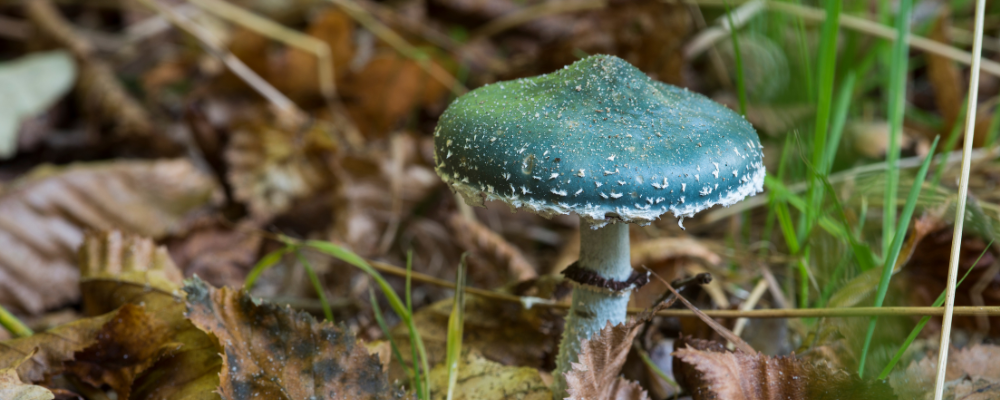
Psilocybe is a genus of agaricoid fungi. Several psychoactive species have small brown caps, gills that darken with the spores, and flesh that may turn blue after injury. None of these characteristics alone allows for reliable identification.
Psilocybe mexicana, P. cubensis, and P. semilanceata do not have the same range or habitat. Mesoamerican texts do not always make it possible to associate the name teonanácatl with a single modern species.
Psilocybin is transformed in the body into psilocin, which acts, among other things, on serotonin receptors. This chemistry explains changes in perception; it does not prove any objective contact with a spirit or deity.
The teonanácatl of the Florentine Codex
In the 16th century, Bernardino de Sahagún conducted an extensive investigation with Nahua scholars, painters, and informants from Tepeapulco and Tlatelolco. The bilingual Nahuatl-Spanish result is known as the Florentine Codex.
The mushroom appears there under the term teonanácatl, in descriptions of feasts and visions. Harvard’s Center for the Study of World Religions emphasizes the collective nature of the inquiry and the role of Indigenous collaborators. Harvard, teonanácatl in the Florentine Codex.
The word has been translated as “divine mushroom” or “flesh of god.” Each translation carries an interpretation. Keeping the Nahuatl term avoids immediately reducing the ceremony to a European category.
Colonial prohibition and ritual continuity
The ecclesiastical authorities of New Spain condemned several Indigenous rites as idolatry. Colonial texts therefore describe the mushrooms through a double tension: a desire to collect knowledge and a conversion project that sought to suppress these practices.
Mazatec, Mixe, Nahua, and other peoples of Mexico have maintained ritual and therapeutic relationships with psychoactive mushrooms. These practices belong to specialists, families, places, and social obligations. They are not a freely detachable protocol.
The name survives the colonial gaze. Reading teonanácatl means hearing the Nahua voice beneath the Spanish commentary and recognizing the community that carried this knowledge.
Heim, Hofmann, and the transition to the laboratory
In the mid-20th century, the work of mycologist Roger Heim on Mexican mushrooms and chemist Albert Hofmann led to the cultivation of specimens and then to the isolation of psilocybin and psilocin in 1958.
The mushroom then enters pharmacology and experimental psychiatry. Current clinical research uses measured compounds, inclusion criteria, medical monitoring, and a legal framework. It does not make consuming wild mushrooms equivalent.
This passage also transforms the magical image: a situated sacrament becomes a molecule, then a counterculture symbol. The article keeps these three layers separate: Indigenous ritual, laboratory science, and Western reception.
Study the codex without possessing the mushroom
Choose a reproduction of a page from the Florentine Codex related to teonanácatl. Note the languages present, the authors of the inquiry, the date, and the colonial context before interpreting the image.
Then draw three circles without plant material: Nahua ceremony, the 20th-century laboratory, and Western psychedelic culture. Place in each the names, dates, and actors that belong to it. Move an element from one circle to another only by citing the source of that movement.
The magical work here lies in restoring names and boundaries. No mushroom, spore, kit, powder, chocolate, or illegal object enters the space.
Historical correspondences
| Reference point | Correspondence |
|---|---|
| Studied group | Psychoactive species of the genus Psilocybe |
| Historical term | Teonanácatl, in Nahuatl |
| Major source | Florentine Codex, 16th century |
| Contexts | Mesoamerican ceremonies, colonial inquiry, and the 20th-century laboratory |
| Magical fields | Ritual vision, divination, community care, and cultural memory |
| Authorized support | Facsimile, drawing, chronology, and reading |