























































































































In several smoking ceremonies of the First Peoples of Australia, leaves—frequently eucalyptus—are placed over embers so that the smoke may accompany purification, welcome, or healing. These ceremonies belong to specific communities, territories, and authorities; they are not a recipe available for imitation. Eucalyptus therefore calls for a magic of respect: acknowledging the cultural relationship, refusing to copy the fire, and translating the passage through a written gesture that appropriates neither rite nor smoke.
The genus Eucalyptus includes a great many species. This profile uses Eucalyptus globulus Labill., the Tasmanian blue gum, as its botanical reference because it is widely cultivated and used for its aromatic leaves. A packet labeled only “eucalyptus” must nevertheless be understood as an incomplete identification.
The cited cultural sources describe ceremonies conducted by Elders or authorized custodians. Readers are not invited to reproduce them. The present practice explores welcome, transition, and responsibility through a threshold map. The product remains closed on the left side of the page, without burning, diffusion, inhalation, or medicinal use.
A Vast Genus, a Reference Species
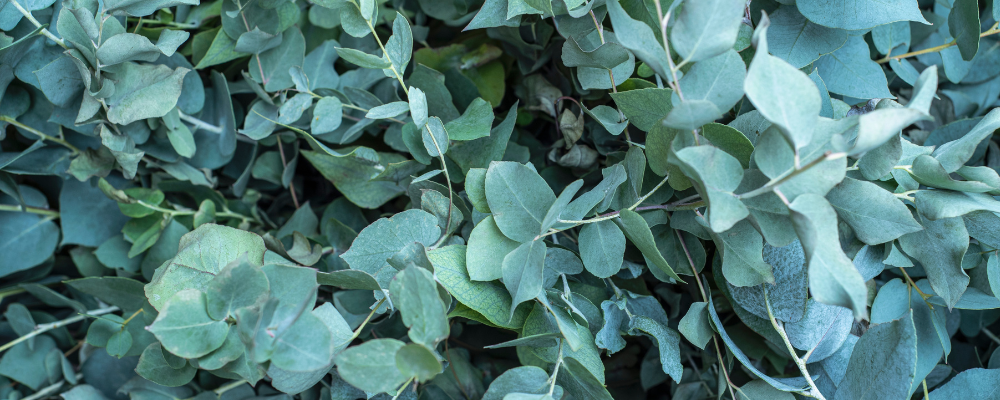
Eucalyptus globulus is a large tree in the Myrtaceae family. The young leaves are opposite, glaucous, and rounded; the adult leaves become alternate, long, and sickle-shaped. The flower buds are closed by an operculum.
Kew accepts the species and places its native range in southeastern Australia. It has been introduced to several continents for timber, ornamental use, and aromatic oils. Kew, Eucalyptus globulus.
The name comes from the Greek, formed from “well” and “covered,” referring to the operculum that protects the flower’s organs before falling away when it opens. Botany thus offers an image of a threshold first sealed and then released.
The aroma of the leaves comes from volatile compounds concentrated in glands. This powerful fragrance does not make the material harmless. On the contrary, it establishes a clear boundary between symbolic observation and respiratory exposure.

Leaves in Smoke Ceremonies
The Australian Institute of Aboriginal and Torres Strait Islander Studies explains that a smoke ceremony may use smoldering leaves, most commonly eucalyptus, to produce smoke associated with purification and healing.
The resource describes a ceremony led by a Ngunnawal Elder as part of specific cultural work. The act rests on a living relationship between people, land, knowledge, and authority. AIATSIS, smoke ceremony and eucalyptus leaves.
The Australian Museum likewise recounts a purification ceremony led by Elders before the opening of a gallery. Gum leaves, their scent, and their sound call the ancestors and mark a new beginning. Australian Museum, ceremony led by Elders.
The smoke cannot be separated from the authority conducting it. The leaf belongs to a situated ceremony, not to a universal purification formula.
Receiving the meaning without copying the rite
Imitating the smoke, words, or gestures described would make the people who give them meaning disappear. Respect begins with refusing to turn an Indigenous ceremony into a decorative accessory.
It remains possible to learn from its public structure: a passage is recognized, an authority welcomes, the place is named, and the community knows that a beginning has taken place. These functions can inspire a personal practice without appropriating the cultural material.
Eucalyptus then becomes the sign of a source obligation. Each reference should name the people, institution, or Elder whenever the information allows. The word “Aboriginal” alone is not enough to erase the plurality of nations.
Magic also respects absences. What has not been made public remains outside the work. The written card replaces the smoke and keeps attention on the concrete welcome extended to people crossing a threshold.
The operculum and the authorized passage
The Eucalyptus bud remains covered by an operculum that falls away when the flower opens. The envelope protects development in progress, then gives way at the moment of unfolding.
This image makes it possible to work with an authorized passage. A door, a file, or a word may remain closed until the conditions are met. The opening receives a date, a person responsible, and the people welcomed.
Renewal does not consist of erasing what came before. The fallen operculum preserves the trace of protection that has become unnecessary. The transition benefits from acknowledging what guarded the threshold before changing the rule.
The sickle-shaped leaf finally provides a visual direction. It can indicate the path through the space, without claiming to purify the air or heal a body.
Mapping a respectful threshold
Draw a closed Eucalyptus bud to the left of the page and an open flower to the right. Between the two, draw a passage consisting of four steps.
In these steps, name the territory concerned, the person welcoming others, the entry conditions, and the responsibility after the passage. If you borrow an idea from a culture, write its complete source beneath the drawing.
Add a leaf above it, oriented toward the exit, and write what must leave the place: an object, an outdated rule, expired access, or completed task. Place below it what must remain protected.
Place the closed product to the left of the page without opening it. Mark the passage with a quiet reading or a neutral sound of your choice, without imitating an Indigenous ceremony. Then date the new welcoming rule.
Historical correspondences
| Reference | Correspondence |
|---|---|
| Reference species | Eucalyptus globulus Labill. |
| Family | Myrtaceae |
| Botanical sign | Operculum covering the flower bud |
| Cultural framework | Smoke ceremonies conducted by Elders of specific peoples |
| Magical domains | Welcome, passage, source, boundary, and responsibility |
| Safe form | Written threshold card and closed product |