























































































































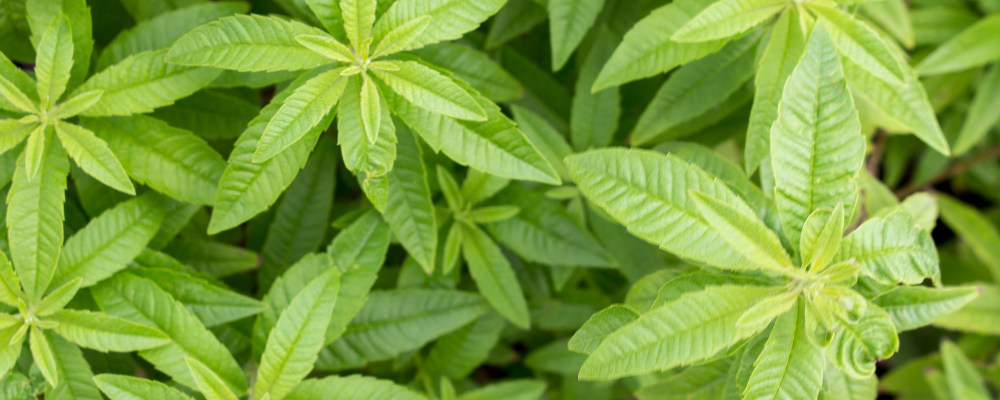
Common vervain impresses neither through its size nor through the brilliance of its flowers. In antiquity, however, this understated plant entered the language of the altar, diplomacy, and treaties: sacred spaces were cleaned with its branches, and Roman heralds carried it when they came to propose peace or declare war.
This place explains its magical power. Vervain does not merely serve to “purify” in the broad sense: it prepares a place before the rite, accompanies the words that commit a city, and marks the passage from hostility to reconciliation. The practices of Saint John’s Eve and Christian charms later preserved its sacred character.
Astrological sources assign it to Venus, not Mercury. This attribution echoes the crown of Venus Victrix, the accords sought by heralds, and the love-related uses of the Middle Ages. Its magic connects ritual cleanliness, the authority of speech, and peacemaking.
Common Vervain of the Waysides
Verbena officinalis L. belongs to the Verbenaceae family. This perennial has slender, square stems, opposite, divided leaves, and long spikes bearing tiny pale lilac flowers. It grows in open places, along roadsides, on disturbed ground, and near dwellings.
Kew gives the species a native range extending from Europe and North Africa to temperate and tropical Asia. However, the name “vervain” covers many horticultural or fragrant plants. Lemon verbena, Aloysia citrodora, belongs to another genus and does not carry the ritual history of Verbena officinalis. Kew, Verbena officinalis.
The plant’s modesty illuminates its uses. A slender branch can sweep a table, sprinkle a place, or form a crown without occupying the center of the rite. Vervain works on the setting in which words and offerings will take effect.
Greek altars and Roman temples
Greek and Roman authors classify Vervain among sacred plants. The Greeks are said to have used it to cleanse the table dedicated to Zeus before major ceremonies. In Rome, its branches were used to sweep temples, purify altars, and sprinkle lustral water. Virgil places it around the altar in an enchanting scene.
Richard Folkard brings these accounts together and recalls several ritual names: sacred herb, tears of Isis, tears of Juno, blood of Mercury. These names do not form a homogeneous system; they show the plant’s long circulation among religious cults, medicine, and magic. Richard Folkard, Plant Lore, Legends, and Lyrics, “Vervain”.
The cleansing carried out by Vervain has a ritual purpose. It removes traces of ordinary activity to make the altar available. In the home, the sprig placed at the entrance extends this function: the space one enters receives a distinct quality.
The Heralds’ Crown
Roman heralds and ambassadors wore crowns of Vervain when they conveyed terms of peace or announced war. The plant therefore accompanied an official pronouncement whose consequences bound the community. It protected the messenger and signaled that his voice no longer belonged entirely to him.
This framework gives Vervain a precise magical domain: negotiation, oaths, reconciliation, declarations, and the closing of a conflict. It does not soften every exchange. It makes speech solemn, draws the boundary between private discussion and public commitment, then compels everyone to hear what is said.
The plant that precedes speech. Vervain prepares the altar before the offering and accompanies the herald before the declaration. Its power lies in that moment when the place and the voice change status.
The crown of Venus Victrix, combining myrtle and Vervain, strengthens the Venusian connection. This is a victorious Venus, capable of uniting allure and political power. Culpeper confirms this rulership by opening his entry with the phrase “herb of Venus.” Nicholas Culpeper, The Complete Herbal, “Vervain”. The reconciliation carried by the plant is therefore neither soft nor passive.
Medieval Charms and Saint John’s Eve
In the Middle Ages, Vervain retained its name as a sacred herb and became part of charms, amulets, and love potions. It was also associated with the plants of Saint John’s Eve. In Madrid, people went to gather it in the fields at midnight; elsewhere, garlands were worn during the bonfires and dances on the eve of the saint’s feast.
An English text from 1624 gives a Christian harvesting formula. The hand first traces a cross over the plant, then the blessing recalls Calvary and the blood of Christ before pulling Vervain from the ground. This prayer places the harvest within a sacred history and asks permission before taking the plant.
The texts attributed to the Druids by Pliny also describe gathering when the Sun and Moon are hidden, with an offering of honey to the earth. These accounts were amplified by compilers. Their strongest underlying theme remains compensation: taking a ritual plant creates a debt to the place.
Preparing a place and a spoken word with Verbena
Before an oath, a difficult conversation, or signing an agreement, pass a dry sprig over the table without touching people or food. Then place it between the two sides of the text. The gesture echoes the preparatory and mediating function of altars and heralds.
To consecrate a space, use Verbena as a small symbolic broom, sweeping from the center toward the edges, then place it at the entrance. No liquid is required. State aloud the purpose of the place: study, prayer, reading, memory, or welcome. The spoken word completes what the sprig has begun.
If a cultivated plant is harvested, pour a little water at its base and take only one stem. This simple restitution follows the principle of offering to the earth. The dried Verbena should then be stored with the agreement’s consent or returned to the compost if it has not been treated with any product.
Historical correspondences
| Reference | Correspondence |
|---|---|
| Botanical name | Verbena officinalis L. |
| Planet | Venus, according to Culpeper and the astrologers cited by Folkard |
| Ritual places | Altar, temple, house, negotiation table, threshold |
| Figures | Herald, ambassador, officiant, Venus Victrix |
| Timing | Ritual preparation; Midsummer’s Eve; the moment of an agreement or declaration |
| Magical domains | Ritual purification, pledged word, peace, alliance, love placed under Venus |