























































































































































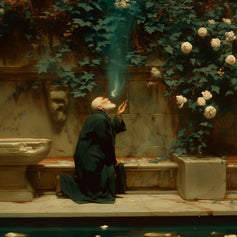





















Rue has received a paradoxical name: herb of grace, it carries an acrid scent and sap that can burn the skin in sunlight. A branch was used to sprinkle holy water, Mediterranean homes placed it against the evil eye, and Culpeper classified it under the Sun and the Lion. Its magic speaks of purification, but its physical nature demands clear distance.
Ruta graveolens runs through the Bible, Greco-Roman medicine, monastic gardens, the liturgy, and popular traditions. The words regret, grace, and rue meet in English literature, although their linguistic resemblance does not constitute a common etymology.
The plant can cause photodermatitis, and ingesting it in high doses causes severe harm, with a major risk during pregnancy. The product remains sealed. For sprinkling, the bouquet, and the wreath, this sheet uses paper forms.
The Blue Leaf with the Acrid Scent
Ruta graveolens L. is a subshrub in the Rutaceae family. Its blue-green leaves are divided into small, rounded lobes, and its yellow flowers have four or five concave petals. Glands release the strong scent that explains the epithet graveolens.
Kew recognizes a native range extending from the northwestern Balkans to Crimea, with very extensive horticultural distribution. Kew, Ruta graveolens.
The garden plant is not harmless material. Furocoumarins present in the sap can react with ultraviolet light and produce skin lesions resembling burns.
The Herb of Grace and Holy Water
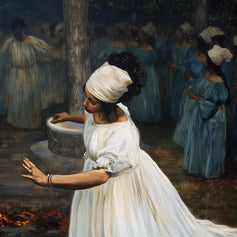
The name “herb of grace” is linked to the use of branches when sprinkling holy water. Its branching shape catches the drops and allows the liturgical gesture to cover the assembly or the consecrated place.
Rue then becomes an instrument of blessing, penance, and exorcism. The same plant that protects against poisons in medical texts takes on the role of driving away hostile powers in Christian ritual.
The Gospel according to Luke mentions the tithe of mint and Rue, evidence of a plant cultivated and counted in religious life. The passage does not attribute magical virtue to it, but it confirms its presence in the biblical world of aromatic plants.
Rue Against the Evil Eye
Around the Mediterranean and in Sephardic, Latin American, and Italian traditions, Rue appears in bouquets, amulets, and gestures directed against the evil eye. It may be worn, placed near an entrance, or associated with a prayer.
These practices do not form a single system. The name ruda, the horn-shaped hand, the Catholic prayer, and the family amulet belong to different settings. Rue connects them through its scent, persistence, and reputation as a protective plant.
Protection preserves the trace of grace. The sprig does not act alone: it carries a blessing, a familial gaze, and the memory of the transmitted gesture.
The Sun, Leo, and literature
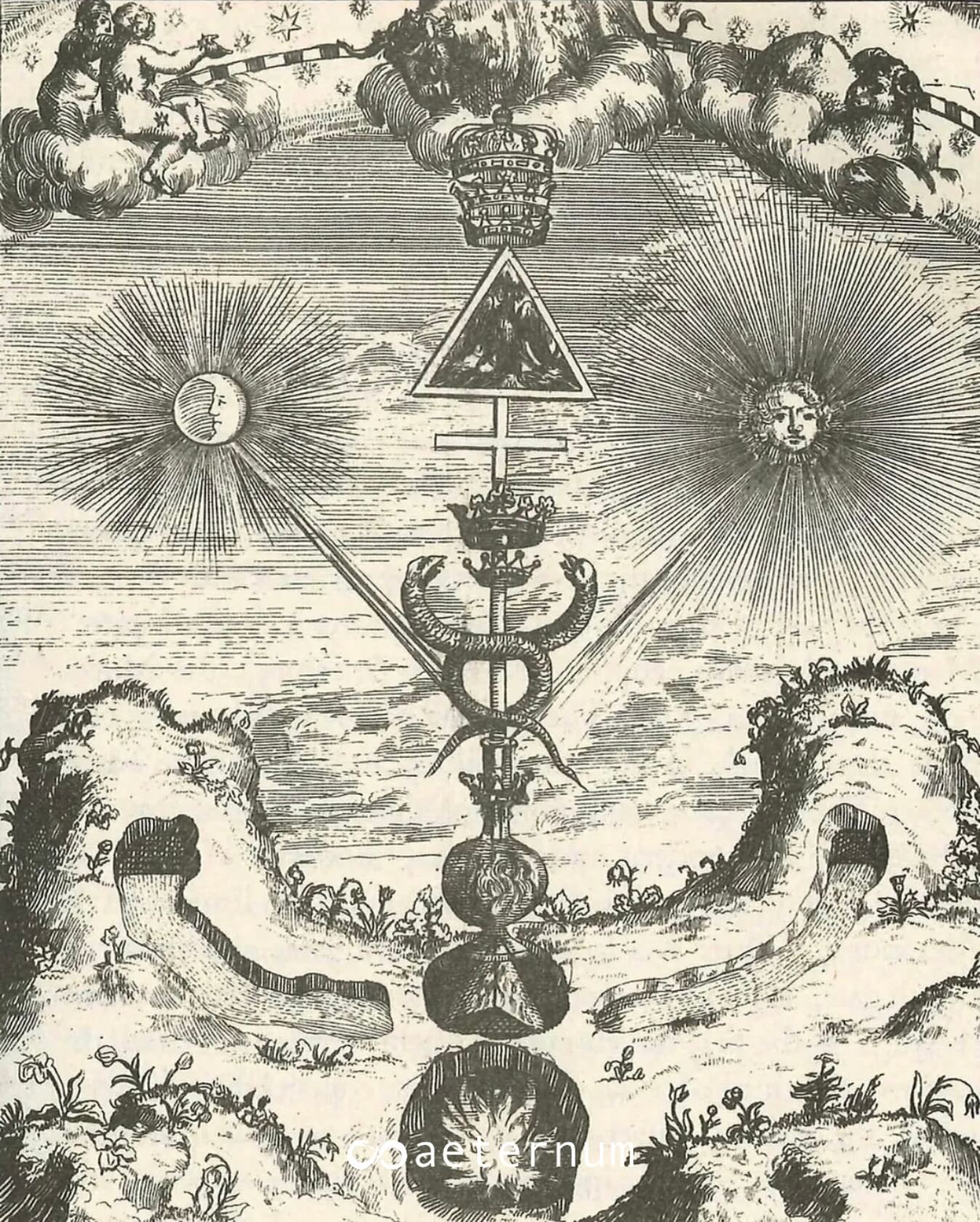
In Nicholas Culpeper’s 1653 The English Physician, he attributes Rue to the Sun and the sign of Leo. He ascribes to it a broad medical domain, particularly against poisons, bites, and vision disorders, according to the medicine of his time.
Shakespeare names it in Hamlet when Ophelia distributes her flowers: “herb-grace o’ Sundays.” Rue becomes a sign of regret, difference, and mourning. In Paradise Lost, Milton associates it with eyebright to restore Adam’s vision, which he must endure.
These texts bring together Sun, sight, repentance, and grace. They provide a more precise correspondence than modern lists that randomly add love, prosperity, or “elevation.”
Sprinkling without plant contact
Cut a sprig of Rue from blue-green paper. Mark four leaves with the names grace, measure, sight, and threshold. Place it near a bowl of clear water without immersing it.
Touch the water with clean fingers, then trace a sign on a stone or saucer, not on the skin. Read a passage from Culpeper or Hamlet and name what you wish to examine with greater discernment.
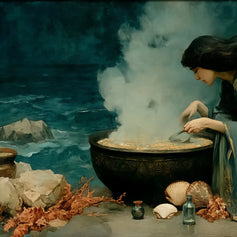
The sachet of Rue remains closed to the left of the workspace. At the end, pour the water into the sink and dry the bowl. No real sprig, oil, or smoke is used.
Historical correspondences
| Reference point | Correspondence |
|---|---|
| Botanical name | Ruta graveolens L. |
| Names | Rue, herb of grace, ruda |
| Texts | Gospel according to Luke, Culpeper, Shakespeare, and Milton |
| Attribution | Sun and Leo in Culpeper |
| Magical domains | Blessing, evil eye, penance, vision, and threshold |
| Safe form | Sealed product, paper sprig, separate water, and reading |