


Rice is not a universal sign of wealth that can be detached from any culture. It is a measured reserve, collective labor, and a situated offering. On a Shintō household altar, it may be presented with water and sake. Among the Ifugao of the Philippines, granary figures watch over the harvest and receive gifts during festivals. The grain becomes sacred because it connects the field, the home, the ancestors, and sharing.
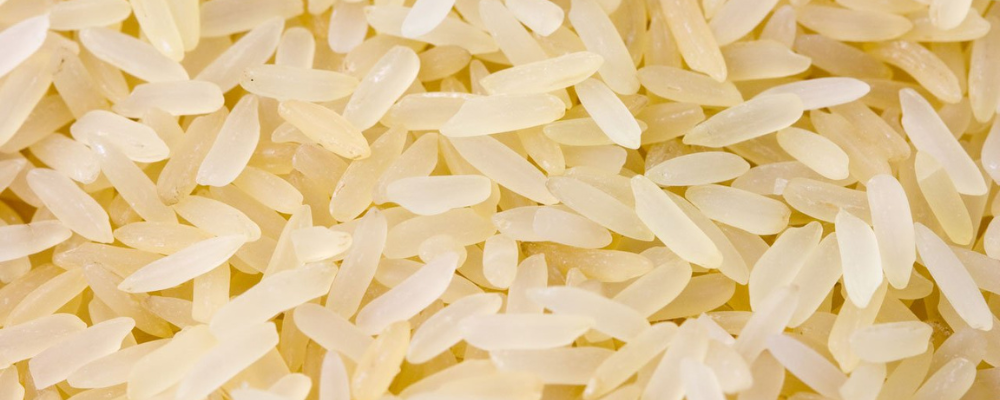
Asian rice is Oryza sativa L., a cultivated Poaceae species descended from lineages domesticated in China. Its stems bear branched panicles in which grains ripen enclosed by glumes. Depending on the variety, the plant may be cultivated in flooded paddies or under rainfed conditions.
Its historical magic is expressed through precise institutions and gestures: the agricultural calendar, the granary, daily offerings, meals for the living, and relations with the dead. Scattering rice “for abundance” without context impoverishes this history. Counting, setting aside, offering, and redistributing it better restore its structure.
The grain shaped by domestication
Oryza sativa is an annual grass with long, narrow leaves. Each panicle bears numerous spikelets. The harvested grain retains its hull, which is removed to produce brown rice; its bran and germ can then be removed to produce white rice.
Kew treats the species as a cultigen originating in China and places evidence of domestication around 6000 BCE in the lower Yangtze basin. Kew, Oryza sativa.
The visible grain is the endpoint of a system of water management, selection, transplanting, harvesting, and storage. Its magical value comes not only from its quantity. It comes from a community’s ability to maintain every stage leading from field to bowl.
Rice on the Shintō household altar
The British Museum holds a kamidana, a small Shintō altar intended for the home. Its description states that offerings of Rice, water, salt, or sake may be placed there with branches of sakaki.
The object and its use are described in the museum's collection. British Museum, domestic kamidana altar. Here, the grain belongs to a rhythm of care addressed to the kami within a living religious framework.
This gesture is not reducible to “attracting money.” Offering a share of ordinary food acknowledges a relationship, a place, and a debt. A practice outside Shintō can learn this logic of reserve without copying the altar or claiming to perform its worship.
Offered Rice does not represent an abstract wealth: it makes visible the household's share that is not consumed by it alone.
The guardians of Ifugao granaries
Among the Ifugao of northern Luzon, the bulul are figures associated with Rice and the protection of granaries. They receive ritual attention throughout the agricultural cycle, with offerings connected to the harvest.
The Metropolitan Museum presents a pair of figures and explains their role as guardians of grain. Metropolitan Museum, Ifugao Rice figures. The statues are not generic decorations: they belong to a society, owners, and ceremonies.
The granary is a threshold between future nourishment and present consumption. The guardian reminds us that the harvest must pass through time without being lost, stolen, or wasted. This function inspires a more responsible magic of preservation than scattering grains at random.
The mystery of shared measurement
A grain may seem tiny, but a handful makes it possible to count, weigh, and distribute. Rice translates a continuous resource into visible units. This quality makes it a language of shares, promises, and reserves.
Every measure also reveals a policy: who grows, who stores, who serves, and who receives? The magic of Rice benefits from asking these questions. Abundance that ignores labor or deprives the granary of tomorrow is merely accelerated consumption.
Rice thus connects gratitude and accounting. A true offering leaves the giver’s share. A reserve protects the future. A shared meal transforms grain into a relationship. These three actions must remain distinct on the page as well as in the home.
Keeping the granary ledger
Draw three empty bowls. The first is titled “today,” the second “reserve,” and the third “sharing.” Write an amount, period of time, or measurable resource in each.
Under today’s bowl, note what you can use without incurring debt. Under the reserve, write the date and the release condition. Under sharing, name the actual beneficiary and the method of transmission.
Check that the total matches what you have, then sign the page. Do not scatter grain or imitate a cultural altar. The rite remains a distribution ledger that honors the work hidden behind every reserve.
Historical correspondences
| Reference | Correspondence |
|---|---|
| Botanical name | Oryza sativa L. |
| Family | Poaceae |
| Ritual frameworks | Shintō altar and Ifugao granaries |
| Historical motifs | Offering, reserve, stewardship, and sharing |
| Magical domains | Measurement, sustenance, gratitude, and continuity |
| Safe form | Paper granary ledger |