


In the fourth branch of the Mabinogi, the magician Gwydion and King Math make a woman from the flowers of oak, broom, and meadowsweet. They name her Blodeuwedd, “flower face.” The plant thus enters a medieval Welsh tale of creation, arranged marriage, desire, and metamorphosis. It is not merely a symbol of love: it takes part in a story in which beauty created by magic asserts its own will.
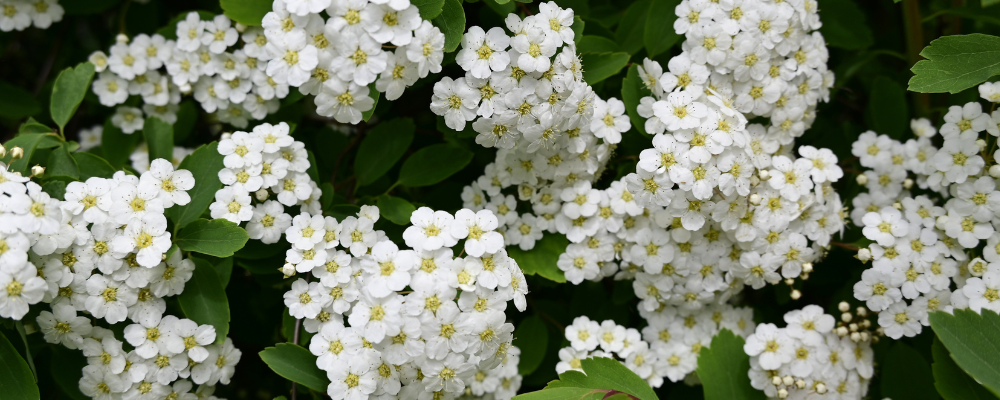
Meadowsweet is Filipendula ulmaria (L.) Maxim., a Rosaceae of wet meadows, ditches, and banks. Its large leaves are divided into toothed leaflets, whitish underneath. The small, numerous, cream-colored flowers form airy inflorescences with a sweet scent.
Its English name meadowsweet has been linked to the meadow, mead, and the practice of strewing floors. The name bridewort also associates it with weddings. The Welsh tale nevertheless gives it a more complex dimension: the flower creates a wife, but does not reduce this woman to the role chosen for her.
A Rosaceae of wet meadows
Filipendula ulmaria has erect stems and pinnate leaves whose large terminal leaflet is divided into lobes. The flowers have five petals and numerous stamens, a classic characteristic of the Rosaceae. The fruits twist into small spiral clusters.
Kew accepts the species, formerly called Spiraea ulmaria, and places its range from Europe to Siberia, the Russian Far East, and the western Himalayas. Kew, Filipendula ulmaria.
The plant thrives in cool to moist soil. Its tall flowering stems float above the lower grasses, while its rhizomes keep the colony in place. This dual form offers a fertile ritual image: a light crown supported by water-saturated ground.

Blodeuwedd, woman made of flowers
In the Mabinogi, Lleu Llaw Gyffes cannot marry any human woman because of a curse. Math and Gwydion then fashion a woman from the flowers of the oak, broom, and meadowsweet. They name her Blodeuwedd.
The translation of the story specifies the three plants used. Fourth Branch of the Mabinogi, creation of Blodeuwedd. Another historical translation makes it possible to compare the passage. Translation by Lady Charlotte Guest.
The scene resembles a perfect floral enchantment, but what follows cracks it. Blodeuwedd loves Gronw and takes part in the plot against Lleu. Gwydion then transforms her into an owl. The flower-woman is therefore neither a docile marital talisman nor an automatic promise of fidelity.
Meadowsweet enters the story as creative material, then the story escapes its creators’ plan.
Bridewort, rushes, and a fragrant home
In Great Britain, Meadowsweet was used to strew the floors of houses and meeting places. Crushed underfoot, it released its fragrance. Its name bridewort connects it to weddings and bridal garlands.
The Game & Wildlife Conservation Trust summarizes these uses and recalls the favor Elizabeth I showed the plant for rush-strewing. GWCT, history of Meadowsweet.
Rushes transform a meadow plant into a domestic atmosphere. They cover the passageway, receive footsteps, and perfume the gathering. In house magic, this historical gesture speaks of hospitality, but also of what is placed underfoot to make an assembly possible.
The mystery of created will
Blodeuwedd is created for a marriage decided without her. Yet the story does not leave her in that role. Her desire produces a rupture, then Gwydion’s response fixes her in another form. Creative magic encounters a will it cannot control.
Meadowsweet can thus accompany commitment work, provided it is not used to coerce others. It reminds us that an alliance worthy of the name is negotiated with a living person, not with the ideal image shaped to fill a role.
Its presence among three flowers matters too. Oak, broom, and meadowsweet bring together woodland, heath, and wet meadow. The person born from this bouquet surpasses each material. The floral rite thus becomes a question: who decides the final meaning of what has been created?
Returning the crown to its voice
Draw three distinct flowers: oak, broom, and meadowsweet. Under each, write an expectation that your surroundings, your profession, or your family history has placed on you.
Link the three flowers into a crown, then open the circle at one point. In this opening, write a decision that truly belongs to you. It must concern your conduct and respect the consent of other people.
Under the crown, add the conditions of a free commitment: the ability to respond, the right to refuse, duration, review, and exit. Keep the page with your important agreements. This act honors Blodeuwedd’s complexity without reproducing a coercive spell.
Historical correspondences
| Reference | Correspondence |
|---|---|
| Botanical name | Filipendula ulmaria (L.) Maxim. |
| Family | Rosaceae |
| Major text | Fourth branch of the Mabinogi |
| Narrative figure | Blodeuwedd, woman made of flowers |
| Magical domains | Creation, will, alliance, and metamorphosis |
| Safe form | Consent crown on paper |