
























































































































Snakeroot bears a name too broad to designate a single plant. Here, it refers to Seneca snakeroot, long called Polygala senega and now classified by Kew as Senega officinalis. Its tortuous shape became associated with the history of remedies for snakebites and later with the North American pharmaceutical trade. The mystery lies less in a universal power than in the way an Indigenous name, a resemblance, and a colonial market became entwined around a root.
“Snakeroot” can refer to several species that are not closely related. Black snakeroot, Virginia snakeroot, Indian snakeroot, and Seneca snakeroot are not interchangeable. This entry concerns only Seneca snakeroot.
Its history calls for careful reading. Knowledge attributed to the Seneca people was taken up, translated, and commercialized by European doctors and apothecaries. The practice proposed today focuses on the path, the shedding, and the examination of names, without imitating an Indigenous ceremony.
A North American milkwort
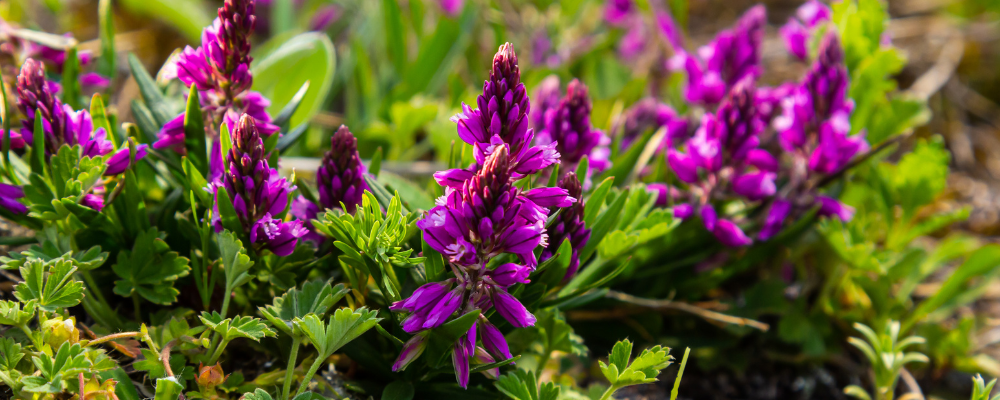
Senega officinalis Spach belongs to the Polygalaceae family. The plant forms several upright stems from a hard, horizontal rootstock. The narrow leaves are arranged alternately, and the small white flowers form terminal clusters.
The historic name Polygala senega L. is now treated by Kew as a synonym of Senega officinalis. Kew, status of Polygala senega.
In Maine, the species grows on limestone gravel, ledges, and well-drained banks. The state’s natural areas program classifies it as locally endangered and describes the loss of populations following clearing and development. Maine Natural Areas Program, Seneca snakeroot.
The gnarled root curves and bears branches. This silhouette encouraged its association with the serpent, but the name alone can never identify a dried root.
The Seneca name and the shape of the serpent
The English name Seneca snakeroot honors the Seneca people, members of the Haudenosaunee Confederacy. Later sources report the use of the root against snakebites, and subsequently for several respiratory disorders.
The shape of the root was also read as a snake’s signature. In this logic, a material that resembles the animal can act against its bite. The resemblance becomes an argument for choosing it and reinforces the name.
These two accounts should not be merged into a single certain origin. Indigenous use, the European interpretation of the form, and pharmaceutical advertising circulated in different contexts.
The snake itself carries several verbs: bite, crawl, molt, go around, and disappear beneath the vegetation. Snake Root becomes magical when the chosen gesture remains connected to a real source or observation.
From root to apothecary jar
In the 18th century, the root entered European materia medica. It was exported, sold by apothecaries, and incorporated into expectorant preparations. This circulation transformed local knowledge into a commodity bearing an Indigenous name.
The National Museum of American History preserves a specimen of crude drug donated in 1924 by Lloyd Brothers, a major American botanical preparations company. The jar materializes the passage from soil to the pharmaceutical supply chain. Smithsonian, Seneca snakeroot specimen.
The root is then washed, dried, weighed, and catalogued. Its individual appearance fades in favor of the commercial lot. The name nevertheless preserves the memory of the cultural provenance highlighted to sell the remedy.
The snake enters the label. The form, the people named, and the medical promise travel together without carrying the same authority.
Molt, detour, and discernment
A winding root does not move in a straight line. It goes around stones and follows areas where water and nutrients remain accessible. This shape supports work on the useful detour.
The snake’s molt adds the separation between an abandoned outer layer and a living body. It can represent an identity, role, or habit that has become too constricting. The magical gesture then asks you to name what remains on the ground.
Discernment begins with the common name. Before any interpretation, write down the botanical name, historical name, and origin of the product. This check breaks the chain of dangerous substitutions.
Protection against a bite becomes a limited metaphor: identify the threat, keep your distance, and seek competent help. It does not replace any medical assistance and does not authorize handling a snake.
Drawing the path of a shedding
Draw a winding line from left to right. At its starting point, write the name of the role or habit to leave behind. At the destination, note the form of life you want to make possible.
Add three real obstacles along the path. For each one, draw a detour and write down the action that allows you to get past it without direct confrontation. Keep only one action per obstacle.
Below the line, draw an empty envelope. Place inside it the words that no longer travel with you. Above the path, write the names of people capable of helping in case of difficulty.
Date the departure and arrival. When the first action is completed, retrace part of the line in pencil. The drawing follows the actual progress and transforms shedding into a verifiable passage.
Historical correspondences
| Reference | Correspondence |
|---|---|
| Accepted name | Senega officinalis Spach |
| Historical name | Polygala senega L. |
| Family | Polygalaceae |
| History of the name | Use attributed to the Seneca people against snakebites |
| Magical domains | Shedding, detour, protection, and discernment |
| Safe form | Drawing of the path, without handling the root |