






















































































































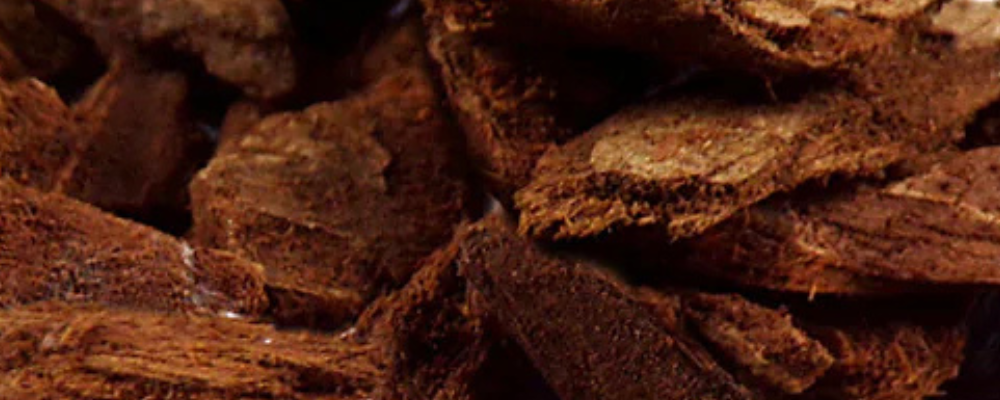
Jezebel Root is a curio from American hoodoo, not the scientific name of a plant. Under this name, Louisiana iris rhizomes circulate, especially Iris fulva, Iris hexagona, or Iris brevicaulis, but also pine or European iris substitutes. Its mystery lies as much in its use for power, money, and influence as in the shifting identity of the material sold under the same name.
The name refers to the biblical queen Jezebel, a figure whom the Hebrew texts present as foreign, royal, and an adversary of Israel’s prophets. In hoodoo, her image was reworked around female authority, attraction, money received from men, and the ability to command a situation.
Botanical material requires particular vigilance. “Root” here refers, in most cases, to an iris rhizome, and the trade uses several species or substitutes. Every practice begins with the label, the origin, the botanical name provided, and refusing ingestion.
One curio name, several irises
Louisiana irises form a group of plants found in wetland habitats. Iris fulva has coppery to reddish-brown flowers and spreads by rhizomes. Other species in the group have blue, purple, or pale flowers.
Kew accepts Iris fulva and places its range in the north-central and southeastern United States, including Louisiana and Mississippi. Kew, Iris fulva.
The curio may also be sold under the names Queen Root or Queen Elizabeth Root, then replaced with German iris or pine wood. These substitutions alter the species, the risk, and the material history. The magical name therefore never guarantees the taxon.
From the biblical queen to a magical name
The First Book of Kings presents Jezebel as the daughter of the king of the Sidonians and the wife of Ahab. In Christian interpretations, her name later becomes an accusation associated with idolatry, seduction, and female power deemed dangerous.
The biblical text provides the name’s template, but not the hoodoo root. First Book of Kings, 16:31.
Hoodoo partially reclaims this burden. Jezebel becomes a figure of authority, economic survival, and mastery of power relations. This reversal is social as well as magical: it transforms an insult into a name of power.
Jezebel Root in Hoodoo
Rootwork references associate Jezebel Root with women seeking money, favor, prestige, or leverage in a negotiation. Fragments may be placed in mojo bags or kept as curios in a condition work.
A study devoted to the roots of hoodoo identifies several Louisiana irises and describes their use in sachets intended to attract influence and material support. Historical rootwork index, “Jezebel Root” entry.
These practices belong to an African American tradition that emerged under specific racial, economic, and religious constraints. Taking them up requires naming hoodoo, avoiding generic voodoo imagery, and not erasing the Black women for whom the figure of Jezebel served both oppression and resistance.
The name Jezebel is a story of contested power before it is a plant label.
The mystery of a changing material
Two sachets bearing the same name may contain species that are not closely related. Color, cut, or smell is not enough to identify a dried rhizome. Traceability therefore becomes part of the magical work.
Commercial substitution is not neutral. A Louisiana iris connects the curio to a wetland region of the southern United States; a European iris tells an entirely different supply-chain story. The name remains, but the botanical substance changes.
This instability invites working with the name and label rather than inventing certainty. The material can remain a witness to the trade, while the practice concerns authority, negotiation, and economic protection.
Establish the negotiation seal
Draw an iris with three upright petals and three drooping sepals. In the center, write your financial or professional request in precise terms, without seeking to constrain anyone.
On the three upright parts, place your skill, your entitlement, and your price. On the three descending parts, write your limits, your fallback solution, and the point that supports your request.
Add the botanical name indicated on the packet, the supplier, and the purchase date. If this information is missing, leave the line blank. Keep the curio closed on the left side of the page; the work acts through preparation for negotiation rather than bodily contact.
Historical correspondences
| Reference | Correspondence |
|---|---|
| Nature of the name | Hoodoo curio, not a species |
| Associated taxa | Iris fulva, I. hexagona, I. brevicaulis, and others |
| Commercial substitutes | European iris or pine |
| Figure | Jezebel, disputed female authority |
| Magical domains | Influence, money, negotiation, and autonomy |
| Safe form | Iris seal and traceability record |