


Cinquefoil bears its number in its name. Its five leaflets offered Agrippa a botanical demonstration of the power of five: in his De occulta philosophia, it drives away demons and serves for expiation because the number shapes its virtue. Culpeper later places it under Jupiter. The plant thus becomes a rare crossroads between botanical form, Renaissance arithmology, and astrological herbalism.
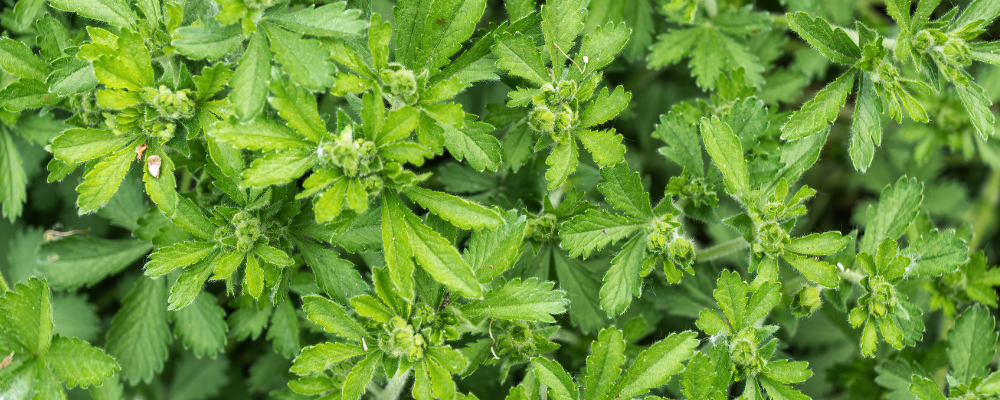
Creeping cinquefoil is Potentilla reptans L., a perennial Rosaceae species with long stems that root at the nodes. Its leaves ordinarily divide into five toothed leaflets. The solitary yellow flowers likewise display five petals.
Its historical magic does not come from a contemporary list of five benefits. It comes first from the visible number, then from texts that interpret this number within a Christian, astrological, and natural system. Five connects the plant to the human body, the senses, and the hand’s gesture.
Five leaflets on a creeping stem
Potentilla reptans advances close to the ground by slender stolons. Roots may form at each node. The palmately arranged leaves bear five leaflets, with occasional variations. The yellow flower has five clearly visible parts around its center.
Kew accepts the species and places its native range from Macaronesia and North Africa to China. Kew, Potentilla reptans.
The creeping growth adds a logic of contact. The stem connects several rooting points, while each leaf opens in five directions. The plant combines a horizontal network with a radiating figure.

The number five in Agrippa
In Book II of De occulta philosophia, Agrippa seeks the natural and spiritual virtues of numbers. He takes cinquefoil as an example of a plant in which five acts through its repeated presence.
The text attributes resistance to poisons, expiation, and power against demons to it. It also describes medical uses belonging to the knowledge of its era and not to be reproduced. Agrippa, Book II, chapter on the power of numbers.
The passage presents an embodied arithmology: the number is not written on a talisman; it appears in the leaf. The plant’s form becomes evidence of an order that the mage believes to be active throughout creation.
For Agrippa, the five-part leaf makes the number visible in matter.
Mercury for Agrippa, Jupiter for Culpeper
Agrippa classifies “five-leaved grass” among Mercury’s plants. This classification aligns with the stem’s mobility, the multiplicity of points, and the hand that writes or counts.
Culpeper, in The Complete Herbal, places Cinquefoil under Jupiter and focuses mainly on its medicinal uses. Culpeper, “Cinquefoil” entry.
The two attributions should not be forced into a single table. They reveal two systems and two authors. Mercury emphasizes the mobile, composite form; Jupiter, the expansive protection granted to the plant.
The mystery of the five-fingered hand
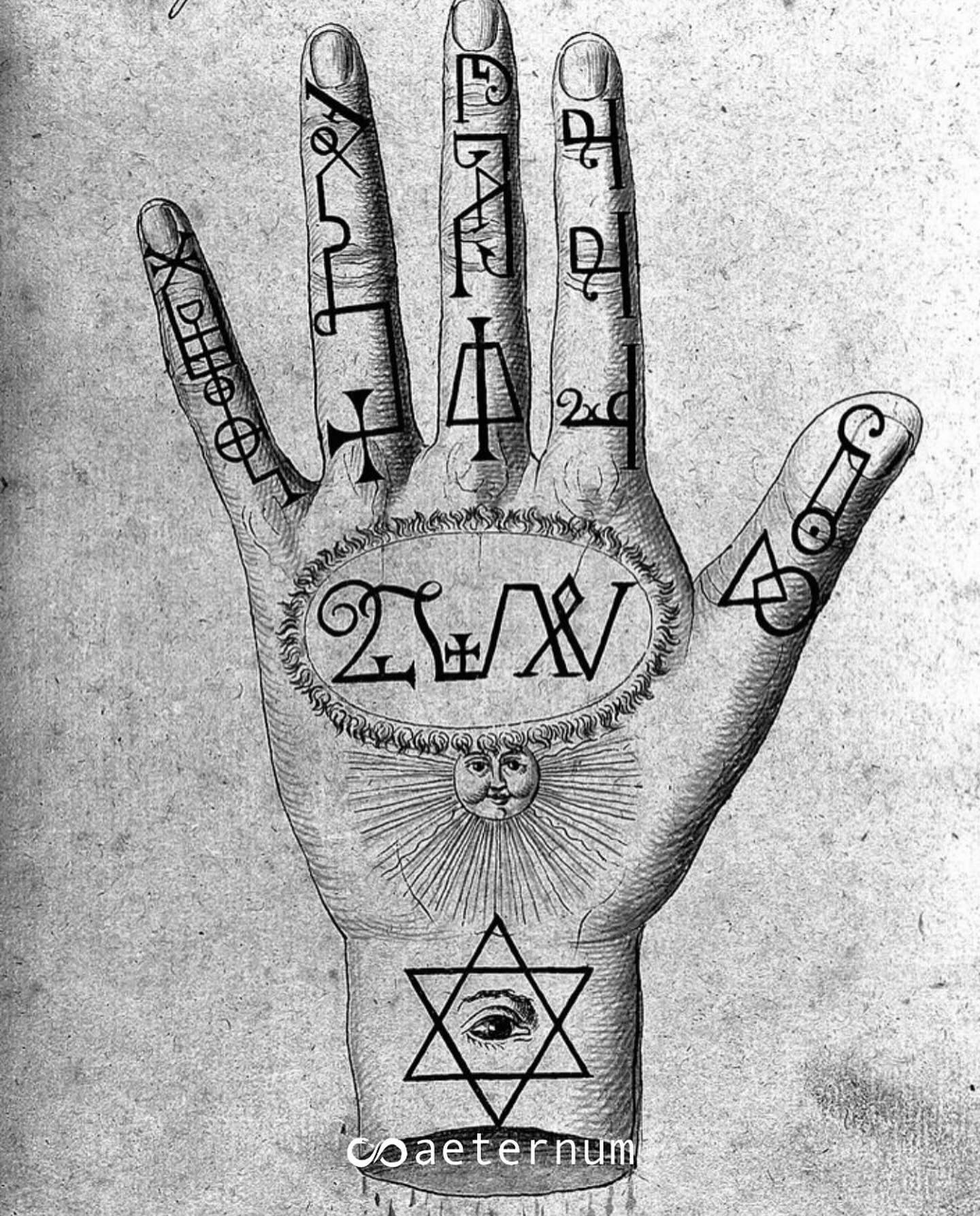
The English name “five-finger grass” brings the leaf closer to an open hand. The correspondence is immediate: five leaflets radiate from a single point like five fingers from the palm.
The hand can give, write, swear, protect, or push away. Cinquefoil does not choose one of these acts for us. It provides a framework for distributing five obligations around a common center.
The stolon then reminds us that every hand belongs to a network. An individual gesture touches several nodes: home, work, alliance, memory, and consequence. The number organizes responsibility as much as desire.
Forming the seal of five acts
Draw a five-leaflet leaf. In the central palm, write the name of a repair or protection that depends on your own actions.
Write in the five leaflets: recognize, restore, protect, testify, and complete. Under each verb, note a measurable action and a date. Then connect the leaf to the name of the person or place concerned, with their consent if they are participating.
Fold the page into five strips without tearing it, then unfold it. The folds make the number tangible without burning or ingesting the plant. Keep the page until the completion of the fifth act.
Historical correspondences
| Reference | Correspondence |
|---|---|
| Botanical name | Potentilla reptans L. |
| Family | Rosaceae |
| Visible number | Five leaflets and five petals |
| Historical attributions | Mercury for Agrippa, Jupiter for Culpeper |
| Magical domains | Expiation, protection, hand, and responsibility |
| Safe form | Seal of five acts on paper |