















































































































































































































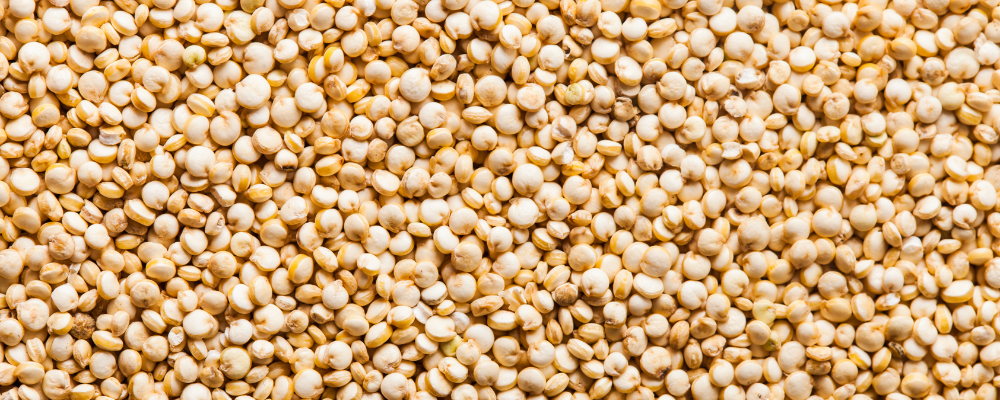
Quinoa is not an exotic cereal offered to a spirituality without a place. It is an Andean plant tended, selected, and cultivated by communities that read the rain, frost, birds, and agricultural calendar. In the Altiplano, the first harvests give rise to ceremonies of gratitude to Pachamama. Its magic belongs to this tangible reciprocity between seed, family labor, climate, and sharing.
Quinoa is Chenopodium quinoa Willd., an annual Amaranthaceae. It produces panicles laden with small seeds in several colors. These contain bitter saponins in their outer layers, requiring appropriate food processing.
Its magical uses honor living Andean knowledge. It does not serve as an interchangeable symbol of abundance. The seed connects the preservation of varieties, food sovereignty, the rhythm of the highlands, and gratitude after the harvest.
An Andean Seed with Many Faces
Chenopodium quinoa has an upright stem, variably shaped leaves, and a dense or loose inflorescence. The seeds may be white, yellow, red, or black. This variation corresponds to numerous ecotypes adapted to altitude, salt, cold, or drought.
Kew accepts the species and places its native range from Ecuador to northwestern Argentina. Kew, Chenopodium quinoa.
Quinoa is a pseudocereal: it is cooked like a grain but does not belong to the Poaceae family. This distinction protects its botanical identity and reminds us that similarity in use and plant relatedness do not coincide.
A Crop Predating the Incas
The FAO presents quinoa as a staple food of Andean peoples before the Inca Empire. Indigenous peoples preserved its cultivation through their knowledge, seed selection, and agricultural practices adapted to their environments.
The seed can be roasted, ground, cooked, or fermented into chicha depending on culinary practices. FAO, history and culture of Quinoa.
This continuity withstands narratives that make the plant begin with the Incas or with its global popularity. Quinoa carries several centuries of collective work, followed by a recent history of trade, prices, and international recognition.
Rain, sowing, and first harvest
In the Altiplano, the agricultural calendar distinguishes the rainy season, the time of frost, and the period of winds. Families observe the first rains, the flowering of local plants, the behavior of birds, and the fox's cry to read the coming season.
The Quinoa Museum describes soil preparation, seed selection, sowing, and ceremonies of gratitude to Pachamama when the first fruits appear. Quinoa Museum, Altiplano agriculture.
The ritual does not float above agriculture. It follows plowing, waiting for rain, protecting the panicles, and threshing. Gratitude responds to food received after work exposed to the risks of the climate.
Andean reciprocity connects ceremony with the field, the family, and the calendar.
The mystery of saved seed
After threshing, some of the seeds become food, while others prepare for the next season. Choosing seed is therefore a decision directed toward people who will eat later.
The tiny seed carries a range of colors, resilience, and flavors. Reducing it to a uniform grain of gold erases this cultivated plurality. The magic of preservation begins by naming the variety, its origin, and the person who kept it.
Reciprocity also requires a material return. Buying through a fair supply chain, avoiding waste, and acknowledging the producer's knowledge are gestures more faithful than the decorative use of a handful of anonymous seeds.
Keep the reciprocity record
Divide a page into four fields: received, worked, shared, and returned. In the first, record resources received from others. In the second, write down your actual contribution.
The third field is for the people who will benefit from the result. In the fourth, write what will return to the community, the soil, or the person who transmitted the knowledge. Add a date and an amount when the exchange is economic.
Draw a Quinoa panicle in the center. Each branch connects a gift to its counterpart. Keep the record on paper, while Andean ceremonies remain connected to the communities and lands that sustain them.
Historical correspondences
| Reference point | Correspondence |
|---|---|
| Botanical name | Chenopodium quinoa Willd. |
| Family | Amaranthaceae |
| Region of origin | Andes, from Ecuador to northwestern Argentina |
| Ritual framework | Agricultural calendar and gratitude toward Pachamama |
| Magical domains | Reciprocity, seed, sharing, and continuity |
| Safe form | Reciprocity record on paper |










