















































































































































































































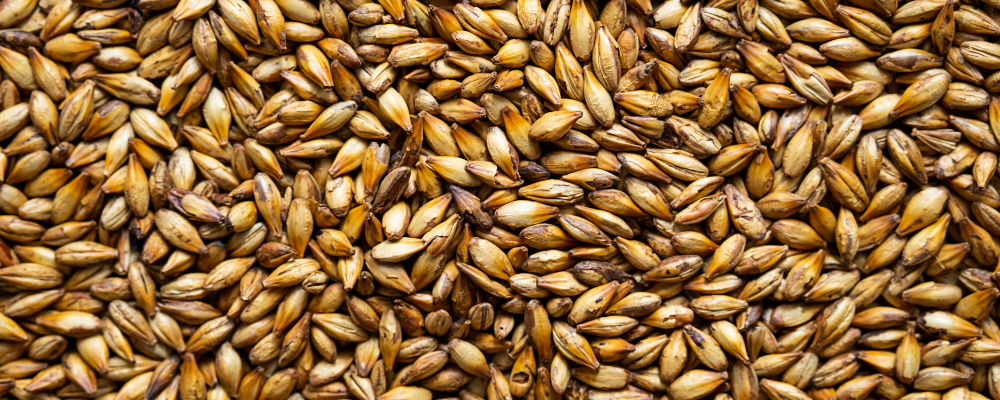
Barley belongs to the earliest agricultural landscapes of the Fertile Crescent, but its most striking magical presence appears in the Homeric Hymn to Demeter. The goddess refuses wine and asks for water mixed with barley flour and pennyroyal. This beverage, the kykeon, becomes inseparable from the memory of Eleusis: a cultivated grain then carries mourning, hospitality, and entry into a mystery rite.
Cultivated Barley is Hordeum vulgare L., an annual Poaceae. Its ears bear spikelets aligned along an axis and extended by long awns. The cultivated two-row or six-row forms result from a long process of selection that made the grains less prone to dispersal.
In historical magic, Barley is not reduced to agricultural abundance. It serves as material for libation, the meal at the threshold, and the transformation of grain through grinding. Its most enduring account associates a very common substance with a word kept secret.
The cultivated ear of the Fertile Crescent
Hordeum vulgare completes its cycle in one season. The hollow stem bears sheathing leaves. At the top, the ear gathers the spikelets in groups of three, and the arrangement of their fertility produces the two-row or six-row appearance.
Kew accepts the species and places its native range from the eastern Mediterranean to Central Asia and China. Kew, Hordeum vulgare.
Cultivation transforms the relationship between the ear and the soil. The ripe grain remains attached until harvest, then passes through threshing, winnowing, and grinding. Each of these actions separates, gathers, or opens: the material vocabulary of a rite already exists in agricultural work.
Demeter refuses wine
In the Homeric Hymn to Demeter, Metaneira offers wine to the grieving goddess. Demeter refuses it and asks for a mixture of water, barley flour, and pennyroyal. She then receives the drink according to the gesture she herself prescribed.
The passage takes place after Persephone’s abduction and during Demeter’s withdrawal. The kykeon marks hospitality accepted under condition, at a distance from festive wine. Homeric Hymn to Demeter, line 205 and following.
Barley enters here into a scene of refusal, mourning, and minimal restoration. It does not erase the loss. It offers enough substance to resume one’s place among humans before the story’s resolution.
The substance of the mystery begins with a clear refusal, followed by the acceptance of measured hospitality.
The kykeon and the mysteries of Eleusis
The account of the Hymn establishes the sacred horizon of Eleusis, the site of the mysteries of Demeter and Persephone. There, initiates reenacted a passage of loss, searching, and return, part of which remained forbidden to disclose.
Kykeon thus connects the simplest cooking with an experience protected by secrecy. Its ingredients are public: water, ground grain, and an aromatic plant. Its meaning depends on the place, the calendar, the initiation, and the shared narrative.
This distinction changes the present-day gesture. Reproducing a beverage does not restore a mystery. The structure, however, remains legible: leave behind a festive drink, choose a plain food, and mark a passage through a shared rule.
The mystery of the ground grain
The whole grain retains a closed form. Milling breaks this envelope and makes the material miscible with water. Between the two states stands the mill, a tool of repeated transformation.
Barley is therefore suited to threshold, mourning, and resumption work. The magical gesture does not require swallowing the grain: it can arrange on a page what must remain whole, what must be transformed, and what can join a shared work.
The ear’s long awns offer a second image: each grain belongs to a line, but all the lines converge on the same axis. An initiatory community is held together by distinct experiences connected to a central rule.
Tracing the passage of the grain
Draw an ear of Barley bearing nine grains. In the three lower grains, write what is lost. In the three middle grains, place what makes it possible to cross over. The three grains at the top receive the signs of a possible return.
Draw a circle around the ear, then leave an opening oriented toward the next concrete action. Write beside it the sentence you refuse and, beneath it, the minimum hospitality you accept.
Conclude with a date for resuming. The drawing remains the support for the rite. Do not use any beverage, flour blown into the air, or symbolic ingestion: the Eleusinian model conveys a form of passage, not a recipe to imitate.
Historical correspondences
| Reference point | Correspondence |
|---|---|
| Botanical name | Hordeum vulgare L. |
| Family | Poaceae |
| Major text | Homeric Hymn to Demeter |
| Ritual material | Barley flour in kykeon |
| Magical domains | Mourning, hospitality, initiation, and return |
| Safe form | Drawing of an ear of nine grains |










