
























































































































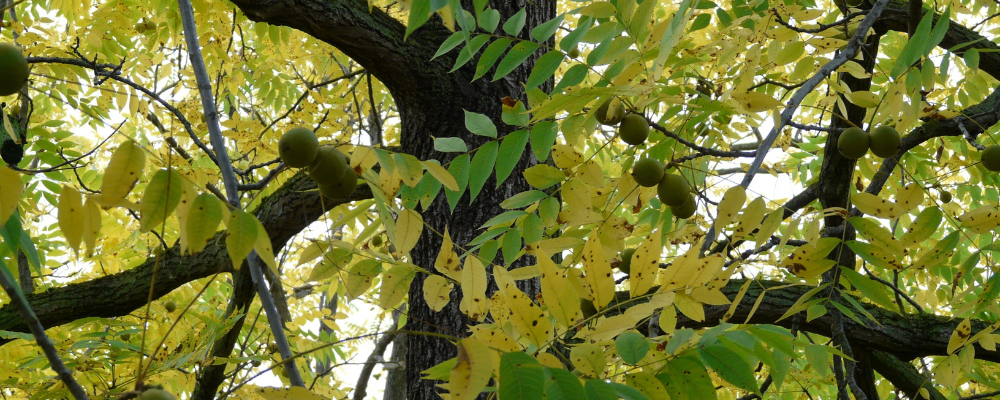
The Walnut Tree of Benevento became, through judicial and demonological accounts, the imaginary center of nocturnal gatherings of witches. The real tree thus merges with a geography of fear, accusation, and local identity. Further back in Greek antiquity, Carya is transformed into a Walnut Tree and receives a sanctuary from Artemis Caryatis. The mystery of the Walnut Tree therefore does not come solely from its fruit: it lies in the tree chosen as a site of transformation, gathering, and contested memory.
The Common Walnut is Juglans regia L., a large deciduous tree in the Juglandaceae family. Its bark becomes fissured with age. The compound leaves release a distinct scent when crushed, and the fruits ripen inside a green husk.
This entry covers the tree, its territory, and the stories attached to its shade. The Nut, as a fruit of weddings and reserves, has a separate entry. Here, the magic concerns assembly, transformation, testimony, and discernment when confronting accounts of persecution.
A Large Tree with Compound Leaves
Juglans regia can form a broad crown. Its imparipinnate leaves bring together several leaflets, with the terminal one being the largest. The male flowers hang in catkins, and the female flowers appear at the ends of young shoots.
Kew accepts the species and places its native range from Xinjiang to the western Himalayas. Kew, Juglans regia.
The cultivated tree can live for a long time, develop a broad trunk, and produce dense shade. Its presence organizes the site far beyond the nut harvest.
This scale establishes a territorial magic. The Walnut Tree becomes a meeting point, landmark, witness to generations, and center around which a story can take root.
Carya Transformed into a Walnut Tree
Servius’s commentary on Virgil recounts the story of Carya, loved by Dionysus. After her death, the god transforms her into a Walnut Tree, and Artemis reports the event to the inhabitants of Laconia.
A sanctuary is erected to Artemis Caryatis, a name linked to the place and the Walnut Tree. Servius, commentary on Virgil's Eclogues, 8.29.
The transformation does not turn every walnut tree into a relic. It gives the name Carya a botanical and cultic survival attached to a territory.
The mystery lies in this displaced identity. A person becomes a tree, and then the tree becomes the name of a sanctuary and a point of collective memory.
The transformation turns the Walnut Tree into a body of memory set within the landscape.
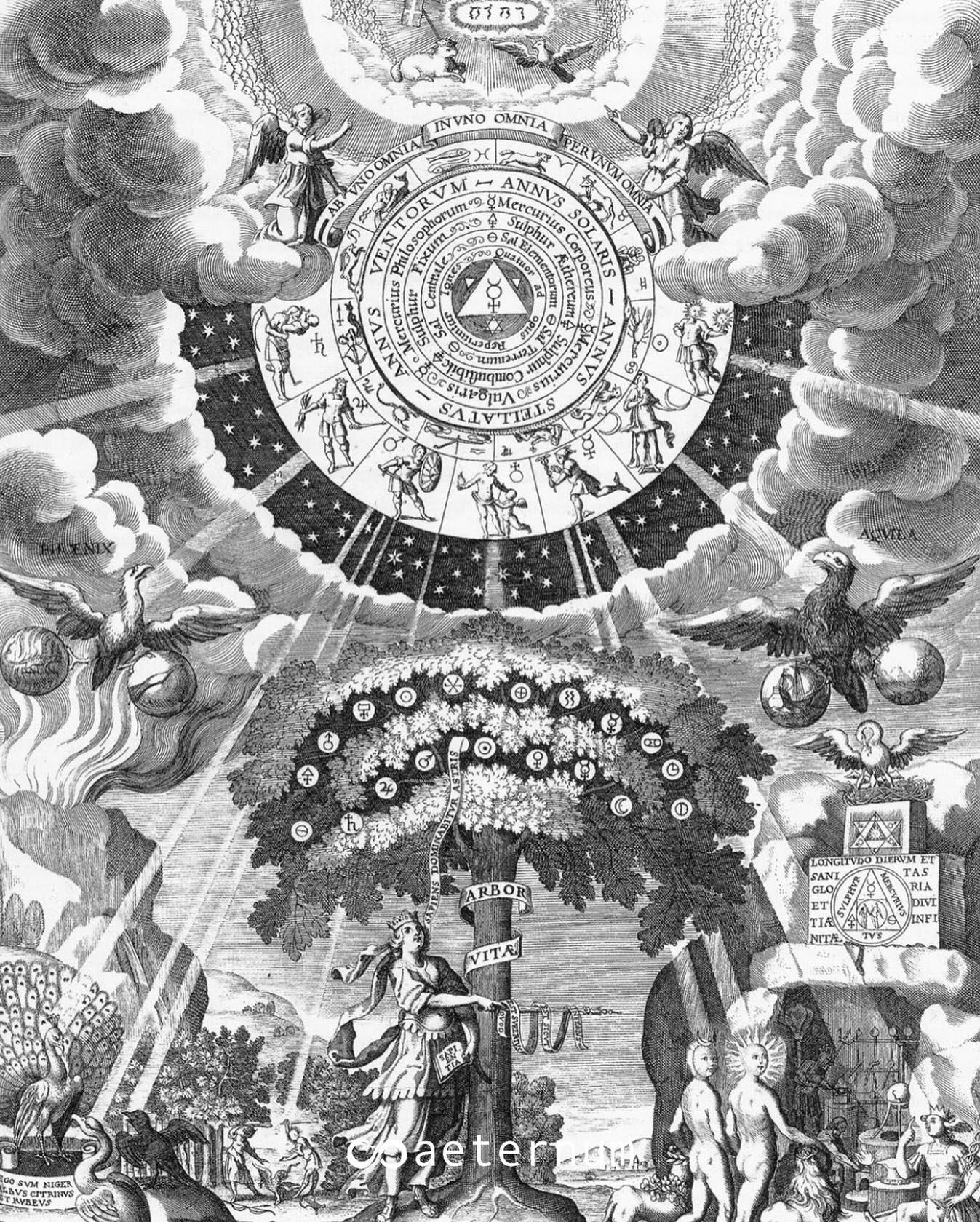
The Walnut Tree of Benevento and the sabbat
In Benevento, Italy, a walnut tree was placed at the center of stories about pagan practices, nocturnal gatherings, and witchcraft. The versions developed through chronicles, trials, and demonological literature.
A recent historical study traces the formation of this reputation and its links with the city's identity. Historical study of Benevento, witches, and the Walnut Tree.
Paolo Grillandi, a 16th-century jurist, helped establish the Walnut Tree as a sabbat site in the language of prosecution. The story therefore bears the mark of institutions that questioned, judged, and punished.
The historical magic of the Walnut Tree of Benevento must not erase this violence. The tree is a narrative center, while the accusations reveal social fear and the power exerted over those targeted.
The mystery of the assembly beneath the tree
A great tree offers a visible center and a periphery where voices take their places. Its crown brings people together without enclosing them, and its trunk provides a common reference point for those arriving from different directions.
The story of the sabbat transforms this ordinary possibility into a forbidden scene. It shows how a meeting place can become suspect when authority controls neither the people nor their speech.
The Walnut tree suits a magic of assembly that keeps a register of those present, distinguishes account from accusation, and protects everyone’s right to leave the circle.
Its Greek transformation adds the memory of the name. Every gathering under the sign of the Walnut tree begins by naming those who are absent and the people whose words have been distorted.
Establishing the circle of testimonies
Draw a Walnut tree seen from above. The trunk forms the center, and eight branches divide the crown into eight spaces.
In each space, write a source, a witness, or a version. Add the date, author, and the person’s position in the account.
Draw an outer circle bearing three questions: who accuses, who benefits from the account, and who cannot respond? Leave an opening for any future information.
At the foot of the drawing, write the decision that can be made now and the one that must wait. Keep the plant material in its sealed pouch, to the left of the register.
Historical correspondences
| Reference point | Correspondence |
|---|---|
| Botanical name | Juglans regia L. |
| Family | Juglandaceae |
| Greek account | Transformation of Carya and Artemis Caryatis |
| Italian account | Benevento Walnut and sabbat literature |
| Magical domains | Assembly, memory, testimony, and discernment |
| Safe form | Crown drawn as a circle of sources |