


Muira Puama comes from the forests of the Guianas and northern Brazil, where its wood and roots became associated with ethnobotanical uses related to vigor. Its entry into Western trade took place under the name “wood of potency,” a phrase that encouraged aphrodisiac claims. Yet the mystery of this material belongs neither to the planets of the Renaissance nor to European grimoires: it lies in a hard root, transported, named, and reformulated through contact with distant markets.
The name Muira Puama may refer to several plants in the trade. This entry uses Ptychopetalum olacoides Benth., a small woody species in the Olacaceae family, as its reference point. Identification requires a readable botanical name, provenance, and plant part.
Its magical focus remains vigor understood as the ability to act, persevere, and regain a foothold. This interpretation comes from the root’s material history and the commercial meaning given to its name. It remains restrained: no planetary or elemental correspondence is added.
A species of the Guianas and Brazil
Ptychopetalum olacoides is a shrub or small tree of humid tropical forests. The genus bears flowers with folded petals, a characteristic evoked by the name Ptychopetalum.
Kew accepts the species and places its native range from the Guianas to northern Brazil. Kew, Ptychopetalum olacoides.
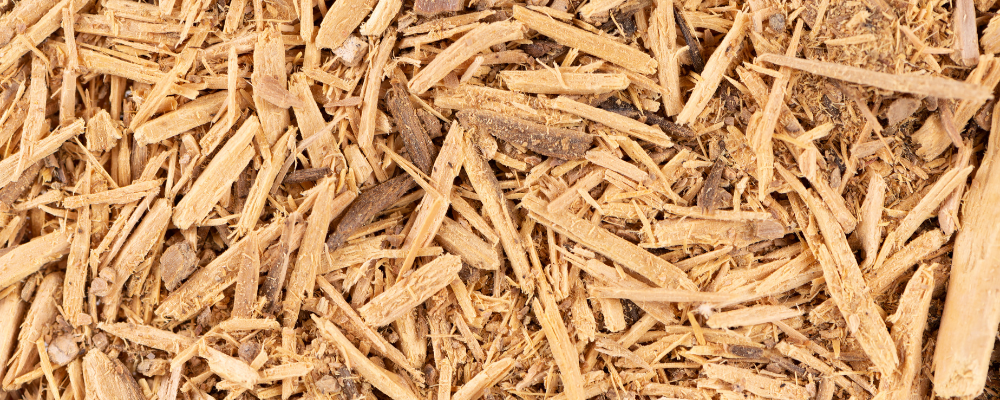
The trade mainly offers woody pieces and powders. Once the plant has been fragmented, its identifying characteristics disappear. The name carried by the label then becomes a major concern.
The magic of matter begins with this requirement: do not confuse the power of a name with the identity of the plant. Provenance, species, and lot form the threshold of any interpretation.

The root of vigor in the Brazilian Amazon
A study published in 2002 presents Ptychopetalum olacoides as a plant used in the Brazilian Amazon in alcoholic root preparations described as a nerve tonic and aphrodisiac.
The study concerns animal models and does not allow reported use to be converted into health advice. Ethnopharmacological study of Ptychopetalum olacoides.
The term vigor must be placed within this ethnobotanical context. It brings together endurance, stimulation, and sexual reputation, then commerce simplifies its meaning under an attractive formula.
The grimoire preserves the root as a witness to a history of circulation. It does not borrow a medical practice or turn a commercial reputation into guaranteed power.
The power of a commercial name replaces neither the plant’s identity nor the history of its use.
The wood of power and its movements
Under the name Muira Puama, international markets have brought together roots, barks, and related species. The phrase “wood of power” served as a linguistic bridge to catalogs of tonic plants.
Each movement changes the context. The root leaves behind a territory and specific preparation methods, then becomes powder, extract, or a mixture ingredient. The story grows shorter as the chain lengthens.
A study of the Catuama combination preparation examined the tolerability of a mixture containing Muira Puama, Guarana, Ginger, and Trichilia. It does not allow the result to be attributed to a single plant. Clinical study of a mixture containing Muira Puama.
This distinction protects magical use. The material represents the return of effort, but no commercial formula is presented as ritual truth.
The mystery of strength held in reserve
A woody root preserves the marks of the soil and time. Cut into fragments, it reveals tightly packed fibers and a physical resistance that has contributed to its image of vigor.
The magic of perseverance draws on this hardness without confusing it with the human body. The fragment becomes a sign of sustained effort, a safeguarded resource, and a renewed decision.
Vigor is not agitation. It is recognized by the ability to resume a task after resting, maintain a limit, and ask for support before exhaustion.
Muira Puama is suited to commitments over time. Its presence recalls the material’s provenance and the debt created by any extraction from afar.
Establishing a pact of vigor
Draw a root divided into four fibers. Name them effort, rest, support, and limit. In each one, write an observable fact for the following week.
In the center, write the action to resume. Give it a short duration and a stopping time. A task without a planned stopping point does not receive the root’s seal.
Draw a frame around the illustration bearing the species, the provenance indicated by the seller, and the purchase date. Leave any unknown information blank instead of guessing.
Keep the plant fragment in its closed pouch, placed to the left of the page. After the set period, put it away and evaluate the pact based on the four fibers.
Historical correspondences
| Reference | Correspondence |
|---|---|
| Reference species | Ptychopetalum olacoides Benth. |
| Family | Olacaceae |
| Native range | Guianas and northern Brazil |
| Parts sold | Root and wood, fragmented or ground into powder |
| Magical domains | Vigor, recovery, perseverance, and limits |
| Planet and element | No historical attribution retained |