















































































































































































































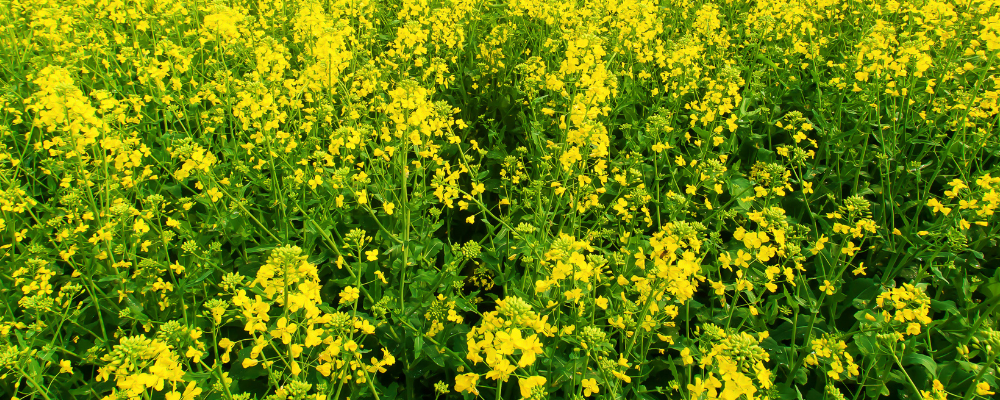
Mustard draws its symbolic power from a contrast: a tiny seed can produce a plant that occupies space, provides nourishment, and reseeds itself. The Gospel of Matthew makes it an image of a kingdom that begins almost imperceptibly, then becomes large enough to shelter birds. A Buddhist story gives a Mustard seed another task: leading Kisā Gotamī from house to house until she recognizes that grief passes through every family. The plant unites growth, welcome, and a proper measure of the human condition.
“Mustard” refers to several Brassicaceae. White Mustard is Sinapis alba L. Black Mustard, long known as Brassica nigra, is accepted by Kew under the name Mutarda nigra. The accounts do not always provide enough characteristics to choose a species.
The entry therefore works with the Mustard plant as a historical figure of small beginnings, visible growth, and quest. It promises neither money nor domination. The proposed ritual remains on paper and transforms the seed into a unit of decision, without wild sowing, ingestion, or poultice.
Several species under the name Mustard
Mustards are annual plants with four petals arranged in a cross. The yellow flowers produce siliques containing small, round seeds. Leaves, fruit shape, and the arrangement of the beak help distinguish the species.
Kew accepts Sinapis alba and places its native range from Europe to China. Kew, Sinapis alba.
Black Mustard produces siliques that are more tightly pressed against the stem. Kew treats the name Brassica nigra as a synonym of Mutarda nigra. Kew, nomenclature of Black Mustard.
The common name is enough for the narrative, but not for identifying a packet. Botanical magic maintains this double attention: listening to the image conveyed and looking at the species actually present.
The small seed and the great welcome
In Matthew 13, the Mustard seed is taken and sown in a field. The text calls it very small, then describes growth that offers branches to the birds.
The parable works through a change of scale. The beginning does not yet resemble the welcoming space that will emerge from it. Matthew 13, the Parable of the Mustard Seed.
The tree in the story serves a function: to welcome. Acquired size is not valuable in itself. It becomes just when other living beings find a place among the branches.
This image establishes a magic of responsible growth. Each expansion of a project receives a question: who will be able to enter, who risks being driven out, and which branch will provide a place for rest?
The plant’s greatness is measured by the space it opens up.
Kisā Gotamī’s quest
In the Buddhist commentary on the Dhammapada, Kisā Gotamī carries her dead child and asks for a remedy. She is given the task of bringing back a Mustard seed taken from a house that has known no death.
She finds seeds, but no house untouched by death. Her journey transforms her request and leads her to recognize a shared condition. The Story of Kisā Gotamī and the Mustard Seed.
The grain does not heal through contact. It becomes the object of an investigation. Each threshold crossed adds an answer and moves isolated pain toward shared understanding.
The mystery lies in this almost weightless object that opens every house. Mustard carries a magic of quest, testimony, and return among the living.
The field, the branch, and the limit
A Mustard plant grows quickly and can produce many seeds. In a garden, this vigor requires a location and monitoring. The symbol of growth therefore contains its own limit.
The field of the story provides a framework. The seed is not scattered everywhere: it is placed where its growth can be seen and responds to an intention.
The branch adds the responsibility of welcoming. A project that grows without a seat, an access route, or shared resources achieves nothing but expansion.
Mustard then brings together three magical operations: choosing the field, naming the beginning, and checking the space offered by the outcome.
Drawing the seed, field, and branches
Draw a square for the field. In the center, place a small circle and write the minimum action that launches the project within twenty-four hours.
Draw five branches from the circle. Each receives a step, a date, and a person responsible. A branch without someone responsible remains closed.
Add three birds. In each one, write a person or group that should be able to benefit from the project. Connect the bird to a concrete welcoming branch.
Finally, surround the field with a boundary. Note what the growth must not consume: rest, consent, budget, or shared space. Reread the page at the appointed time.
Historical correspondences
| Reference | Correspondence |
|---|---|
| Family | Brassicaceae |
| Reference species | Sinapis alba and Mutarda nigra |
| Sources | Matthew 13 and the story of Kisā Gotamī |
| Symbolic forms | Seed, field, branch, home, and quest |
| Magical domains | Beginning, growth, welcome, and discernment |
| Safe form | Drawn field and branches |










