


Millet carries a mystery of endurance that began long before books of magic. In northern China, noodles approximately four thousand years old preserved traces of dough made from two millets. In the Book of Ezekiel, grain goes into a ration bread prepared during a figurative siege. Between these two witnesses, Millet does not promise opulence: it speaks of measure, reserve, movement, and continuity when resources grow scarce.
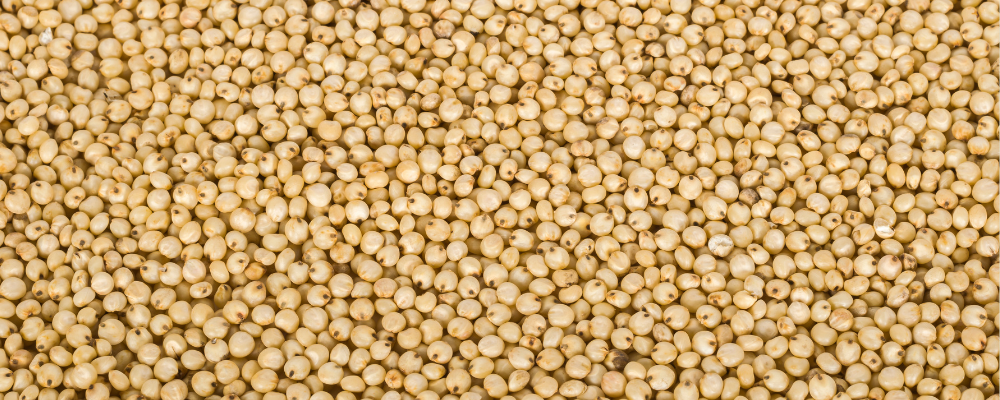
The word Millet refers to several small-grain cereals. This entry uses Common Millet, Panicum miliaceum L., an annual Poaceae with a branched panicle, as its reference. The distinction matters because Bird Millet, Pearl Millet, and foxtails belong to other species.
Its historical magic can be read in the counted, transportable seed transformed into food. It serves workings of storage, endurance, and fair distribution. The proposed gesture remains graphic: no grain is scattered outdoors, given to animals, or burned.
One Name for Several Small-Grain Cereals
Panicum miliaceum develops upright stems, long leaves, and a loose panicle whose branches bear small spikelets. When ripe, the grains may be white, yellow, red, or brown, depending on the cultivated forms.
Kew accepts the species while indicating a native range that is difficult to establish after a long history of cultivation. Kew, Panicum miliaceum.
The panicle does not gather the grains into a compact ear. It distributes them along slender branches. This form offers an image of distributed resources: each share remains connected to a common structure.
Its small size invites counting. In a magical reading, counting does not seek to control chance; number makes it possible to know what exists, what is missing, and what can be shared.
Lajia Noodles and the Memory of Grain
At Lajia, in northwestern China, an overturned bowl preserved noodles beneath layers of sediment. Their dough had been made from common Millet and foxtail Millet.
The study published in Nature in 2005 dates them to approximately 4,000 years ago. Nature, Millet noodles discovered at Lajia.
The grain has disappeared as a visible form, but the preparation retains its signature. Its mystery comes from this transformation: grinding, mixing, kneading, and stretching make the Millet unrecognizable without erasing its origin.
The magic of continuity can take up this idea. A resource changes form over the course of a project, then remains traceable through the record of its transformations.
A reserve becomes history when each transformation preserves the trace of its origin.
A cereal carried across Eurasia
Archaeobotanical data place the domestication of common Millet in northeastern China before its spread westward. Its short growing cycle facilitated its adoption in diverse agricultural environments.
A 2020 synthesis traces its presence in Europe during the 2nd millennium BCE. Scientific Reports, the spread of common Millet across Eurasia.
The grain thus becomes a material of travel. It travels with cultivation practices, calendars, tools, and recipes. The circulation carries collective knowledge rather than an isolated talisman.
For the grimoire, this story associates Millet with passage between places and the ability to begin a short cycle again. The correspondence remains earthly, agricultural, and measurable.
The measured bread in Ezekiel’s sign
Ezekiel is ordered to gather wheat, barley, beans, lentils, Millet, and spelt in a container. The bread is weighed, the water is measured, and the prophet performs a sign of siege and exile.
The passage describes a ration under constraint, not a prosperity recipe. Ezekiel 4:9–17, siege bread and ration.
Millet enters a mixture in which no single seed is sufficient on its own. Its symbolic value comes from assembly, limitation, and the time imposed on the act.
This text presents a serious magic of preparation. Measuring makes it possible to face a lean period without invoking deprivation or reproducing it as a spectacle.
Establishing a reserve record
Draw a panicle divided into twelve branches. Each branch represents a week or a stage. At its tip, write the necessary resource: time, money, food, help, or rest.
Assign each resource a real quantity. Then note its source and the person responsible for tracking it. An empty box becomes a question to address, not an omen.
At the base of the panicle, draw a bowl. Place in it the resources shared among several stages. Indicate the rule that prevents a single stage from emptying the common reserve.
Review the record before each departure. Cross out what has been used, carry over the remainder, and date every change. Magic lies in continuity made visible.
Historical correspondences
| Reference | Correspondence |
|---|---|
| Reference species | Panicum miliaceum L. |
| Family | Poaceae |
| Form | Small grains borne on a branched panicle |
| Sources | Lajia, Eurasian spread, and Ezekiel 4 |
| Magical domains | Reserve, measurement, route, endurance, and sharing |
| Safe form | Drawn panicle and record |