


Mint advances underground before appearing farther away in the garden. Its scent emerges when it is crushed and gives cold an almost immediate sensation. Greek texts lead it toward Minthe, a nymph of the underworld, and toward Demeter’s beverage. In the 17th century, Culpeper placed spearmint under Venus. Between memory, desire, hospitality, and return, each story nevertheless calls for a specific species.
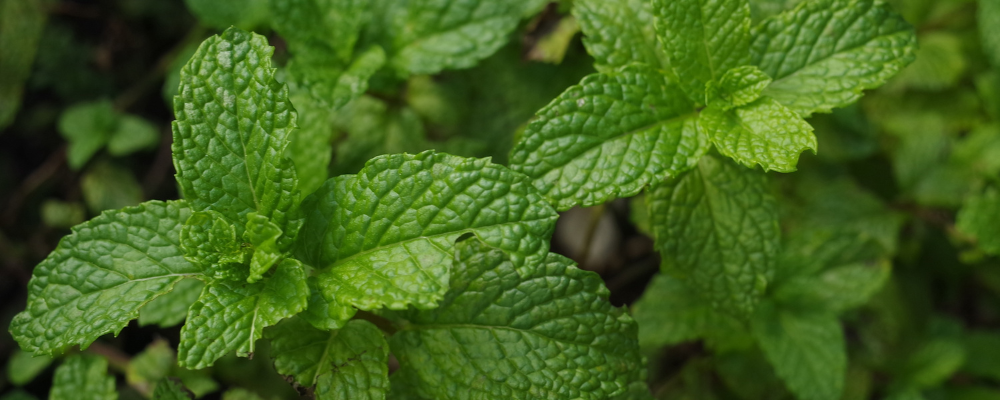
Here, the plant material is peppermint, Mentha × piperita L., a hybrid of water mint and spearmint. The word “mint,” however, covers a genus rich in species and hybrids. Culpeper’s spearmint, the pennyroyal in the Eleusinian beverage, and the peppermint in today’s sachet are not interchangeable.
This plurality calls for a clear line. Scent brings the mints together, then botany separates them. Magic becomes a practice of discernment: recognizing the name, the story, and the action before bringing their meanings together.
A family of scents to distinguish
Mints belong to the Lamiaceae family. They have square stems, opposite leaves, and two-lipped flowers. Their underground or trailing stems allow them to spread quickly through a cool, damp area.
Peppermint, Mentha × piperita, is a cultivated hybrid. Spearmint, Mentha spicata, has lanceolate leaves and flowering spikes. Kew places the latter’s native range from Europe to China. Kew, Mentha spicata.
Menthol activates receptors sensitive to cold. The cool sensation therefore does not mean that the plant actually lowers the temperature. This difference between perception and measurement offers a first magical lesson: an impression can be powerful without describing the entire phenomenon.
The underground growth adds the idea of return. A cut stem can reappear elsewhere from the rhizome. Mint then represents an idea that finds a new passage and a memory that returns by a hidden route.
Minthe at the edge of the underworld
In Strabo’s Geography, a mountain in Elis bears the name Minthe. The associated story presents the nymph as Hades’ lover, trampled by Persephone and then transformed into fragrant mint. Oppian recounts the transformation with Demeter as the force of anger.
Ovid summarizes the metamorphosis again in Book 10 of the Metamorphoses. The versions therefore do not recount exactly the same scene, but they preserve the link between the nymph, the trampled ground, the fragrance, and the realm of Hades. Greek and Roman sources on Minthe.
The bruising becomes the focal point of the mystery here. The foot destroys the nymph’s form, while the scent spreads. Her presence changes mode: it leaves the visible body and enters the air.
What is trampled answers with fragrance. Mint transforms erasure into a perceptible trace and returns an elusive memory to the place.
Demeter, the kykeon, and Pennyroyal
In the Homeric Hymn to Demeter, the goddess refuses red wine and asks for a drink made of water, barley flour, and glechon. The latter plant corresponds to pennyroyal, Mentha pulegium.
Demeter accepts this kykeon from Metaneira before revealing her divinity and establishing the Eleusinian narrative. The drink marks the passage between the fasting of grief, human welcome, and a return to divine action. Homeric Hymn to Demeter.
Pennyroyal must never be mentally replaced with “any mint.” Its oil is highly toxic. The source’s value lies in the ritual composition of the ancient drink, not in a recipe to reproduce.
The kykeon gives Mint a liminal place. It accompanies a refusal, a stated request, received hospitality, and a return. A contemporary practice can retain this sequence with water drawn and a spoken phrase, without ingestion.
Venus in Culpeper’s garden
Culpeper devotes his main entry to spearmint. He notes its growth through roots and its tenacious establishment in gardens. In his astrological system, this Mint belongs to Venus.
The chapter links the plant to desire, the body, and several medicinal preparations. It also mentions its fragrance as support for the head and memory. Nicholas Culpeper, “Mint” entry.
Venus adds charm, connection, and pleasure to the plant’s freshness. Yet the rhizome qualifies this sweetness: a relationship can gain ground quietly. Any attraction magic therefore calls for a clear boundary and genuinely available space.
Mint is suited to words of welcome, resuming a conversation, and remembering a bond. It is not meant to force a return. Its model is that of a freshly opened door, with a threshold visible from both sides.
Refreshing words before a return
Draw three leaves connected to a horizontal stem. In the first, write what belongs to the past. In the second, note the message to convey today. In the third, write the response you will leave open.
Under the stem, draw an underground line and place in it the memory that still nourishes the situation. Name it in one factual sentence, without interpreting another person’s intentions.
Place the sealed product to the left of the page. Read the message from the second leaf, then remove the words that accuse, exaggerate, or make promises on behalf of someone else.
Send the message only if its boundary remains clear. Otherwise, fold the page and keep it for twenty-four hours. Mint thus becomes a moment of freshness between impulse and speech.
Historical correspondences
| Reference point | Correspondence |
|---|---|
| Product plant | Mentha × piperita L., Peppermint |
| Another ancient species | Mentha spicata in Culpeper |
| Kykeon species | Mentha pulegium, Pennyroyal |
| Mythical figures | Minthe, Persephone, Demeter, and Hades |
| Magical domains | Memory, welcome, desire, return, and discernment |
| Safe form | Writing, drawing, and sealed product |