


White Horehound presents a gray leaf, soft to the eye, then delivers a pronounced bitterness. In the 17th century, Nicholas Culpeper placed it under Mercury and linked it to the chest, breath, and speech. Its magic arises from this contrast between a woolly surface and a sharp taste: protecting the voice, bringing out what clutters it, and speaking a truth without softening it until it becomes unrecognizable.
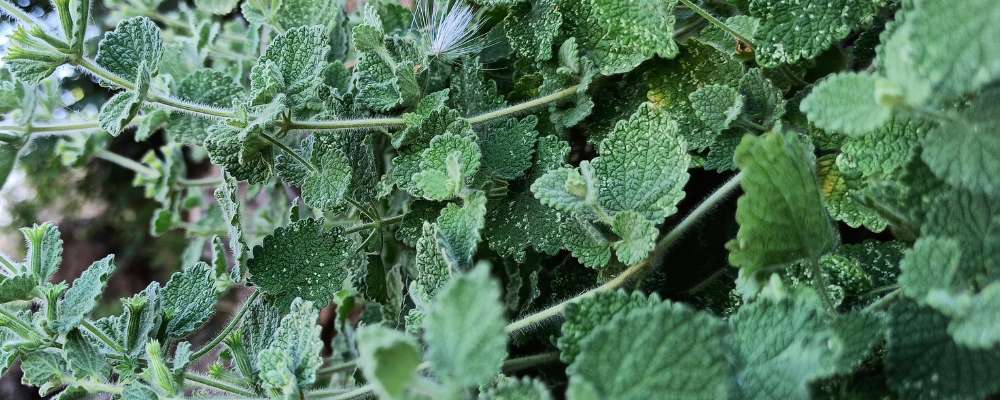
White Horehound is Marrubium vulgare L., a perennial of the Lamiaceae family. Its square stems, embossed leaves covered with pale hairs, and white flowers grouped in whorls distinguish it from Black Horehound, now classified under the name Ballota nigra.
Old herbals give it a clearer medical place than a place in grimoires. Culpeper nevertheless provides a precise magical thread with Mercury, breath, and the mouth. This thread leads toward protected speech, without turning a 17th-century medicinal recipe into a present-day promise.
A White Leaf and a Bitter Mouth
Marrubium vulgare forms clumps of upright stems. The opposite leaves are rounded, crenate, and heavily wrinkled. Dense down gives them a gray-white tone, especially on their undersides. Small flowers appear in tight rings around the stem.
Kew accepts the species and places its native range from Macaronesia and Europe to the central Himalayas, passing through the Mediterranean. The plant has also become established on other continents. Kew, Marrubium vulgare.
The down limits water loss and protects the leaf’s surface. The hardened calyces remain around the stem after flowering and can catch on things. White Horehound thus unites visual softness, resistance to dryness, and a thorny circle.
Its bitterness brings another dimension. It interrupts the automatic response of taste and makes attention immediate. In magical work, it represents the word that comfort must not dissolve.
White, the Circle, and Distinction
The qualifier “white” comes from the plant’s light-colored felt, not from the bright color of a flower. This whiteness results from a multitude of fine hairs. It forms a diffuse protection around the leaf.
The flowers form whorls at each node. After they fall, the calyx persists as a small toothed crown. The stem becomes a succession of narrow doors, as though each stage kept its own circle.
This architecture suits prepared speech. Before an announcement, each node can receive a question: what fact, which recipient, what boundary, what consequence? The voice gains clarity when its path has stages.
Black horehound is neither the same species nor the same historical entry. A nameless sachet without a Latin name cannot guarantee its identity. The name Marrubium vulgare remains the reference point for this chapter.
Mercury in Culpeper’s herbal
In The Complete Herbal, Culpeper distinguishes white horehound from black horehound and describes the former as a gray, very bitter plant that grows on dry ground and uncultivated places.
He places it under Mercury. His chapter focuses on the chest, breath, secretions, and several apothecary preparations. Nicholas Culpeper, entry “Horehound”.
Mercury governs passages and exchanges here. Breath passes through, speech emerges, and the message reaches its recipient. Bitterness prevents language from becoming too flattering. The down preserves the speaking organ’s fragility.
Horehound’s voice passes through a soft leaf and a severe flavor. It protects the utterance without taking away the sentence’s force.
Clearing the voice and keeping the boundary
Horehound magic concerns, first of all, what must pass through the mouth. A confused request, a delayed truth, or an overly long answer loses its direction. The plant invites you to remove the excess before speaking.
Its floral circle offers a form of protection. The central sentence remains surrounded by conditions that prevent dispersion: place, time, person present, and exact subject. This protection does not close the dialogue; it gives it an edge.
Bitterness represents the cost of clarity. Saying no, announcing an end, or acknowledging a mistake can leave a difficult taste. Horehound does not promise to make the moment pleasant. It helps keep the sentence whole.
Mercury adds mobility. After speech comes circulation: leaving a response, transmitting information, or reformulating an agreement. A statement without follow-up remains suspended. The practice must therefore include the act that follows the voice.
Preparing a complete statement
Draw a stem with four knots. In the center of each knot, write one word: fact, request, boundary, next step. Under the drawing, formulate a short sentence for each of these four reference points.
Circle the “boundary” knot with a toothed circle. Write outside what you will not discuss during the exchange. Write inside the point on which negotiation remains possible.
Place the closed product to the left of the page. Read the four sentences in order, without adding any explanation. Correct only the words that create ambiguity.
After the conversation, write down the response received near the fourth knot. The work ends when the sequence becomes a dated action, a specific agreement, or a clearly stated separation.
Historical correspondences
| Reference | Correspondence |
|---|---|
| Botanical name | Marrubium vulgare L. |
| Family | Lamiaceae |
| Reference form | Woolly leaf and persistent whorls |
| Ancient source | Nicholas Culpeper's The Complete Herbal, 17th century |
| Magical domains | Voice, truth, boundary, passage, and response |
| Safe form | Written preparation and closed product |