





















































































































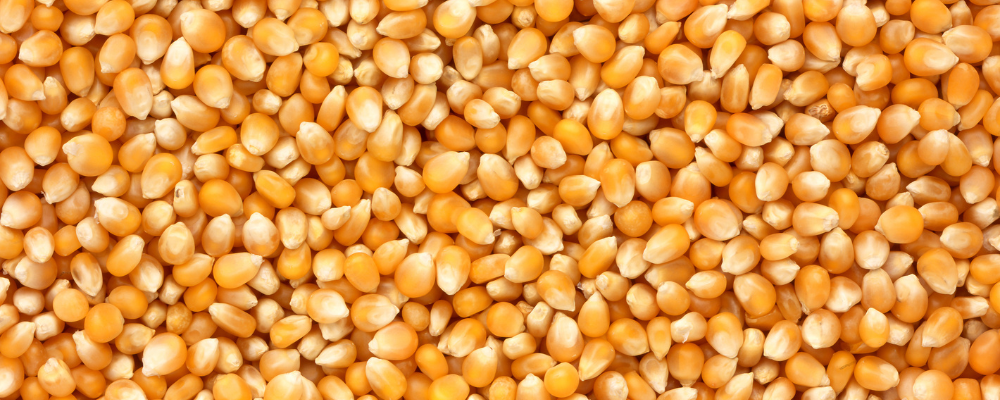
Maize carries several worlds on a single ear. Each kernel retains its color, but all share the cob and the husks that envelop them. In the Popol Vuh, the flesh of the first humans is kneaded with yellow and white Maize. In the Andes, the kernel becomes food, drink, and offering. Its magic speaks of collective birth, a debt to the earth, and organized abundance.
Maize is Zea mays L., a tall grass domesticated from plants in Mexico. It depends closely on the people who sow, select, and harvest it. The cultivated ear retains its kernels: without human intervention, their dispersal remains very limited.
This plant does not have a universal sacred meaning. Maya narratives and Andean practices belong to specific peoples, languages, and calendars. Their meeting invites a practice of personal writing, without copying an Indigenous offering, prayer, or ceremony.
A Plant Shaped with Humans
Zea mays belongs to the Poaceae family. Its solid stem bears long leaves. The male flowers form the panicle at the top, while the female flowers produce the ears on the sides. Each silk corresponds to an ovule; after fertilization, it becomes a kernel.
Kew places the native range of Maize from central and southwestern Mexico to western Guatemala. The cultivated species is the result of a history of selection that began several millennia ago from teosintes. Kew, Zea mays.
The ear condenses a relationship between unity and plurality. The kernels line up around an axis and ripen beneath several layers of vegetation. The silk receives pollen, the husks protect, and the cob holds everything together until harvest.
This reciprocal dependence underlies a demanding magic. Maize nourishes humans, but its continuity requires seed, field, water, selection, and sharing. Abundance appears as a shared work, never as an arrival without labor.
The Maize Humans of the Popol Vuh
The Popol Vuh, the book of the K’iche’ Maya people, recounts several attempts to create humans. The beings made of mud fall apart, those made of wood live without the right memory of their creators, and then a new creation is made from food.
From yellow Maize and white Maize came the flesh, muscles, and strength of the first humans. Xmucané ground the grains and prepared nine drinks. The text therefore unites creation, grinding, number, and nourishment. Translation of the Popol Vuh by Goetz and Morley.
The National Museum of the American Indian also presents Maize as sacred matter connecting the Maya to their ancestors and to the story of their origin. NMAI, Maya creation story.
Flesh comes from a prepared grain. Human creation passes through harvesting, grinding, water, and the hand that transforms food.
Mamasara and Andean offerings
In the Inka world, Maize was used in food, Maize beer, and offerings. The Qhapaq Ñan network connected ecological regions through which grains, textiles, objects, and people circulated.
The National Museum of the American Indian presents a white variety called Mamasara and recalls the high status of Maize in the Inka empire. The grain was used in meals, ceremonial drinks, and gifts to the powers of the world. NMAI, Maize in the Inka universe.
The name Mamasara connects the plant to a maternal figure. It does not turn every ear sold today into a consecrated object. It recalls that food can carry kinship, obligation, and a respect that go beyond its market value.
The most fitting magical correspondence concerns reciprocity. Before asking for a harvest, name the resources already received. After a success, determine what will be given back: time, money, food, knowledge-sharing, or assistance.
The ear, the tassel, and the husk
Maize offers several materials in a single harvest. The kernels carry the colors and nourishment. The cob preserves their arrangement after threshing. The husks envelop them, then become fibers for woven objects. The silks connect the flower to the future kernel.
Each part conveys a magical verb. The grain gathers, the cob arranges, the husk protects, and the silk receives. Together, they make it possible to envision a community in which cohesion does not erase differences.
Corn-leaf dolls and other braided forms belong to several cultural histories. A personal practice benefits from remaining abstract: a cob diagram is enough to work with everyone’s place without reproducing a ceremonial object.
Color calls for the same restraint. White, yellow, red, blue, and black exist in real varieties. Their meaning depends on the story or ritual in which they are used. A palette does not become a universal system through mere commercial repetition.
Composing a cob of reciprocity
Draw a vertical cob and twelve kernels arranged in four rows. In the first row, write the names of the people who made your project possible. In the second, list the materials, places, and knowledge you received.
In the third row, note the work you actually provided. In the fourth, indicate what you will give back after the harvest. Each box calls for a specific action and a date.
Then draw three spathes around the cob. Name them “boundary,” “reserve,” and “transmission.” This covering protects the project from depletion and sets aside a portion for what comes next.
Keep the drawing until you complete an act of reciprocity. Then take a kernel from the fourth row, color it, and write on the back of the page what this gift made possible.
Historical correspondences
| Reference | Correspondence |
|---|---|
| Botanical name | Zea mays L. |
| Family | Poaceae |
| Central narrative | Creation of humans in the Popol Vuh |
| Andean framework | Food, drink, and offering in the Inka world |
| Magical domains | Creation, community, reciprocity, and harvest |
| Safe form | Drawing of the cob, remembering those who helped, and an act of reciprocity |