


Black henbane belongs among the plants that old texts surround with tombs, quarrels, and dread. Pliny called it a plant of ill omen; wreaths were said to have been placed on the dead; the witches of playwrights mixed it into their preparations. Behind these images lies a poison capable of causing confusion, hallucinations, and delirium.
Its Latin names already tell of the danger. Insana suggests loss of reason and stupor. Alterculum refers to the disputes attributed to those who had absorbed it. Astrologers placed it under Saturn, the planet of boundaries, solitude, old age, and death.
Henbane calls for a different rule from ordinary protective plants. Its ritual place remains that of an image or a specimen sealed by a professional. It is not burned, chewed, or carried loose in a sachet. Safety is part of its meaning: recognizing a boundary that must not be crossed.
The sticky plant of disturbed ground
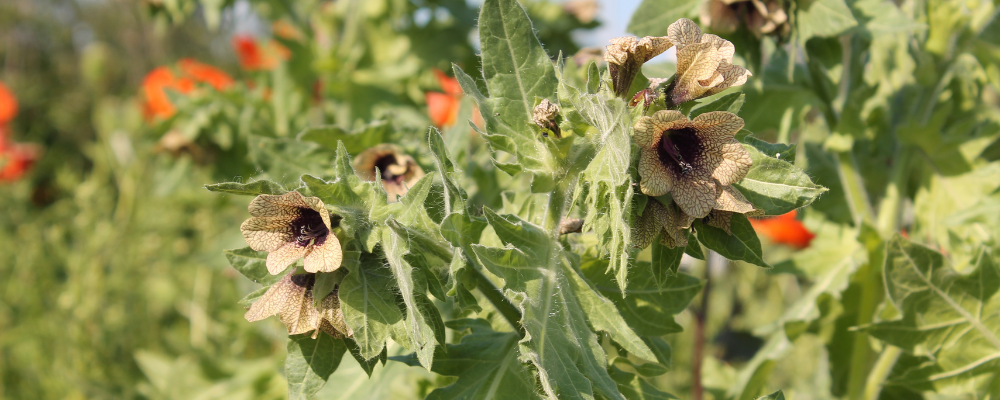
Black henbane, Hyoscyamus niger L., belongs to the Solanaceae family, like belladonna and datura. This annual or biennial plant bears soft, hairy, sticky leaves. Its yellowish flowers are marked with purple veins around a dark throat. The fruits take the form of capsules enclosed in a persistent calyx.
Kew places its native range from the Mediterranean to Western and Central Asia. The plant grows in open ground, rubble, and disturbed soils. Its strong smell and glandular appearance alone do not allow for safe identification. Kew, Hyoscyamus niger.
The seeds, leaves, and roots contain tropane alkaloids. The amount present varies according to the plant part, growth stage, and conditions. A small quantity may be enough to cause a medical emergency. The actual plant must therefore not be circulated as a decorative accessory.
Funeral feasts and wreaths for the dead
Folkard reports that Pliny described black henbane as a plant of ill omen, used at funeral feasts and scattered over graves. Plutarch is cited regarding wreaths placed on the dead and funeral ornaments made with the plant. Richard Folkard, Plant Lore, Legends, and Lyrics, “Henbane”.
The crown also appears in certain representations of Hercules and is said, in another context, to have been used for Olympic victors. These contradictory uses link Henbane to the extreme passage: death, victory, surpassing human strength, and an impossible return to the previous state.
In memory work, this history does not call for offering the plant to the deceased. An image of the closed capsule is enough to represent the sealing of the tomb. Henbane teaches that not every passage needs to be reopened.
The Plant of Saturn
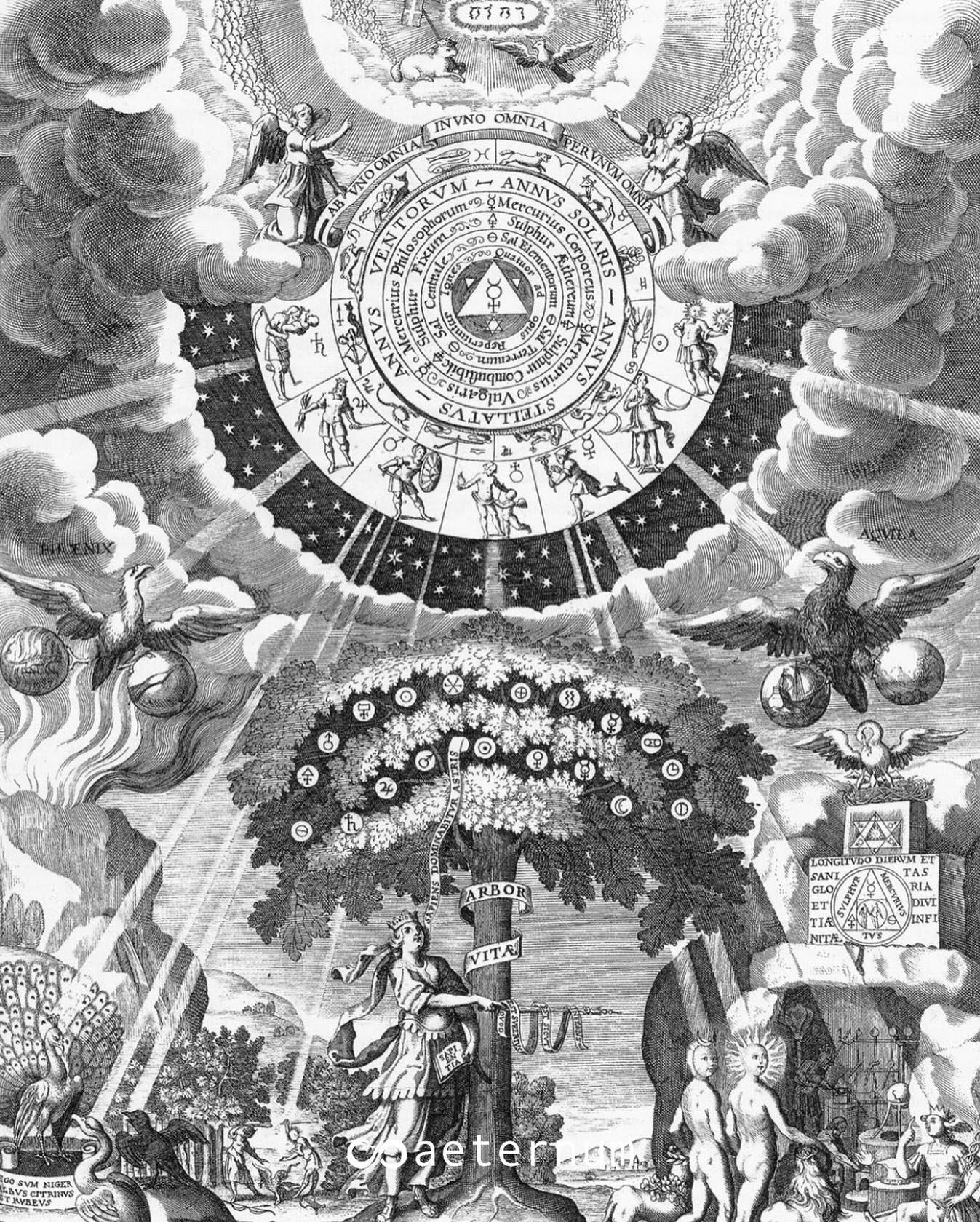
The astrologers cited by Folkard place Henbane under Saturn. The planet suits its murky color, repulsive odor, abandoned places where it grows, and funerary stories. Saturn governs what stops, separates, confines, and recalls mortality.
Another attribution, reported as belonging to Albert the Great, made it a herb of Jupiter in a medical context. European magic therefore offers no perfectly stable system. For ritual uses, however, the Saturnian association dominates accounts of tombs, dangerous sleep, stupor, and witchcraft.
The seal before the threshold. The Saturnian lesson of Henbane is not to open consciousness. It is to seal the container, mark the boundary, and leave untouched what endangers life.
Witches’ Potions and Deceptive Smoke
Ben Jonson places Henbane near Hemlock among the plants gathered for witches’ operations. Its reputation stems from neurotoxic effects that can produce agitation, visions, disorientation, and memory loss. Tales of nocturnal flight and transformation should not obscure the mechanism of the poison.
Folkard also preserves the story of charlatans who burned the seeds beneath the mouths of people suffering from toothache. They claimed that small “worms” were coming out of the tooth, when in fact fragments had been placed in water to deceive the patient. The passage brings together toxic smoke, pain, and visual manipulation.
Fumigation is therefore ruled out. Vapors and particles can expose the operator and anyone present. Henbane is not a tool for respiratory divination; it is a subject of historical study whose real danger explains part of the terror surrounding it.
Working with Henbane’s limit
Use a botanical reproduction, never loose plant material. Place the image in a black frame and write on the back the limit that must not be crossed. Keep the frame closed throughout the work. This practice gives visible form to the Saturnian prohibition.
To close a period, draw a Henbane capsule with its lid. Write inside what must remain finished, then fold a second sheet of paper over the drawing and seal its four sides. Store it out of the way until the date set for its destruction.
On a Saturday, during Saturn’s hour in planetary calendars, the image may accompany an examination of responsibilities: what belongs to you, what concerns others, and what you refuse to handle. The rite ends with handwashing, even if only a reproduction was used: the gesture inscribes caution into the ceremony.
Historical correspondences
| Reference | Correspondence |
|---|---|
| Botanical name | Hyoscyamus niger L. |
| Historical names | Insana ; Alterculum |
| Planet | Saturn among the astrologers cited by Folkard |
| Frameworks | Tombs, funeral meals, crowns of the dead, witchcraft literature |
| Magical domains | Closure, prohibition, death, limit, responsibility, refusal of intrusion |
| Authorized form | Botanical image or facsimile; no loose plant material, no burning |