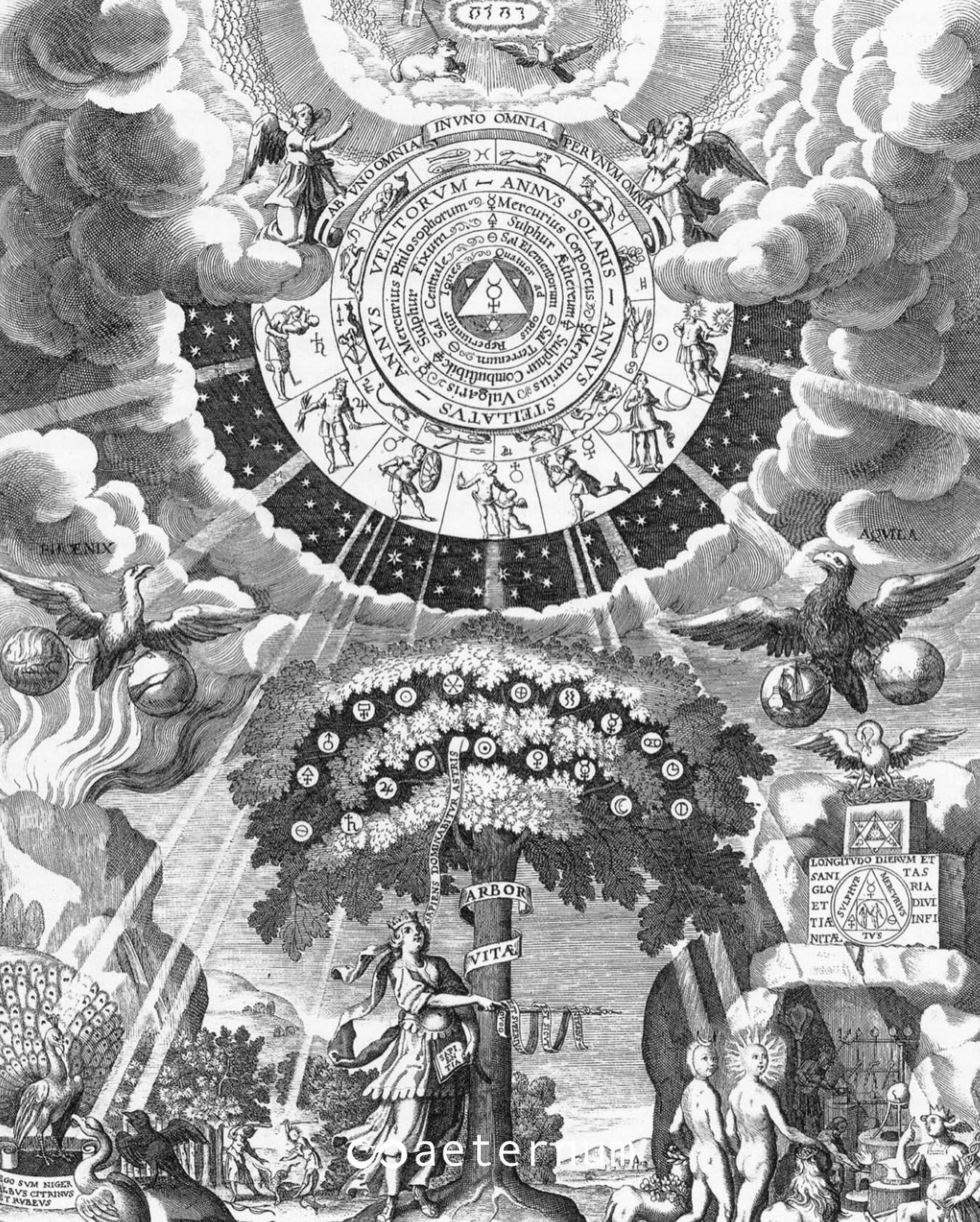
The Ash connects the worlds without escaping bites. In the Eddic poems, Yggdrasil raises its branches above the world, nourishes beings, and suffers beneath the teeth of the stag, serpents, and dragon. Culpeper places the Ash under the Sun. Its magic is therefore not that of an immobile and invulnerable tree: it belongs to a living axis, maintained every day despite wear.
The botanical profile concerns Fraxinus excelsior L., the European Common Ash. Old Norse names Yggdrasil an askr, a word meaning ash. However, the exact identity of a mythical tree cannot be reduced to a modern specimen: the story uses the name of the Ash to construct a world.
The sources provide three solid lines: Yggdrasil as a cosmic tree, Culpeper’s solar Ash, and the use of flexible wood for handles, spears, and objects subjected to impacts. The proposed practice works with the axis, responsibilities, and upkeep, without cutting a branch.
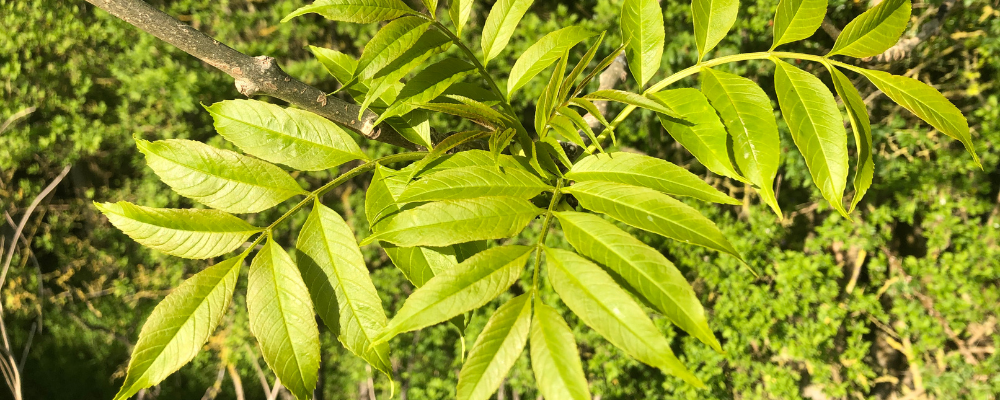
Identifying Fraxinus excelsior
Fraxinus excelsior belongs to the Oleaceae family. The tree has highly visible black buds, opposite compound leaves made up of toothed leaflets, and winged fruits called samaras. The trunk becomes gray and fissured with age.
Kew places its native range from Europe to Iran. Kew, Fraxinus excelsior.
The Ash can grow very tall and develop a high crown. Its light-colored wood withstands impacts well while remaining elastic, a quality sought for tool handles, bows, and parts that must bend without breaking.
This union of height and flexibility supports its magical interpretation. The axis does not derive its value from absolute rigidity: it receives tensions, transmits force, and holds together several levels of the same work.
Yggdrasil, the World Ash
In the Völuspá, the seer knows of an ash tree named Yggdrasil, a tall tree watered by a white substance, ever green near Urðr’s well. Three women establish the laws there and grant life to humans.
The Grímnismál describes three roots, the eagle at the top, the serpent or dragon below, the deer that grazes, and the squirrel Ratatosk that carries words between the heights and the depths. Grímnismál, stanzas 31 to 35.
Yggdrasil is not a peaceful backdrop. Its trunk rots on one side, Níðhöggr gnaws at its roots, and the animals bite its shoots. The tree endures because powers tend to it, especially the Norns who water it.
The world tree survives through care, not through the absence of injury. Its greatness contains decay, messages, judgment, and renewed water.
Odin Suspended and the Runes
In the Hávamál, Odin recounts that he remained suspended for nine nights from a wind-battered tree, wounded by a spear and offered to himself. He leaned down, grasped the runes, and fell. The poem does not directly name Yggdrasil in the stanza, but interpretive tradition connects the tree to the cosmic axis.
The passage presents knowledge as a trial, a sacrifice, and a taking. Runes do not fall like a light reward. The account warns against the idea that all knowledge can be obtained without transforming the seeker.
The magic of the Ash accompanies demanding study, commitment, and the engraved word. It does not ask one to imitate suspension or injury. The symbolic structure is enough: remain with a question, accept time, and grasp a sign only when it becomes legible.
Yggdrasil connects this individual quest to an inhabited world. Every rune gained enters a network of laws, relationships, and consequences. The axis does not separate the initiate from the collective: it places their knowledge among other beings.
The Ash Governed by the Sun
Culpeper places the Ash under the governance of the Sun. His 17th-century herbal associates leaves, bark, and samaras with remedies for poisons, water retention, and other ailments. Nicholas Culpeper, “Ash Tree”.
The Sun brings centrality, visibility, and authority. This correspondence meets Yggdrasil without merging the traditions: the Norse poem constructs a cosmic tree, while the English herbal assigns a planet to a known species.
The book’s medical indications are not a current protocol. Their magical significance lies in the solar position and in the image of a tree opposed to poisons. Protection then takes the form of a clear axis around which decisions are organized.
The sheet retains a maintained authority. The solar Ash illuminates a center, while Yggdrasil shows the bites that reach it. Governing requires seeing the tensions and providing the roots with the necessary water.
Caring for the axis and its three roots
Draw a trunk and three roots. Give each root a concrete domain: body, home, work; or past, present, future. Write beneath each one what nourishes it and what gnaws at it.
At the top, place a solar decision, worded in one readable sentence. Between the crown and the roots, draw a messenger squirrel and note the information that must circulate to prevent a rupture.
Choose a manageable care task for each root and give it a date. Place the closed sachet at the foot of the drawing until the final action. The rite echoes the care of Yggdrasil and Culpeper’s Sun without pruning, ingestion, or fire.
Historical correspondences
| Reference point | Correspondence |
|---|---|
| Botanical name | Fraxinus excelsior L. |
| Eddic tree | Yggdrasil, called askr in Old Norse |
| Figures | Norns, Odin, Níðhöggr, and Ratatosk |
| Astrological source | Sun according to Nicholas Culpeper |
| Magical areas | Axis, study, authority, and care |
| Safe form | Three-rooted tree and sealed product |