


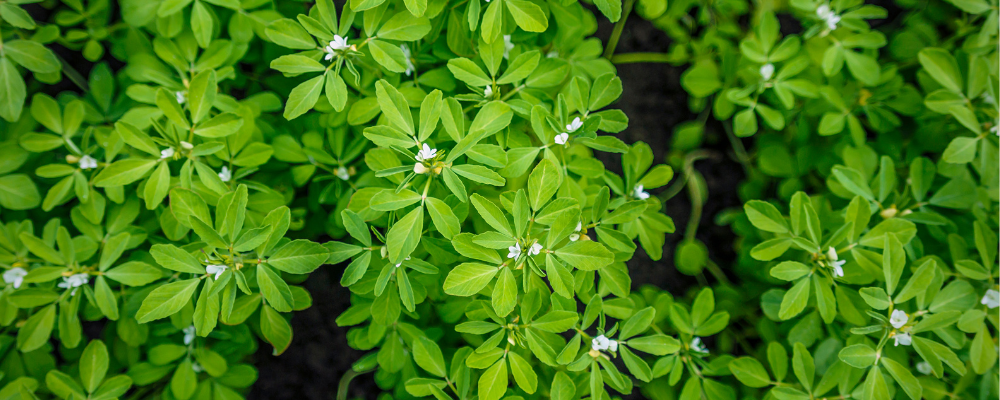
At Rosh Hashanah, Fenugreek becomes a sign spoken aloud before becoming a material used. The Aramaic name rubya invokes the idea of increase: the seeds placed on the table accompany a request for increased merits and blessings in the coming year. This custom gives Fenugreek a precise historical magic, grounded in language, liturgical memory, and the responsibility to transform a wish into conduct.
Fenugreek is Trigonella foenum-graecum L., a small annual Fabaceae whose elongated pods contain angular, yellow-brown seeds. Its Latin name evokes “Greek hay,” while its powerful fragrance recalls maple syrup after drying.
Its clearest symbolic use is found in the simanim, sign-foods of the Jewish New Year. The seed does not act as an autonomous talisman: its name supports a request, and the person then responds through their actions. The proposed practice preserves this alliance between words, measure, and commitment, without ritual ingestion, fumigation, or promises of wealth.
A pod filled with seeds
Trigonella foenum-graecum is an annual herb with leaves divided into three leaflets. Its pale flowers produce narrow, beaked pods containing a series of hard, irregular seeds.
Kew accepts the species and places its native range from Iraq to northern Pakistan. The plant later spread to vast regions through cultivation. Kew, Trigonella foenum-graecum.
Each pod gathers several separate seeds held by the same shell. This structure suits a practice of increase that does not rely on blind accumulation: each unit is given a purpose while remaining connected to the whole.
The dry seed retains a persistent smell. It reminds us that a commitment leaves a perceptible trace. In this entry, the enclosed material remains a visual reference; the magical work takes place on the page.
Fenugreek among the signs of the New Year
The Talmud transmits a series of plants and foods to see or eat at the beginning of the year. This practice nourished the simanim of Rosh Hashanah, in which the name of the food becomes the vehicle for a request.
The Orthodox Union presents Fenugreek under the Aramaic name rubya. The root of the word evokes increase, accompanying the request for an increase in merits and in the people. Orthodox Union, symbolic foods of Rosh Hashanah.
The sign is based on a play on words transmitted within a religious framework. A seed isolated from prayer, the meal, and the calendar does not carry the same meaning. The correspondence belongs to a situated action.
The name opens the request; the act gives it a continuation. Fenugreek connects the desired increase with the conduct that will make it worthy.
From Sign to Measurable Commitment
In a meal of symbols, the substance makes a word memorable. The small seed and its name condense a request short enough to remember, repeat, and share.
Tradition does not turn Fenugreek into a machine for producing money. The increase concerns merits, good deeds, and collective continuity. This orientation shifts the focus from possession to responsibility.
A faithful magical reading therefore addresses three questions: what must grow, who will benefit from it, and what action will prove this growth? An answer without a beneficiary or criterion remains a wish without substance.
The angular seed suits this discipline. Each face can receive a commitment: giving, repairing, learning, or passing on. The sum takes on meaning when these faces build a coherent year.
The Pod as a Growth Register
A pod aligns its seeds within a limited space. It provides an image of orderly growth: the number increases, but the casing retains its shape and prevents dispersion.
This correspondence serves the work of shared budgeting, learning, service, and transmission. Growth is given a limit, a deadline, and a witness. It can thus be observed rather than merely invoked.
Fenugreek also becomes a plant of beginnings. The calendar sets a point of resumption at which previous commitments are reviewed and what deserves more space is chosen.
The mystery lies in the transition from homophony to conduct. A word brings the seed closer to a request; the person must then build the connection through their decisions.
Composing an Increase Pod
Draw a long pod divided into seven compartments. In the first, write what deserves to grow. In the last, write the concrete benefit expected for a person or group.
Fill the five central compartments with five brief actions. Give each action a date, quantity, or visible result. Replace any abstract promise with an achievable step.
Above the pod, write the word “increase.” Below it, note the limit that will prevent growth from harming something else: time, money, rest, or consent.
Read over the page at the beginning of each month. Color in one compartment when the action is completed and leave the others open. At the end of the cycle, keep the pod with the project log.
Historical correspondences
| Reference | Correspondence |
|---|---|
| Botanical name | Trigonella foenum-graecum L. |
| Family | Fabaceae |
| Form | Elongated pod containing angular seeds |
| Ritual framework | Fenugreek rubya among the simanim of Rosh Hashanah |
| Magical domains | Growth, merit, commitment, and beginning |
| Safe form | Pod drawn with seven compartments |