
























































































































Fennel carries fire in its stem. Hesiod recounts that Prometheus hid the flame he stole from the gods inside it, because the dry pith could preserve an ember beneath an intact outer covering. Herbals also credit it with the power to restore sight to snakes, and Culpeper places it under Mercury in Virgo. Between hidden flame, renewed sight, and hollow stem, its magic works through discreet transmission.
The culinary plant is Foeniculum vulgare Mill., a Mediterranean Apiaceae species naturalized in many regions. The giant fennel of the Greek story is more likely Ferula communis, called narthêx. The two plants belong to the same family, but they are not the same species.
The distinction does not diminish the story; it reveals its mechanism. A tall stem with dry pith carries an ember without showing a torch. Common fennel connects with this story through its name and family, while the Greek source preserves narthêx as Prometheus’s plant.
Identifying Foeniculum vulgare
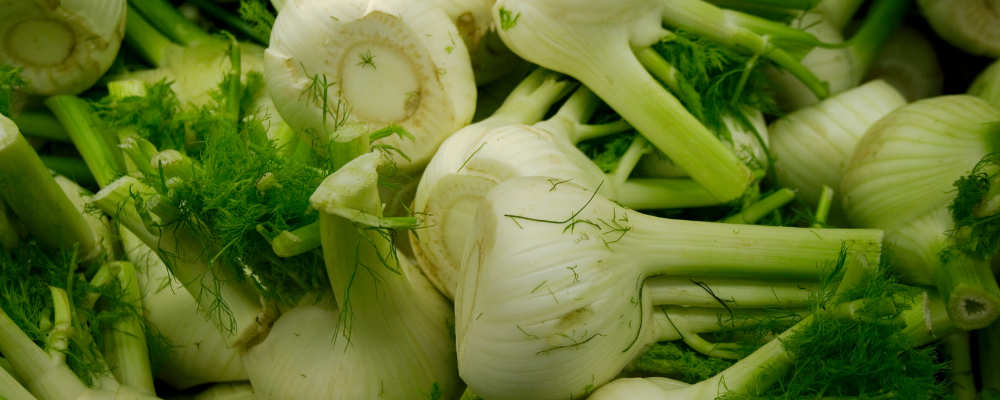
Foeniculum vulgare belongs to the Apiaceae family. The aromatic perennial can reach two metres. Its leaves are divided into threadlike segments, its ridged stems become hollow, and its small yellow flowers form large umbels without prominent bracts.
Kew places its native range from the Mediterranean to Ethiopia and as far as western Nepal. Kew, Foeniculum vulgare.
The “Fennel seeds” sold commercially are actually dried fruits. Sweet fennel, bitter fennel, and Florence fennel are different selections. The edible bulb is a swollen leaf base, not an underground bulb.
The stalk connects an inner void with upright structure. It becomes a channel, sheath, and memory of a passage. This morphology suits workings involving messages, a guarded flame, and knowledge carried without premature exposure.
Prometheus and the Hidden Flame
In the Theogony, Hesiod recounts that Prometheus stole fire and hid it in a hollow stalk of narthêx. Zeus then saw the flame among humans and prepared his revenge. Hesiod, Theogony.
The narthêx is identified with giant fennel, Ferula communis. Its dry pith can burn slowly beneath bark that remains flexible. The mythical detail thus corresponds to a practical technique for transporting embers.
The stolen fire is not merely an emblem of warmth. It brings cooking and the arts to humans, but also provokes Zeus’s response. The knowledge received has a price, a responsibility, and a moment of revelation.
The stalk does not produce the fire: it keeps it alive during the journey. Fennel becomes the instrument of a transmission that changes the human condition.
The serpent that renews its sight
Authors of antiquity and later European herbals passed on the idea that the serpent eats Fennel or rubs against it to sharpen its sight after shedding. The story brings together a slender plant, a change of skin, and the return of vision.
This image belongs to premodern natural history. It is not an eye treatment. Its magical power comes from the link between shedding and vision: seeing differently after leaving behind an envelope that has become too narrow.
Prometheus’s hollow stalk keeps a glow inside; the serpent regains clarity after an outer change. The two stories form a single axis of discernment: protecting a spark until the moment when the eye can receive it.
Fennel thus accompanies study, the reconsideration of a decision, and emergence from confusion. It reminds us that clarity does not arrive through proclamation: it requires a shedding, a path, and renewed attention.
Mercury in Virgo according to Culpeper
In the 17th century, Culpeper places Fennel under Mercury in the sign of Virgo. He also explains the custom of cooking it with fish through an astrological opposition to Pisces. Nicholas Culpeper, “Fennel”.
Mercury governs transport, language, and analysis here. Virgo brings sorting, method, and precision. This card connects with the messenger stalk and the reputation for visual clarity without relying on a recent correspondence.
The medical uses described for the eyes, digestion, or other disorders belong to the practices of its time. Pouring plant juice into the eye would be dangerous. The source should be read as an astrological herbal guide, not as a prescription.
Fennel thus brings together a Greek myth and a later English medical system. Neither proves the other: they offer two distinct stories of transport and discernment.
Carrying a spark without exposing it
Draw a long hollow stem between two circles. In the first, write the knowledge or project that is still fragile. In the second, name the person, place, or date capable of receiving it.
Inside the stem, draw seven small lines like an advancing ember. Associate each line with a preparation step: check, learn, test, correct, protect, transmit, respond.
Place the sealed sachet near the first circle. Move it to the second only when the seven steps each have a date. The work draws on Prometheus and Mercury without real fire, fumigation, ingestion, or contact with the eyes.
Historical correspondences
| Reference point | Correspondence |
|---|---|
| Botanical name | Foeniculum vulgare Mill. |
| Plant from the Greek story | Ferula communis, giant Fennel |
| Figure | Prometheus carrying fire |
| Astrological source | Mercury in Virgo according to Culpeper |
| Magical domains | Transmission, clarity, study, and passage |
| Safe form | Seven-step card and sealed sachet |