























































































































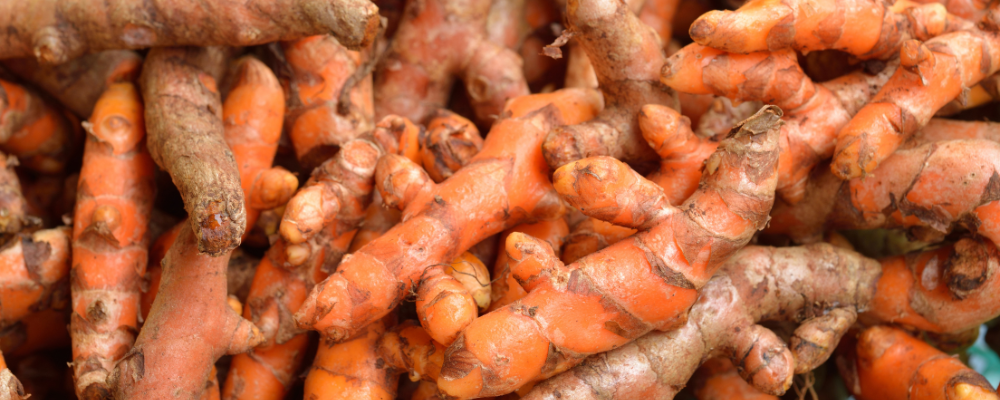
Turmeric colors fingers, fabrics, and thresholds yellow, and the color does not fade easily. Its rhizome nourishes, dyes, and accompanies wedding rites in several regions of India. Its magical presence comes from specific social acts: anointing, blessing, marking the transition, and making entry into a new state visible.
The plant is Curcuma longa L., a member of the Zingiberaceae family. It reproduces through its underground rhizomes and does not produce fertile seeds. The yellow powder comes from these underground stems, which are boiled, dried, and then ground, rather than from a root in the strict botanical sense.
Turmeric belongs to the cuisines, medicines, and religions of South Asia, which cannot be reduced to a Western correspondence. The entry places the haldi ceremony and auspicious color at its center, then proposes a written practice that copies neither a prayer, nor bodily anointing, nor an act reserved for a family.
A cultivated and sterile rhizome
Curcuma longa belongs to the Ginger family. The plant forms large upright leaves from a pseudostem and a network of fleshy rhizomes underground. The inflorescences bear pale bracts around small yellow flowers, but cultivated forms are sterile.
Kew describes Turmeric as a cultigen from southwestern India, known only in cultivation and propagated by division of the rhizomes. Kew, Curcuma longa.
The rhizome contains curcuminoids responsible for its yellow-orange color and an aromatic fraction. Drying, grinding, and storage transform its texture and smell. Commercial powder cannot be assessed by eye alone for species, purity, or the absence of adulterants.
Propagation without seeds offers an image of continuity through sharing. Each new plant comes from a living piece preserved and then replanted. This biology supports work devoted to lineage, the home, and the passing on of knowledge through action.
The color that marks the transition
Turmeric is both a spice and a coloring substance. On skin or fabric, its yellow makes contact visible. In a ceremony, this visibility matters: it shows that a person has undergone a collective act and that a change has received the presence of loved ones.
Yellow does not have the same meaning in all of India's religious traditions. Depending on the place and occasion, it may evoke auspiciousness, fertility, the sun, protection, or married life. A universal list would erase these contexts.
The mystery of Turmeric lies in a mark that does not remain secret. The powder reveals the hand, the garment, and the surface it touches. It suits the magic of public commitments, when transformation needs a witness and a trace.
In the grimoire, color becomes a method: name the transition, indicate who accompanies it, and leave a dated sign. Its meaning does not depend on a promise of healing or on a supposed effect on an aura.
Haldi in wedding rites
In several wedding ceremonies in India, female relatives and close family members apply a Turmeric paste to the person who is going to marry. The names, mixtures, and order of the gestures vary among communities. The rite may combine blessing, beauty, protection, and preparation for the new home.
The archives of INTACH's intangible cultural heritage describe a Rajput ceremony in which five married women anoint the bride or groom, then first apply a haldi paste to the bride. INTACH, wedding anointing ceremony.
The strongest detail is not the paste recipe. It is the people, the order of the body, the number of days, and the family network that transform the substance into a rite. Copying Turmeric without this relationship does not reproduce the ceremony.
The color passes from hand to hand before remaining on the skin. Haldi makes collective blessing visible when a person changes their place within the kinship network.
Rhizome, kinship, and home
Turmeric connects an underground part divided for replanting with rites surrounding marriage. This meeting between botany and social life creates a correspondence of kinship, alliance, and domestic continuity.
Magic should not reduce Indian marriage to a decorative yellow image. It can retain a broader principle: a lasting transition requires people who recognize it, shared gestures, and a substance capable of preserving its mark.
The rhizome also invites you to choose what will be passed on. Division preserves the plant, but each fragment must receive soil and care. Likewise, a family tradition does not survive through empty repetition: it requires a story, consent, and a place in present life.
Turmeric is therefore suitable for threshold work, collective blessing, and transmission. These areas arise from its cultivation and ritual uses, without attributing to it a European planet added after the fact.
Making a passage visible
On a sheet of paper, draw a rectangle representing the current threshold. Write on the left what you are leaving and on the right what you are joining. In the center, draw three connected rhizomes to represent the people or knowledge accompanying you.
Color the threshold with a yellow pencil. Do not use the powder, as it stains and its food-grade quality is not guaranteed. Beneath each drawn rhizome, write a specific form of help you can ask for or offer.
Have the people concerned sign the page when they give their consent. Then place the sealed product near the drawing until the day of the passage. The practice preserves the record, relationship, and color without imitating a matrimonial anointing.
Historical correspondences
| Reference | Correspondence |
|---|---|
| Botanical name | Curcuma longa L. |
| Part used | Underground rhizome |
| Propagation method | Vegetative division, sterile cultivated plant |
| Ritual framework | Haldi ceremonies in South Asia |
| Magical domains | Passage, alliance, mark, and transmission |
| Safe form | Yellow drawing, signatures, and sealed product |