























































































































Catuaba is not the certain name of a tree: it is a commercial and customary term that has circulated among several Brazilian barks. Pharmacognostic studies have found more than twenty species from different families under this name. Trichilia catigua now occupies a central place, but the label may still conceal another plant. Its true magical mystery lies in this mobile name: a reputation for vigor precedes the identity of the material and requires separating desire, promise, and proof.
This profile takes Trichilia catigua A.Juss., Meliaceae, as a botanical reference while maintaining the plurality of the name catuaba. It is a South American tree whose bark is used in preparations sold as tonics in Brazil.
The aphrodisiac and stimulant reputation belongs first to the commercial and medicinal history of these barks. It does not, by itself, constitute evidence of shamanic ceremonies, fertility cults, or a Martian correspondence. Current practice engages with identity, consent, and the promised strength, without ingestion, extraction, or burning.
A Tree Behind a Collective Name
Trichilia catigua is a tree in the Meliaceae family. Its compound leaves bear several leaflets. The small, pale flowers produce capsules whose ripening reveals seeds enclosed in a red aril.
Kew accepts the species and places its native range from Bolivia to Brazil, Paraguay, and northeastern Argentina. The name catuaba does not appear as a sufficient botanical identity. Kew, Trichilia catigua.
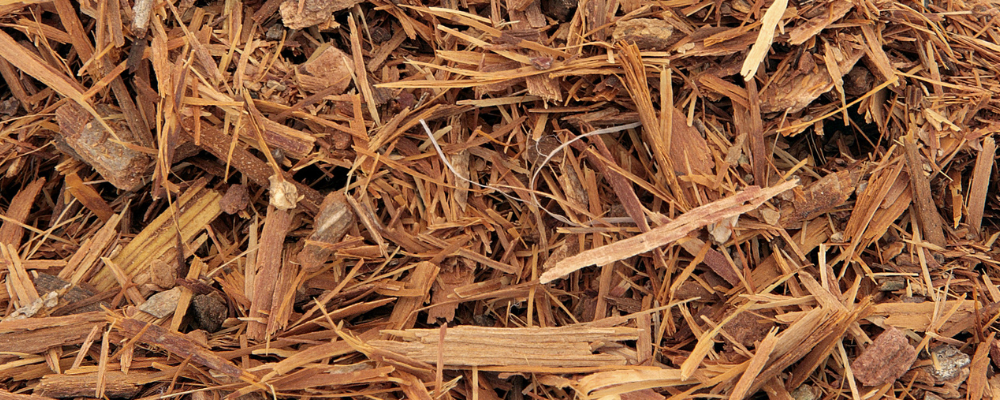
The material sold is bark, the protective part removed from the trunk or branches. Powder erases the visible characteristics that would make it possible to distinguish one species from another.
The very form of the product therefore creates a ritual problem. The more the material is processed, the more the label must bear responsibility for its identification. Symbolic power begins with this requirement.

The Name That Changes Bark
A pharmacognosy review devoted to Trichilia catigua documents numerous plants sold or used under the name catuaba: species of Anemopaegma, Erythroxylum, Phyllanthus, Micropholis, Secondatia, Ilex, and other genera.
The authors trace a confusion established in catalogs and markets since the beginning of the 20th century. Trichilia catigua is widely present in Brazilian commerce, but the common name continues to circulate more broadly. Pharmacognostic review of Trichilia catigua.
The mystery is therefore not an initiatory secret hidden in the forest. It lies in the word’s journey: the same promise becomes attached to different trees, and then the powder makes the exchange difficult to control.
The name travels faster than the bark. Before being attributed a virtue, catuaba requires the plant, the part, and the origin to be named together.
Tonus, desire, and commercial promise
Brazilian publications report the use of catuaba as a tonic against fatigue and as an aphrodisiac. These categories have fueled blended beverages, extracts, and market products.
An anatomical study of thirteen commercial samples compared powders in capsules with bark sold in markets to help distinguish Anemopaegma arvense from Trichilia catigua. The issue of quality control shows that reputation does not guarantee the contents. Morpho-anatomical study of catuaba samples.
In a magical reading, desire is neither an order imposed on another person nor a force contained in the bark. It becomes a statement of consent, an ability to say what attracts you, and a verification of the promises accompanying the object.
Tonus also takes a concrete form: available time, rest, support, and achievable action. The name catuaba then serves as a reminder: a promise of strength must always answer the question, “what material, for whom, and in what context?”
Bark, boundary, and identity
The bark separates the tree’s living tissues from impacts, water loss, and outside organisms. Once removed, dried, and pulverized, it leaves behind this boundary function and becomes a commodity.
This transformation gives catuaba a boundary magic. A person can offer their presence without surrendering their identity, express a desire without possessing another person, and seek strength without accepting every promise made by the seller.
Three layers structure this work: the name received, the verified identity, and the consensual use. When these layers diverge, the action stops. When their outlines agree, a decision can be formulated without attributing to the plant a power that no source describes.
The sealed product remains the material witness of this inquiry. Its place on the left of the document reminds you that it accompanies the written work without becoming a remedy, food, or consumed offering.
Testing a promise of strength
Draw three nested frames. In the outer frame, copy the promise attached to a project or object. In the middle frame, write the verifiable facts. In the central frame, place your free decision.
Add three fields to the left edge: “exact name,” “origin,” and “responsible party.” Any blank field leaves the framework open and postpones the decision.
For work related to desire, add two distinct signatures or two response areas. No agreement may be written on behalf of another person. For work related to vigor, replace the abstract promise with a measurable action and a time for rest.
Place the sealed product on the left side of the page. Reread the document the next day, remove what is merely advertising, and keep the decision that withstands this second reading.
Historical correspondences
| Reference | Correspondence |
|---|---|
| Botanical reference | Trichilia catigua A.Juss. |
| Family | Meliaceae |
| Identity problem | The name catuaba covers more than twenty commercial species |
| Historical reputation | Tonic, stimulant, and aphrodisiac in Brazil |
| Magical domains | Identity, consent, vigor, and examining claims |
| Safe form | Three written frameworks and a sealed product |