















































































































































































































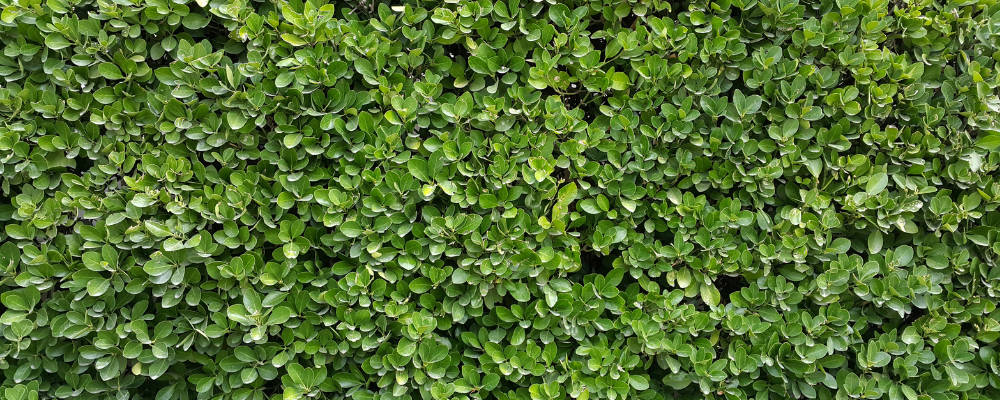
Evergreen, dense, and slow-growing, boxwood accompanies the days when a home enters a different season: Candlemas, Palm Sunday, Pentecost, and funerals. A branch enters through the door, remains near the hearth, or follows the coffin to the grave. Its magic is that of a presence that endures as the calendar and generations pass.
Boxwood does not need a grand mythological narrative. Its strength comes from repeated gestures in the churches, homes, and cemeteries of Europe. It replaces the palm in regions where the palm does not grow, receives the blessing of Palm Sunday, and becomes a domestic sign of protection.
Its evergreen foliage also led to associations with mourning and longevity. Funeral branches, branches placed on graves, and plantings near burial sites create a language in which staying green means preserving memory.
The Little Evergreen Tree
Buxus sempervirens L. is a shrub or small tree in the Buxaceae family. Its highly branched twigs bear small, opposite, leathery, evergreen leaves. Its slow growth and fine-grained wood explain its use in clipped hedges, engraving, woodturning, and precision objects.
Kew gives a native range extending from Europe to northern Iran, including North Africa. The name sempervirens means “evergreen” and directly reflects its symbolic role. Kew, Buxus sempervirens.
The plant contains alkaloids, and its sap can irritate the skin. A blessed branch kept by a family is a received religious object; the entry proposes neither wild harvesting nor bodily preparations.
Boxwood on Palm Sunday
In regions without palm trees, boxwood was used to celebrate Christ’s entry into Jerusalem. The branches were blessed and then brought home. Placed near a crucifix, a devotional image, a door, or a hearth, they extended the blessing into the domestic space.
Folkard also recalls an English calendar recorded by Robert Herrick: Boxwood replaces Christmas greenery at Candlemas, remains until the eve of Easter, and then gives way to yew. The plant thus organizes a visible succession of the liturgical seasons. Richard Folkard, Plant Lore, Legends, and Lyrics, “Box”.
The branch’s protective power lies in the blessing and its place in the Christian calendar. The gesture is not limited to hanging just any evergreen leaf.
The branch carried to the grave
In northern England, a basin filled with boxwood branches was placed at the door of the house from which the coffin departed. Each mourner took a branch and then threw it into the grave. The same plant thus passed from the domestic threshold to the place of burial.
Folkard also reports that in Turkey, widows planted a branch at the head of their husbands’ graves during prayer visits. Boxwood then becomes a living presence placed beside the dead, a sign of return and fidelity.
The green that accompanies. The branch does not deny death. It passes through the door with the coffin, falls with it into the earth, and preserves the memory of those who return.
The sign of the discovered building
A legend from the Pyrenees tells of the founding of the monastery of Sainte-Christine. The workers could not find a suitable location. A white dove appeared with a cross in its beak, landed on a boxwood tree, and then left the cross in its branches. The place was taken as a good sign, and the monastery was built there.
Boxwood does not reveal a hidden treasure. It indicates the point where a building can take root. This function is connected to its use as a border in gardens: it traces a lasting shape, provides an outline, and makes a space legible.
For a grimoire, it therefore belongs to foundations, protective boundaries, remembrance of the dead, and changes in the Christian calendar.
Marking the threshold and memory
If you have a blessed boxwood branch received on Palm Sunday, keep it in a closed wall-mounted holder, away from children and animals. Write the year and the church or person who passed it on to you on the back. This preserves the object’s provenance and meaning.
Without a real plant, draw a small border of evergreen leaves around the name of a deceased person. Open this frame in one place, like a door, then add the date of a happy memory. The gesture evokes the passage from threshold to grave without imitating a funeral.
To consecrate the beginning of a project, place an image of a dove, a cross, and boxwood in the chosen location. Write down what makes this place habitable and enduring. The story of Saint Christina becomes a meditation on foundation.
Historical correspondences
| Reference | Correspondence |
|---|---|
| Botanical name | Buxus sempervirens L. |
| Ritual times | Candlemas, Palm Sunday, Easter, Pentecost, funerals |
| Places | Door, hearth, church, house, and grave |
| Figures | Christ entering Jerusalem, Saint Christina’s dove, mourners |
| Magical domains | Household blessing, continuity, boundary, memory, and foundation |
| Historical forms | Blessed branch, funeral branch, planting on a grave |










