
























































































































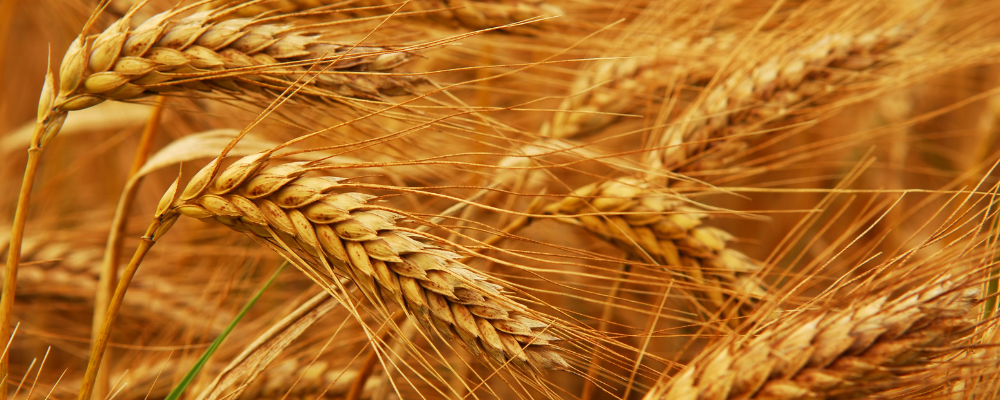
An ear of wheat brings together months of work, a chain of agricultural actions, and the promise of shareable food. From the Greece of Demeter to wedding sheaves and harvest crowns, grain has become a sign of collective life, seasonal loss, and return. Its mystery lies not in a single grain, but in multiplication.
The entry uses Triticum aestivum L., common wheat or bread wheat, as its reference. However, the word “wheat” can refer to several domesticated species, including einkorn, emmer, spelt, and durum wheat. An ancient source referring to grain or barley must not be turned into evidence about common wheat.
The magical use presented follows three documented themes: Demeter and cereal cultivation, the secrecy of the Eleusinian Mysteries, and then harvest and fertility customs. The product remains sealed and separate from any food preparation.
Common Wheat among the Triticum
Triticum aestivum belongs to the Poaceae family. This annual cereal forms a hollow stem, narrow leaves, and an ear composed of spikelets. The grain is a caryopsis: the fruit wall adheres to the seed.
Kew classifies common wheat as an accepted cultigen, shaped by a history of domestication and hybridization. Kew, Triticum aestivum.
The modern ear of grain does not represent the entire history of cereals. Einkorn has two sets of chromosomes, emmer four, and wheat six. These differences remind us that the word wheat simplifies a complex agricultural family.
For the grimoire, identification protects the narrative. A hymn that names barley remains a source on barley; a coin that shows an ear of grain may not allow the species to be determined. Precision does not weaken the symbol: it gives it a foundation.
Demeter, the Grain Lost and Returned
In the Homeric Hymn to Demeter, the goddess searches for her daughter Persephone. Her anger halts the growth of seeds and threatens humans with famine. Persephone’s partial return restores the cycle, and Demeter transmits her rites to the rulers of Eleusis.
The poem makes grain a cosmic and political matter: without agreement between the worlds, no harvest can rise. It connects food, mourning, the season, and the institution of a rite. Homeric Hymn to Demeter, translation by Evelyn-White.
The magical image of wheat comes from this tension. The grain must disappear into the earth before it sprouts, but disappearance alone is not enough: it depends on agricultural care, time, and a collective order.
The secret of Eleusis and the measure of grain
The Mysteries of Eleusis were reserved for initiates, who pledged to keep silent about what they had seen and heard. The sources describe fasting, the procession, torches, and a drink called kykeon, but they do not provide a complete ceremony.
The Hymn specifies that Demeter refuses wine and receives a mixture of water, barley flour, and mint. This detail matters: the Eleusinian drink does not allow wheat to be presented as its ingredient.
The secret of Eleusis resists summary. Grain signals transmission and return, while the content of the rite remains fragmentary.
An Attic hydria preserved at the Metropolitan Museum shows Triptolemos setting out to spread the cultivation of wheat under Demeter’s protection. The Met, Triptolemos bringing wheat to humanity.
Sheaves, crowns, and the portion kept
European harvest customs gave the final sheaf a form. It could be tied, named, carried home, or shaped into a figurine. These gestures marked the end of the work and preserved part of the harvest until the next cycle.
Grain also accompanies weddings as a wish for fertility and abundance. Casting grain over the couple recalls that prosperity concerns a household, provisions, and relationships—not just money.
These practices vary according to place and time. Their common thread is material: keeping, counting, sharing, and resowing. Wheat thus carries a magic of continuity founded on the real operations that transform a harvest into the future.
The mystery of the last sheaf does not constitute a dogma shared throughout Europe. It expresses the difficulty of bringing the harvest to a close without severing the link with what comes next.
Counting what nourishes a cycle
Draw nine grains on a sheet of paper. In the first three, write what you have received; in the next three, what you maintain; in the last three, what you will pass on.
Connect the nine grains in the shape of an ear of wheat and place the sealed sachet of wheat at its base. Choose a form of giving that can be carried out within the week: time, knowledge, a meal, money, or practical help.
Date the sheet after the action and store it with the receipt, recipe, or note that records it. The rite follows the logic of sowing and sharing without ingesting the ritual product.
Historical correspondences
| Reference | Correspondence |
|---|---|
| Botanical reference | Triticum aestivum L., common wheat |
| Other wheats | Einkorn, emmer, spelt, and durum wheat |
| Greek figures | Demeter, Persephone, and Triptolemos |
| Mysteries | Eleusis, initiatory secrecy, and kykeon of barley |
| Magical domains | Harvest, return, sharing, and passing on |
| Safe form | Nine drawn grains and sealed sachet |