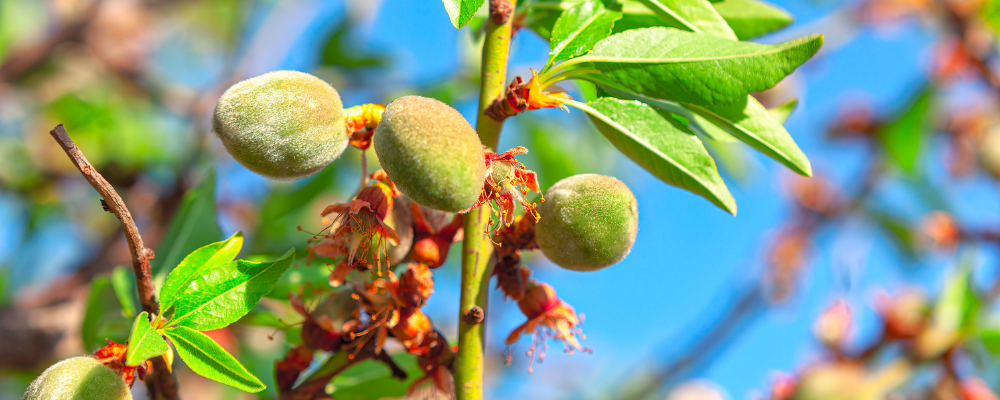
The Almond flowers while winter still holds the landscape. In the Book of Jeremiah, an almond branch opens a Hebrew wordplay between the tree, shaqed, and the one who watches, shoqed. In the Book of Numbers, Aaron's staff sprouts, flowers, and bears almonds in a single night. The tree becomes the guardian of the visible beginning and the sign of an authority called to bear fruit.
The species selected is Prunus amygdalus Batsch, a Rosaceae cultivated in warm temperate regions. Its flowers appear before or with the first leaves. This earliness explains part of its religious symbolism.
The two biblical accounts do not describe the same scene. Jeremiah receives a vision linked to the vigilance of the divine word. Aaron receives a sign that ends a dispute over authority. Their encounter creates a magic of watchfulness in which the announcement must lead to responsibility.
The Flowering That Precedes the Leaves
Prunus amygdalus forms a deciduous tree with lanceolate, finely toothed leaves. The flower buds open on the wood before the foliage fully develops. The white or pinkish petals make the flowering visible from a distance.
Kew accepts this species and indicates its status as a cultigen originating in Transcaucasia. The widely used name Prunus dulcis is listed among its synonyms. Kew, Prunus amygdalus.
Early flowering exposes the tree to late frosts. The first sign of spring therefore carries real vulnerability. Seeing before others does not guarantee the fruit's fulfillment.
This tension sustains the Almond's watchfulness. It announces, monitors, and sets a sequence in motion. The flower opens the promise, while the harvest still depends on time, pollinators, and care.
The Branch That Watches in Jeremiah
At the beginning of the Book of Jeremiah, the prophet sees an almond branch. The divine response links this vision to a word that watches over its own fulfillment.
The linguistic note explains the wordplay between the Hebrew shaqed, almond tree, and shoqed, to watch. The tree that blooms at the end of winter becomes “the watcher” of spring. Jeremiah 1:11–12 and note on the wordplay.
The vision is contained in a branch, not an entire orchard. A fragment is enough to recognize the season and receive a mission. Vigilance begins with the ability to name what presents itself.
The branch sees spring before the landscape does. The Almond Tree watches over the passage from word to deed.
Aaron’s flowering staff
In the Book of Numbers, the leaders of the twelve houses each hand over a staff bearing their name. The staffs are placed before the ark, awaiting a sign that will end the dispute.
The next day, Aaron’s staff had produced shoots, flowers, and ripe almonds. The ordinary stages of a season appear brought together on dry wood. The staff is then preserved as a sign. Numbers 17, Aaron’s staff.
The prodigy does not give only a flower. It leads all the way to the fruit, then the object returns to a place of safekeeping. Authority, fulfillment, and memory form a complete chain.
In a magical reading, the staff demands that a mandate produce results. A title written on the wood commits the person who carries it. The flower makes the responsibility visible; the fruit reveals its consequence.
Watching, announcing, and responding
The Almond Tree’s vigilance has three stages. It detects the sign, announces what it opens, and follows through on its fulfillment. An alert abandoned after its proclamation loses its function.
Early flowering also recalls the cost of exposure. The one who announces receives the cold before the rest of the garden. Proper vigilance provides shelter, relays, and a limit.
Aaron’s staff adds the responsibility of the name. Each staff bore the identity of the person who deposited it. The magical mission gains strength when it says who watches over what and until what date.
The Almond Tree therefore brings together vision and accountability. The branch reveals, the name assigns responsibility, and the almond verifies that a promise has produced something real.
Keeping the watchman’s record
Draw a bare branch bearing twelve buds. At the bottom of the page, write the mission you agree to monitor for twelve days.
Each morning, open one bud by adding five petals. Next to it, note an observed sign. Classify it as a call, risk, or progress. Do not draw any conclusion from a single sign.
Each evening, write beneath the flower the action taken or the factual reason for waiting. When an action produces a result, draw an almond at the tip of the twig.
On the twelfth day, count the flowers, actions, and fruits. Write the name of the person taking over the watch or the closing date. The record transforms the announcement into ongoing responsibility.
Historical correspondences
| Reference | Correspondence |
|---|---|
| Botanical name | Prunus amygdalus Batsch |
| Family | Rosaceae |
| Prophetic vision | Jeremiah 1, almond branch and vigilance |
| Sign of authority | Numbers 17, flowering and fruiting Aaron’s rod |
| Magical domains | Watchfulness, announcement, responsibility, and fulfillment |
| Safe form | Drawn record over twelve days |