
























































































































Galena brings together two powerful images: the cube that demarcates and the lead that weighs. As the principal ore of this metal, it carries Saturn's old correspondence—time, boundary, stripping away, maturity—in an almost architectural geometry.
Its history did not begin with lithotherapy charts. Ground into powder, it became part of the kohl of ancient Egypt; transformed into lead, it joined the network of the seven planetary metals. In modern practice, it is handled without powder or prolonged contact: the power of the ritual comes precisely from respecting the boundary.
To place this stone among related minerals, compare it with Lead, Cerussite, and Pyromorphite.
The Lead Cube
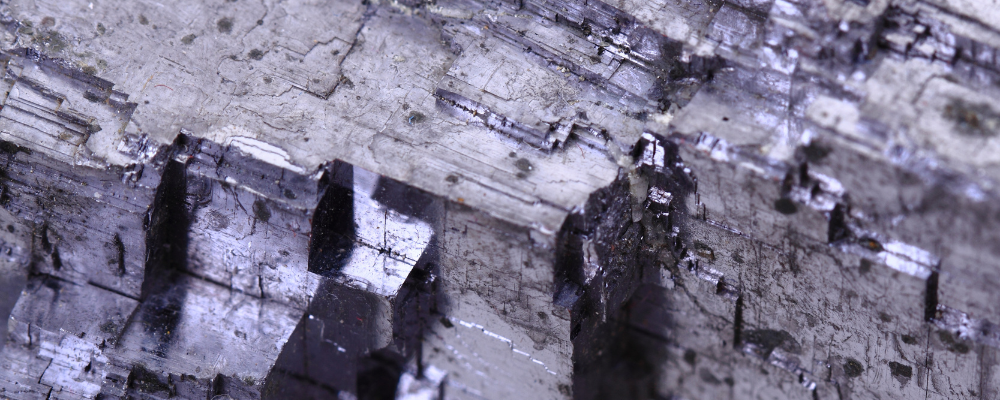
Galena is a lead sulfide, PbS. Its metallic gray luster, notable weight, and cleavage along three perpendicular directions produce cubes and bright steps. The Handbook of Mineralogy describes it as the most important ore of lead.
It can also contain Silver, giving it a place in the history of two metals: dark lead and the hidden light of Silver. This duality nourishes a magic of sorting, stripping away, and extracting what deserves to be kept.
Galena in Egyptian kohl
Ground Galena was used as black pigment around the eyes in ancient Egypt. A kohl pot from the Metropolitan Museum of Art, placed in Hatnefer's tomb, still contained a residue identified as Galena.
The black line combined adornment, protection of the eye, and the healing practices of its time. This historical context gives the stone a real connection with the guarded gaze and the line that surrounds it. The modern practice does not reuse the powder; it retains the image of the eye bordered by a dark limit.
Lead under Saturn
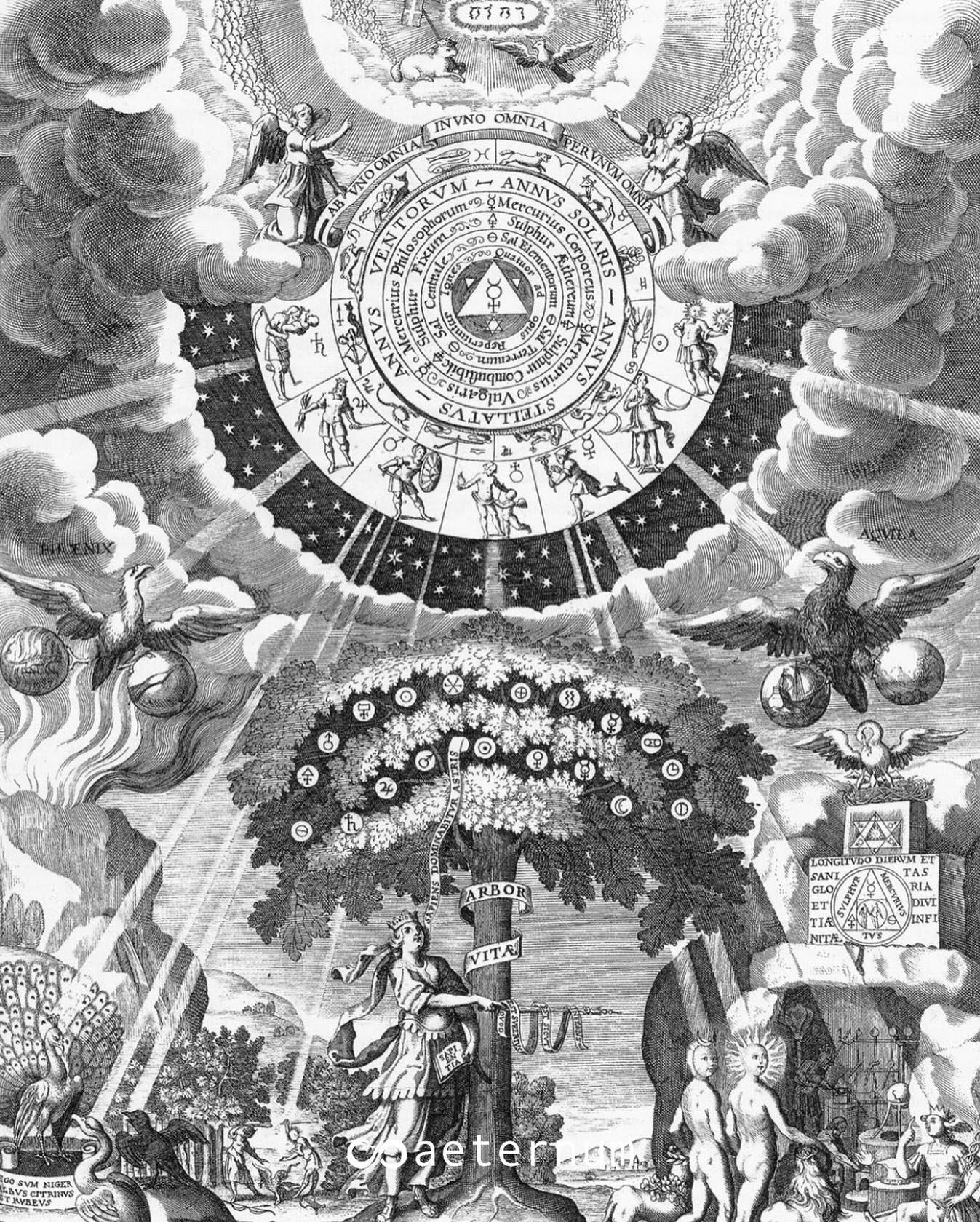
In European alchemy and astrology, lead corresponds to Saturn. The Royal Society of Chemistry notes that the same symbol designated both the metal and the planet. Galena, the ore of lead, naturally inherits this symbolic current.
Saturn governs time, boundaries, age, silence, responsibility, and what remains after the superfluous has been lost. It does not promise quick success. It demands a stable form, an accepted price, and a word kept over time.
The cube does not repel the world: it gives form to what may enter. The Saturnian magic of Galena serves to establish a workable boundary, firm enough to endure and clear enough to be understood.
Earth, Black, and Saturday
Earth suits its density and its role as an ore. Black, lead gray, and very dark violet belong to Saturn’s register. Saturday supports closures, long-term commitments, debt settlement, and the organization of archives.
The number three may recall the three directions of cubic cleavage; the square, structure. A black thread, an old key, a clock, or a dried bay leaf may accompany the stone without touching it directly.
Boundaries, duration, and legacy
To establish a boundary, write what is allowed, what is not, and the action planned if it is crossed. Saturn demands a real consequence: a boundary without associated conduct remains an intention.
For work requiring endurance, place the box of Galena near a calendar and commit to a repeatable action each week. For ancestors or archives, choose a name, a date, and an object to file. The stone represents organized memory, not endless nostalgia.
It is also suitable for closure: finishing a case, settling a debt, or giving up a role that has become too burdensome. The weight of Galena reminds us that maintaining anything has a cost and that maturity consists in choosing what we continue to carry.
The Square of Saturn
On a Saturday, draw a square. Write what you are protecting in the center. On each of the four sides, write a rule that makes this protection concrete: a deadline, distance, budget, or statement.
Place the Galena in its box above the drawing and say: “I give form to my boundary and duration to my word.” Fold the sheet toward the center, then carry out the simplest rule before the end of the day.
Correspondences and references
| Reference | Correspondence |
|---|---|
| Nature | Lead sulfide, PbS |
| Symbolic form | Cube, enclosure, and structure |
| Ancient use | Black pigment of Egyptian kohl |
| Planet | Saturn, by correspondence with lead |
| Element | Earth |
| Day | Saturday |
| Areas | Boundaries, duration, closure, responsibility, and legacy |
| Ritual act | Writing four rules around what must be kept |