


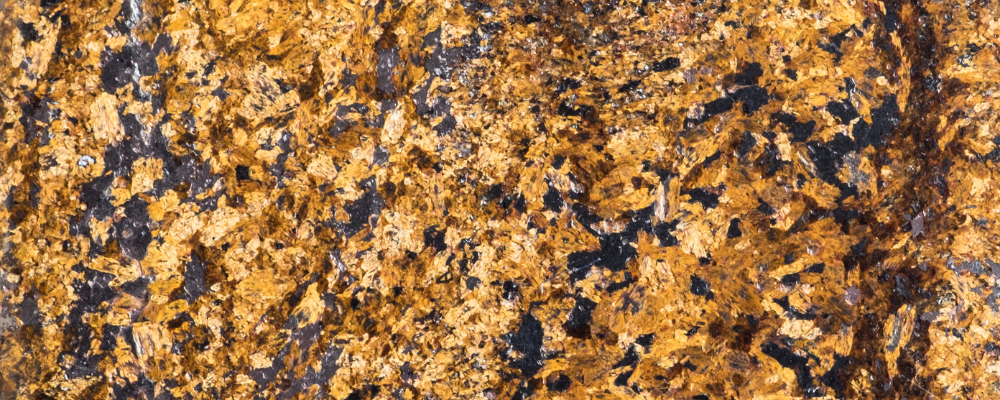
Bronzite resembles dark earth crossed with flashes of bronze. Under grazing light, its reflections seem to move like an ember beneath metal. Its magic lies in this alliance: keeping your feet on the ground, supporting your words, and responding firmly without yielding to agitation.
It accompanies examinations, negotiations, debates, and decisions that require composure. Its former association with “battles of the mind” gives it a far more precise place than the simple modern label of grounding stone.
To place this stone among related minerals, compare it with Diopside, Enstatite, and Fassaïte.
An Enstatite with bronze reflections
Bronzite is an iron-bearing variety of Enstatite and a member of the Pyroxene group. It is not a separate mineral species. Its brown color and metallic reflections come from its iron-rich composition and fine internal transformations that catch the light.
The Handbook of Mineralogy places Enstatite's hardness between 5 and 6 on the Mohs scale. The stone polishes well, but its cleavage calls for careful handling.
The metal hidden in the stone
The name Bronzite describes its golden-brown sheen, comparable to that of patinated bronze. The name Enstatite comes from a Greek word evoking an adversary or opponent: early mineralogists thus highlighted its resistance to certain laboratory tests.
This idea of resistance offered magic a natural language: do not attack without reason, but remain steady in the face of whatever tests you. The mineralogical profile on Mindat helps place Bronzite within the Enstatite family and prevents it from being mistaken for a metal or an artificial stone.
The ally of debates and examinations
In The Magic and Science of Jewels and Stones, published in 1922, Isidore Kozminsky discusses Bronzite under its mineralogical name, Enstatite. He places it under Gemini and recommends it for examinations, arguments, debates, and intellectual confrontations.
This source gives the stone an ancient and concrete role: the mind that must respond under pressure. Current uses related to calm, confidence, and protection can be connected to it, provided they are not presented as an ancient custom.
Resisting does not mean becoming rigid. Bronzite invites you to prepare your response, listen to the objection, then hold the line that remains right. Its sheen does not cover the brown earth: it reveals its strength when the light touches it.
Mercury, Mars, Gemini, and Earth
Gemini calls on Mercury, master of speech, study, and exchange. Earth comes from its brown material and the search for stability. Mars can complement this system when the question concerns courage, defense, or a boundary to set; it does not replace the Mercurian thread transmitted by Kozminsky.
Wednesday is suitable for an examination, a delicate letter, or a negotiation. Tuesday supports taking a stand. The colors brown, copper, and muted gold, along with images of shields or feathers, extend its ritual language.
Response, decision, and boundaries
Before an oral examination, place the Bronzite near your notes. Summarize each idea in one sentence that you can say without searching for your words. The stone becomes a witness to genuine preparation, not a substitute for the work.
During a conflict, hold it for a few moments and separate three things: the fact, your boundary, and the expected response. This method gives an actionable form to its reputation for calm and protection.
For a decision, place it between two written options. Remove vague promises, then choose the path whose price you are also willing to accept. Bronzite helps unite Mercurian discernment with earthly constancy here.
The ritual of the firm response
On a Wednesday, write down the question that is putting you under pressure. Beneath it, draw a brown line, then write a response in three sentences: what you know, what you refuse, and what you propose.
Place the Bronzite on the line and light a yellow or copper-colored candle. Say: “My thoughts remain clear; my words hold their place.” Read your response while standing, then carry out the action it calls for.
Correspondences and references
| Reference | Correspondence |
|---|---|
| Nature | Iron-bearing variety of Enstatite, Pyroxene group |
| Hardness | Approximately 5 to 6 on the Mohs scale |
| Sign transmitted | Gemini according to Isidore Kozminsky |
| Planets | Mercury, complemented by Mars for defense |
| Elements | Earth and Air |
| Days | Wednesday and Tuesday |
| Areas | Examination, debate, eloquence, decision, calm, and boundaries |
| Ritual act | Prepare a response in three sentences |