















































































































































































































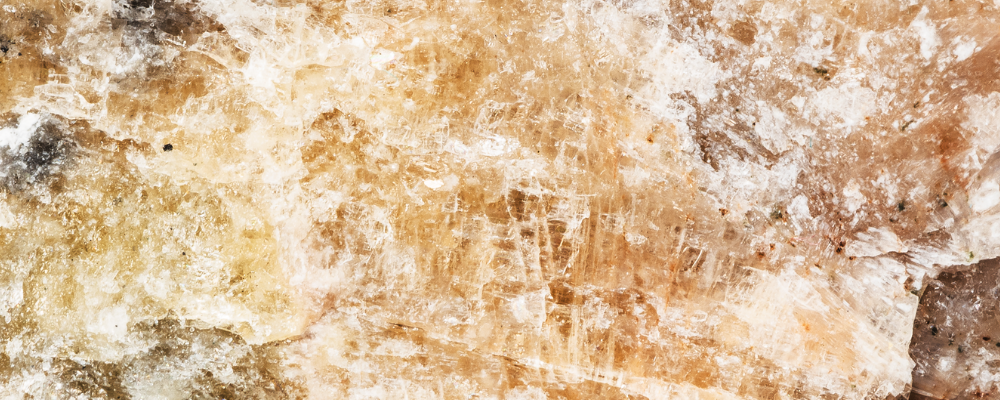
Cancrinite is a mineral of architecture and circulation. Its aluminosilicate network forms channels capable of accommodating carbonate, sulfate, water, and other constituents. Its color, often yellow to orange in many specimens, illuminates a sober idea: a stable framework can contain changing realities.
Discovered in the 19th century, it has no distinctive ancient magical tradition. A contemporary interpretation can draw on its structure and its name. Saturn establishes the framework; Mercury circulates the content; Jupiter recalls administration and measurement; Earth and Air unite concrete rules with mobility.
To place this stone among related minerals, compare it with Davyne, Edingtonite, and Datolite.
The name of Count Cancrin
Cancrinite is named after Georg von Cancrin, Minister of Finance of the Russian Empire. The Mindat entry thus connects mineral nomenclature with the worlds of administration, accounting, and resources.
This origin does not give the stone an ancient financial virtue. It does, however, open a coherent correspondence with maintaining a framework, allocating resources, and making responsible use of what is available.
A framework with channels
Cancrinite belongs to the feldspathoids and to the group that bears its name. Its formula allows for variations: sodium, calcium, carbonate, sulfate, and water occupy a framework of aluminosilicate. The Handbook of Mineralogy entry presents this composition and its hexagonal system.
This combination avoids an overly rigid image. The structure holds, but what it accommodates can change. It is precisely this relationship between rule and content that enriches its symbolic language.
From the Ural Mountains to nomenclature
Cancrinite was described in 1839 from material found in the Ural Mountains. It occurs in alkaline igneous rocks poor in free silica. Its colors range from white and gray-green to yellow, orange, pink, and blue.
The Cancrinite Group comprises several species built on related structural principles. It reveals a family in which identity depends as much on the framework as on the occupants of its channels.
A good rule knows what it protects and what it allows to move. Too narrow, it blocks life; too vague, it carries nothing. Cancrinite directs attention to this boundary.
Saturn, Mercury, and Jupiter
Saturn establishes the framework and limits. Mercury presides over exchanges and mobile contents. Jupiter, associated here with governance and allocation, provides scale. Earth stabilizes; Air allows information and possibilities to circulate.
Saturday is suitable for establishing a rule, Wednesday for adapting it, and Thursday for distributing resources. A drawn frame, four tokens, and an envelope serve as supports.
Frame, Budget, and Room for Maneuver
Cancrinite supports the preparation of a budget, contract, schedule, or offer. It invites you to distinguish non-negotiable limits from variables that can still move.
It also supports people who confuse security with immobility. A fair frame does not predict every event: it defines the space in which a response remains possible.
The Rite of the Living Frame
Draw a rectangle on a sheet of paper. Outside it, write what you refuse to sacrifice. Inside it, place four tokens representing time, money, energy, and help. Move them until you achieve a sustainable distribution, then place the Cancrinite on the border.
Say: “My frame protects without imprisoning. I give each resource a place and a path for circulation.” Keep the sheet with the relevant file.
Correspondences and reference points
| Reference point | Correspondence |
|---|---|
| Nature | Mineral species of the Cancrinite group |
| Celestial bodies | Saturn, Mercury, and Jupiter |
| Elements | Earth and Air |
| Days | Saturday, Wednesday, and Thursday |
| Ritual colors | Yellow, orange, gray, black |
| Areas | Frame, budget, allocation, adaptation |
| Associated objects | Drawn frame, four tokens, envelope |
| Gesture | Separating Fixed Limits from Variables |










