


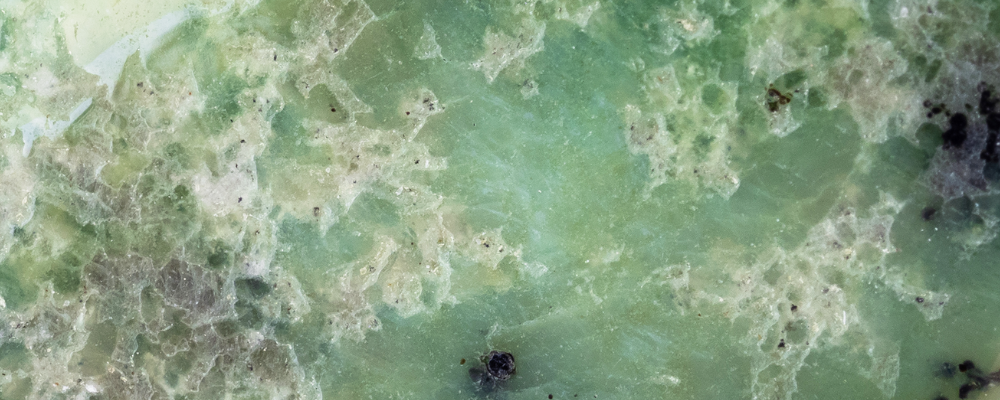
Green Garnet is not a single species: it may be Grossular, Andradite, or Uvarovite. The same color can thus include Tsavorite, Demantoid, and intensely green druses. This diversity encourages looking at the actual stone before assigning it a history or correspondence.
Garnets have a long human history, but ancient texts mainly refer to red stones. For green, associations with growth, Venus, and Jupiter belong to a modern framework. The history of Demantoid in Russia and that of Tsavorite in East Africa provide precise reference points.
To place this stone among related minerals, compare it with Garnet, Rhodolite, and Almandine.
One Color, Several Garnets
The word Garnet refers to a family of minerals sharing the same crystal architecture, but whose composition varies. The Gemological Institute of America points out that this family encompasses many colors and several species.
“Green Garnet” is therefore a color name. To identify the stone, one must look at its species, origin, and, when it is cut, the information provided by the seller or laboratory.
Tsavorite, Demantoid, Uvarovite
Tsavorite is a green Grossular colored by vanadium or chromium. Demantoid is a green Andradite known for its light dispersion. Uvarovite, rich in chromium, tends instead to form small, tightly packed crystals on a matrix.
These stones have neither the same brilliance nor the same appearance. Their kinship lies in the structure of Garnets, not in an interchangeable identity.
From the Urals to Tsavo
Demantoid was discovered in the Urals in the mid-19th century and became part of creations admired by the Russian imperial court. A study by Gems & Gemology traces this renown.
Tsavorite belongs to a more recent history. Geologist Campbell Bridges discovered it in 1967 in Tanzania, and later in Kenya; the GIA celebrated the fiftieth anniversary of this discovery in 2017.
Green does not come from an invented past. It may evoke new growth, favor, or the return of light, while the real history of each Garnet retains its places, dates, and people.
Venus, Jupiter, and Earth
In a contemporary interpretation, Venus connects green with charm, harmony, and fertility. Jupiter represents growth, generosity, and the opening of a possibility. Earth provides the grounding necessary to ensure that growth does not become a headlong rush.
Friday is suited to harmony, and Thursday to expansion. Leaf green, moss green, and gold form its palette. A seed, a coin, and a twig can accompany the stone.
Growth, Favor, and Renewal
Green Garnet supports a project that you want to nurture consistently. It invites you to recognize the resources already present, create good conditions, and let development follow a viable pace.
In relationships, it supports reciprocal favor: giving the other person space without abandoning your own place.
The Garden of Resources
Place a seed, a coin, and the Green Garnet in front of you. Name a resource for each object: what must sprout, what can fund the action, and what safeguards your intention.
Say: “I nurture what can grow without depriving me. May favor circulate, and may every resource find its purpose.” Then plant the seed or entrust it to the earth.
Correspondences and References
| Reference | Correspondence |
|---|---|
| Nature | Green Garnet, of variable species |
| Celestial Bodies | Venus and Jupiter |
| Element | Earth |
| Days | Friday and Thursday |
| Ritual Colors | Leaf green, moss green, gold |
| Areas | Growth, Favor, Resources, Renewal |
| Associated Objects | Seed, Coin, Twig |
| Gesture | Nurturing Viable Growth |