















































































































































































































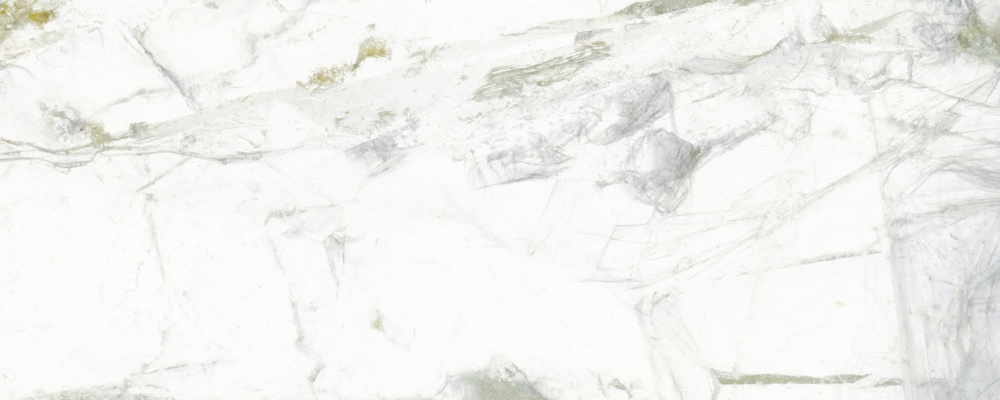
Brucite is a soft material organized in layers. Its sheets separate along a clear plane, while some fibers retain a degree of flexibility. It teaches strength without harshness: establish a foundation, distribute pressure, and restore order level by level.
Its contemporary magic associates Saturn with structure and boundaries, the Moon with the water retained in its composition, Earth with grounding, and Water with rest. It accompanies periods of reorganization, when one must protect one’s energy without stopping all circulation.
To place this stone among related minerals, compare it with Lepidolite, Pargasite, and Albite.
A Material Built in Layers
Brucite is the mineral magnesium hydroxide. White, pale green, bluish, gray, or honey-yellow, it can form plates, rosettes, foliated masses, and fibers. The Handbook of Mineralogy describes its cleavage, flexibility, and colors.
Its softness distinguishes it from stones of massive strength. Brucite resists in another way: it distributes its structure across superimposed planes. This architecture inspires magical work focused on organization, calm boundaries, and recovery after a period of overload.
Marble, Serpentinite, and Transformation
Brucite appears during the transformation of magnesium-rich minerals. It can form in marble, metamorphic limestones, and rocks affected by serpentinization. It also forms in low-temperature hydrothermal veins.
Its geological history does not follow the image of a brutal conquest. It proceeds through alteration, circulation, and the reorganization of matter. In the grimoire, it represents change achieved through successive adjustments: moving a burden, making a boundary visible, then allowing the new order to stabilize.
Archibald Bruce and the Description of the Mineral
Brucite is named after Archibald Bruce, an American physician and mineralogist born in 1777 who described the species. This origin places the stone within early 19th-century mineralogy and the effort to distinguish minerals by their structure and characteristics.
The name gives Brucite a classificatory value. It suits work where confusion comes from a disorderly accumulation: tasks, responsibilities, debts, or commitments. Its first operation is to separate the levels before deciding what should remain.
Saturn, Moon, Earth, and Water
Saturn corresponds to layers, boundaries, time, and the reduction of excess. The Moon corresponds to hydration, rest, and rhythms of withdrawal. This association is contemporary and derives from Brucite's layered structure and composition.
Earth provides the foundation and stability. Water softens, calms, and allows a new distribution. Saturday is suitable for sorting and setting boundaries; Monday supports recovery and listening to one's personal rhythm.
Order, limits, rest, and reorganization
Brucite supports the reorganization of a space or schedule. It can be placed near a list divided into three levels: keep, delegate, remove. Its soft texture reminds us that an effective boundary does not need aggression.
Near a place of rest, it marks the end of a period of activity. On a desk, it serves as a reminder when each task must be given its own level, deadline, and measure. It is also suitable for transitions in which everything cannot be resolved at once.
The Three-Layer Ritual
On a Saturday, take three sheets. On the first, write what supports your situation. On the second, write what is exerting pressure. On the third, note the limit to set. Layer the sheets in this order and place the Brucite on top.
On Monday, remove the central sheet and choose one burden you can reduce this week. Keep the other two sheets together until the action is complete. The ritual follows the structure of the stone: recognize the layers, isolate the pressure, and protect the foundation.
Correspondences and reference points
| Domain | Correspondence | Reading |
|---|---|---|
| Planets | Saturn and Moon | Structure, limits, rhythm, and recovery. |
| Elements | Earth and Water | Foundation, distribution, rest, and flexibility. |
| Days | Saturday and Monday | Sort and reduce; restore the rhythm. |
| Colors | White, pale green, honey yellow | Calm, renewal, and luminous order. |
| Figures | Sheet, layer, rosette | Layers, organization, and distributed pressure. |
| Verbs | Separate, limit, reorganize | The talismanic method of Brucite. |
Brucite represents stability built in layers. It does not ask you to carry everything: it teaches you to distribute the load, remove excess, and preserve a base that is flexible enough to last.










