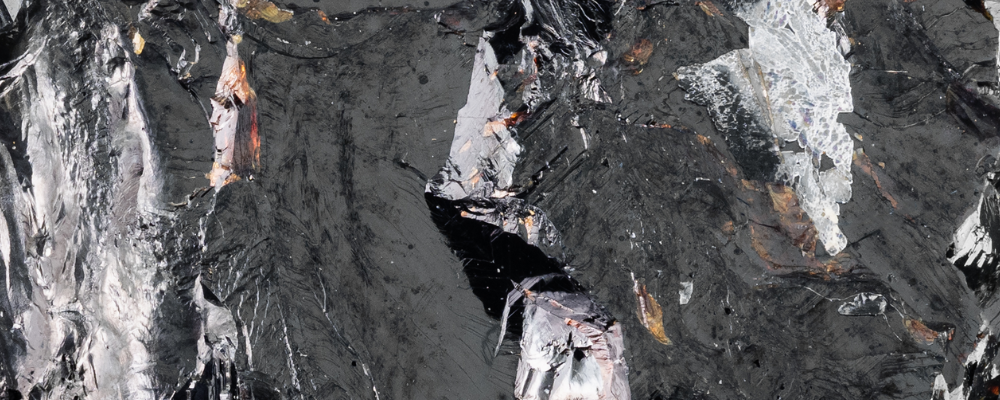
Blende shines like a metal without displaying all its characteristics. Miners gave it a name linked to the idea of deceiving or dazzling, because its appearance suggested an ore that was difficult to identify using ancient methods. Under this historical name lies Sphalerite, the main source of zinc.
This story gives the stone a richer symbolism than a simple notion of protection. Blende speaks of discernment in the face of a persuasive appearance, of value hidden in a misunderstood material, and of the trial that turns a promise into fact.
To place this stone among related minerals, compare it with Zincite, Sphalerite, and Marmatite.
Blende or Sphalerite
Blende is an old mining term used for Sphalerite, a zinc sulfide with the formula ZnS. The entry devoted to the name Blende traces it to German miners’ vocabulary and the idea of a deceptive ore.
The name remains in use in commerce, historical collections, and expressions such as “zinc blende.” It refers to a real material, but the current mineralogical name is Sphalerite.
The main zinc ore
The Handbook of Mineralogy describes Sphalerite as belonging to the cubic system. It may be yellow, brown, reddish, green, or black, with a resinous to adamantine luster and very distinct cleavage.
Iron replaces some of the zinc in many specimens and darkens the color. The stone occurs in hydrothermal veins and deposits where it is found alongside Galena, Pyrite, Chalcopyrite, or Calcite.
The ore that bewildered
Georgius Agricola mentioned blende in the 16th century. Ernst Friedrich Glocker proposed the name Sphalerite in 1847, based on a Greek word associated with the idea of deception. The Sphalerite entry preserves these two stages in the history of the name.
The ancient difficulty did not come from an intention hidden in the stone: its appearance did not match the expected criteria for a metal ore. The furnace, analysis, and experience later revealed its value.
Blende demands proof equal to the promise. A luster attracts and a name points the way, but only the appropriate test shows what the material can truly deliver.
Mercury, Saturn, Earth, and Fire
Mercury governs the interpretation of signs, the changing name, and commerce. Saturn receives the mine, resistance, and control. Earth bears the ore; Fire recalls the operation that separates the resource from its gangue.
Wednesday is suitable for verifications, and Saturday for lasting decisions. A lamp, scales, or a piece of zinc can serve as supports beside the specimen.
Discernment, value, and commerce
Blende accompanies the study of a brilliant offer, a contract, a job proposal, or a major purchase. It invites you to investigate the composition, function, and return instead of deciding based on appearance.
It also supports recognizing a value that remained hidden because it did not meet usual expectations. Its focus is neither absolute distrust nor credulity, but fair testing.
The Three Signs Test
Place the Blende on a gray square. Write down the promise you are examining, then name three observable signs that would confirm it: an outcome, a time frame, and a return. Establish a way to verify each one.
Say: “I observe the luster, test the material, and recognize the real value.” Make your decision only after the first check.
Correspondences and reference points
| Reference point | Correspondence |
|---|---|
| Nature | Former name for sphalerite, zinc sulfide |
| Celestial bodies | Mercury and Saturn |
| Elements | Earth and Fire |
| Days | Wednesday and Saturday |
| Ritual colors | Brown, yellow, metallic gray |
| Domains | Discernment, value, commerce, verification |
| Associated objects | Lamp, scales, gray square |
| Gesture | Define three observable proofs |