


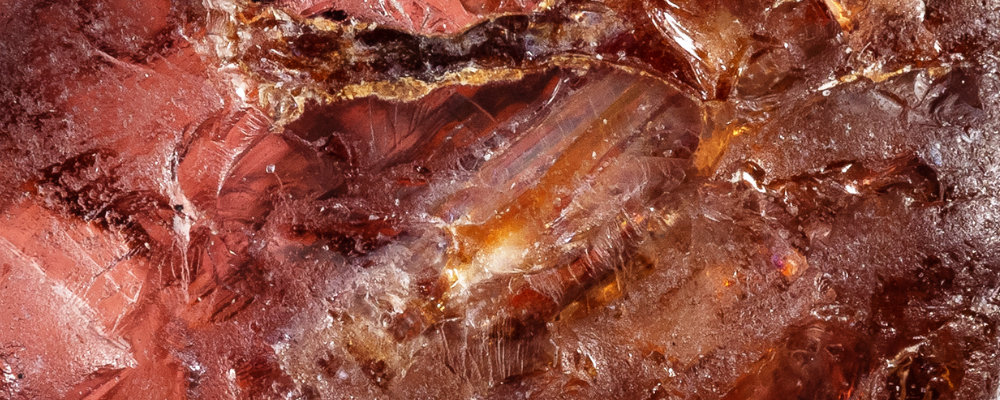
Zircon is a natural stone, ancient within the Earth and endowed with a genuine lapidary heritage. In the Middle Ages, the Hyacinth and Jargon associated with it protected sleep, warded off hostile spirits, and encouraged wealth, honor, and wisdom. Isidore Kozminsky places it under Virgo and connects it with the Moon’s nodes.
Mercury governs Virgo, discernment, order, and knowledge. The Moon is associated with sleep and the two nodes that mark the crossroads along the journey. Zircon thus supports nighttime protection, study, reputation, and the passages whose lesson must be understood.
To place this stone among related minerals, compare it with Peridot, Howlite, and Jet Black.
A natural mineral older than the continents
Zircon is a Zirconium silicate with the formula ZrSiO4. It occurs in brown, yellow, red, green, blue, or colorless varieties. Its luster and dispersion can produce remarkable fire.
The GIA notes that Australian crystals are approximately 4.4 billion years old. They are among the oldest known terrestrial materials. Natural Zircon should not be confused with lab-made cubic Zirconium oxide.
From Hyacinth to Zircon
The names Hyacinth, Jargon, and Zircon referred to several stones over the centuries. Ancient identifications remain difficult, but some of the red, orange, or brown Hyacinth described by lapidaries corresponds well to Zircons.
The historical page from the GIA reports that in the Middle Ages the stone was worn to promote peaceful sleep, ward off malevolent spirits, and attract wealth, honor, and wisdom. These themes form its most enduring magical heritage.
Sleep, wisdom, and the Moon’s nodes
In The Magic and Science of Jewels and Stones, published in 1922, Isidore Kozminsky gives Zircon the Sanskrit name reported as Rahuratna, “stone of the Moon’s nodes.” He connects these nodes with the dragons of eclipses and Mercury’s Caduceus.
Kozminsky places Zircon under Virgo. His system thus aligns it with the Mercurial order, discernment, knowledge, and the reading of passages. The medieval virtues of sleep and protection add the Moon to this framework.
A knot marks the place where two paths cross. Zircon does not erase the passage: it helps recognize what becomes attached to it, preserve the lesson, and let the night undo unnecessary agitation.
Mercury, Virgo, Moon, and Earth
Mercury governs Virgo, classification, applied wisdom, and reputation earned through work. The Moon relates to sleep, cycles, and knots. Earth carries the crystal’s age and geological memory.
Wednesday is suitable for study, business, and professional honor. Monday supports rest and emotional transitions. Yellow, brown, silver, a knotted cord, and a closed book extend its correspondences.
Protection, knowledge, and reputation
For sleep, place the Zircon on a table away from the bed and write down the matter you refuse to resolve during the night. Close the notebook and return to it in the morning.
For study, place the stone near a closed book after the session. Summarize the lesson in three sentences. Mercury transforms accumulation into usable knowledge.
For reputation, write down the honor you seek and the conduct that must justify it. The wealth and recognition associated with medieval lapidaries remain tied to wisdom, not appearance alone.
The knot untied before sleep
On a Monday evening, tie a loose knot in a cord and place the Zircon beside it. Name the thought that keeps returning without producing a solution. Write down the time when you will return to it.
Untie the knot and say: “The night guards my rest; the morning will receive my work.” Close the notebook, turn off the light, and leave the stone on the table until you wake.
Correspondences and references
| Reference | Correspondence |
|---|---|
| Nature | Natural zirconium silicate |
| Lapidary tradition | Sleep, protection, wealth, honor, and wisdom |
| Sign | Virgo according to Isidore Kozminsky |
| Planets | Mercury and Moon |
| Elements | Earth and Air |
| Days | Wednesday and Monday |
| Areas | Protection, sleep, knowledge, reputation, and prosperity |
| Ritual act | Untying a knot and closing the working for the night |