


Topaz is a stone of light directed toward a goal. Lapidaries attributed to it strength, protection at night, and the soothing of anger; talismanic collections gave it the falcon to obtain favor and the lamp to attract wealth. Its language unites clarity, authority, and desire made visible.
The ancient name topazos did not necessarily refer to modern Topaz. This distinction makes its history clearer: on one side, the yellow stones of antiquity; on the other, the mineral gemstone recognized today, with its broad range of colors and its own magical tradition.
To place this stone among related minerals, compare it with Kyanite, Kyanite, and Andalusite.
The Gemstone of Directed Light
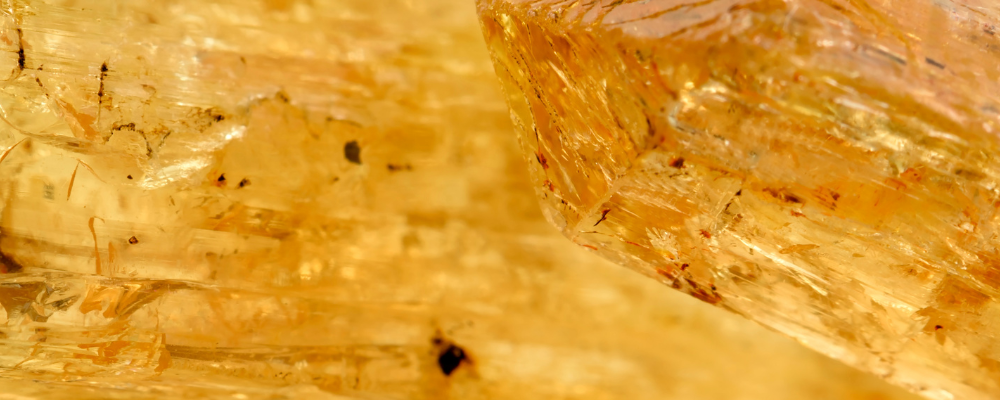
Topaz can be colorless, yellow, orange, pink, brown, or blue. Warm tones inspired its association with flame and the Sun, while its transparency evokes an intention cleared of confusion. The GIA presents its colors and gemological characteristics.
Its great hardness resists scratches, but its cleavage calls for caution when exposed to impacts. This combination of resilience and a defined fracture line sheds light on its talismanic use: concentrating force, directing it, and then avoiding its dissipation in a fit of passion.
Topazos and Ancient Names
Pliny the Elder associates topazos with an island in the Red Sea. The stone described in these accounts most likely corresponds to Peridot extracted on the island of Zabargad, rather than to modern mineral Topaz. The translation of Book 37 of Natural History makes it possible to follow the ancient nomenclature.
Ancient gemstone names were initially based on color, location, and appearance. A yellow stone could change identity from one author to another. For the grimoire, this caution takes nothing away from Topaz: it separates the history of the word from the material one holds today.
Strength and nighttime protection
European lapidaries made Topaz a stone of vigor, reason, and protection against nighttime fears. It was also supposed to contain anger and defend against disturbances of the mind. These functions outline a single action: maintaining a steady light when the imagination goes astray or the will becomes scattered.
This framework can be adopted without making a medical promise. Topaz then becomes a witness to a discipline: naming what causes concern, bringing the mind back to a precise fact, and choosing a course of action. Beside the bed, it marks the closing of the day; on a work table, it supports concentration.
The falcon, the lamp, and favor
In the talismanic traditions compiled by Isidore Kozminsky, Camillo Leonardi recommends a flying falcon engraved on a Topaz to obtain the favor of kings, princes, and nobles when the Moon passes through certain degrees of Scorpio. The falcon represents ascent, clear vision, and access to higher authority.
The same corpus describes a man holding a lamp, engraved on a Topaz set in gold, to attract riches. The Moon is then in Scorpio and receives a favorable aspect from Jupiter or the Sun. Kozminsky’s text preserves these figures and their astrological conditions.
Two seals. The falcon seeks favor through elevation and a clear gaze. The lamp attracts prosperity by making the will visible. Both give direction to the light of Topaz.
Scorpio, Sun, and Fire
Scorpio comes from the corpus of Leonardi and the lunar elections reported by Kozminsky. It brings concentration, contained power, and the ability to hold an intention until its fulfillment. The Sun and Fire derive from a more recent occultist reading, based on brilliance and warm colors.
Jupiter acts as a support for favor and ease in the lamp talisman. Sunday is therefore suitable for workings of radiance and recognition; Thursday can be used for requests for support, growth, or prosperity.
The Rite of the Solar Lamp
On a Sunday, place the Topaz in front of a lit lamp. Write a request in one sentence, then remove every word that describes neither an action nor an observable result. Reread the sentence facing the light and place the stone on it.
On the following Thursday, perform a concrete action related to the request: present a piece of work, seek support, set a price, or open negotiations. Keep the Topaz near the sheet of paper until you receive a response. The rite takes up the ancient emblem of the lamp and transforms it into a rule of action: illuminate the request, then expose it to the world.
Correspondences and reference points
| Domain | Correspondence | Reading |
|---|---|---|
| Sign | Scorpio | Concentration, contained power, and the talisman’s lunar election. |
| Planets | Sun, with Jupiter in support | Radiance, favor, growth, and directed wealth. |
| Element | Fire | Clarity, will, authority, and bringing to light. |
| Days | Sunday and Thursday | State the intention, then seek support. |
| Figures | Falcon and lamp | Favor through elevation; wealth through held light. |
| Verbs | Illuminate, strengthen, obtain | The talismanic method of Topaz. |
Topaz does not represent diffuse light. It is the lamp held in one hand, the falcon’s gaze fixed on its target, and the strength that remains calm until the moment to act.