


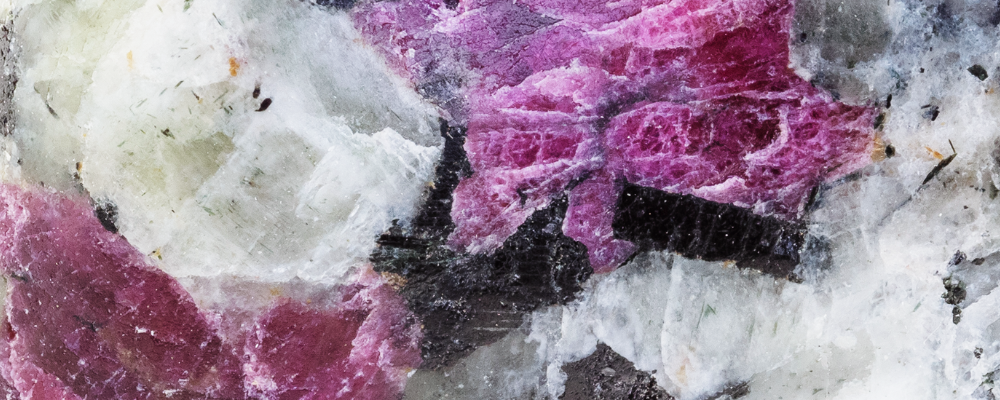
Corundum is a material of resilience. Composed almost entirely of aluminum oxide, it reaches 9 on the Mohs scale. Its colors give rise to famous names: Ruby for red, Sapphire for other gem colors. Behind their brilliance lies the same framework.
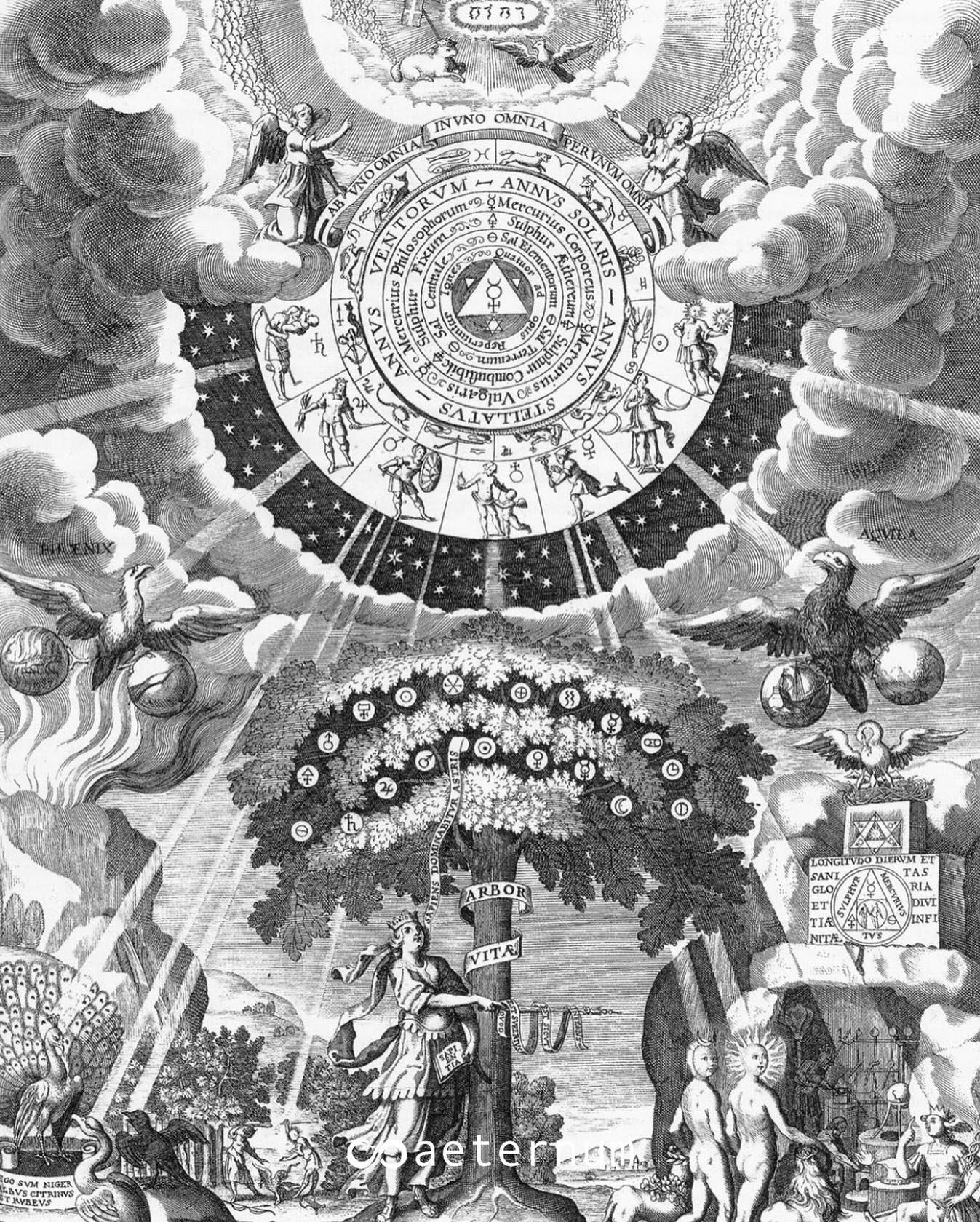
Ancient traditions mainly concern gems called Ruby and Sapphire, whose historical identification may have encompassed other minerals. Raw Corundum calls for a more restrained reading. Saturn governs endurance, Mars effort, the Sun authority; Fire tests, and Earth holds firm.
To place this stone among related minerals, compare it with Ruby, Sapphire, and Spinel.
From Corundum to Ruby
The word Corundum may have come, through several South Asian languages, from terms associated with Ruby. The Handbook of Mineralogy connects its probable etymology to the Sanskrit kurivinda, transmitted through Tamil.
The mineral name now encompasses the entire species Al2O3. Ruby and Sapphire are therefore not separate minerals, but colored gem varieties of Corundum.
Aluminum oxide
Corundum consists almost entirely of aluminum oxide. Its hardness of 9 places it just after Diamond on the Mohs scale. It can be gray, brown, pink, red, yellow, green, blue, or violet.
Trace elements color the crystal. Chromium produces Ruby’s red; other combinations, notably iron and titanium, contribute to Sapphire’s blues. Color expresses a variation within the same architecture.
Gems, colors, and confusions
The Gemological Institute of America confirms that Ruby and Sapphire belong to Corundum. Ancient texts devoted to red or blue stones must nevertheless be read with caution, because Ruby was long confused with red Spinel.
The GIA historical synthesis shows that several famous “balas rubies” were Spinels. The symbolic legacy therefore follows the name and color as much as modern identification.
Resistance does not mean never yielding. It means bearing the useful burden without losing its shape. Corundum asks which discipline truly serves the work.
Saturn, Mars, the Sun, and Earth
Saturn governs duration, constraint, and mastery. Mars provides effort; the Sun receives the authority gained through trial. Earth holds the structure, and Fire represents the pressure that reveals its resistance.
Saturday suits discipline, Tuesday effort, and Sunday the assumption of responsibility. A weight, a square of dark fabric, and a golden circle accompany the stone.
Endurance, authority, and mastery
Corundum accompanies training, a demanding role, or a project that requires consistent quality. It encourages you to distribute the burden instead of relying on a surge of willpower.
It also supports authority grounded in competence: upholding a rule that you first apply to yourself, then taking responsibility for the result.
The Rite of the Sustained Burden
Place a small weight on a square of dark fabric. Beside it, write down the actual burden you accept and the length of time you will carry it. Place the Corundum between the weight and the sheet.
Say: “I measure my strength by what I hold with constancy. My discipline gives form to my authority.” Then set the concrete pace of your commitment.
Correspondences and references
| Reference | Correspondence |
|---|---|
| Nature | Mineral species; Ruby and Sapphire are its varieties |
| Celestial bodies | Saturn, Mars, and the Sun |
| Elements | Earth and Fire |
| Days | Saturday, Tuesday, and Sunday |
| Ritual colors | Gray, red, blue, gold |
| Areas | Endurance, mastery, authority, constancy |
| Associated objects | Weight, dark fabric, golden circle |
| Gesture | Define the burden and duration of the commitment |