


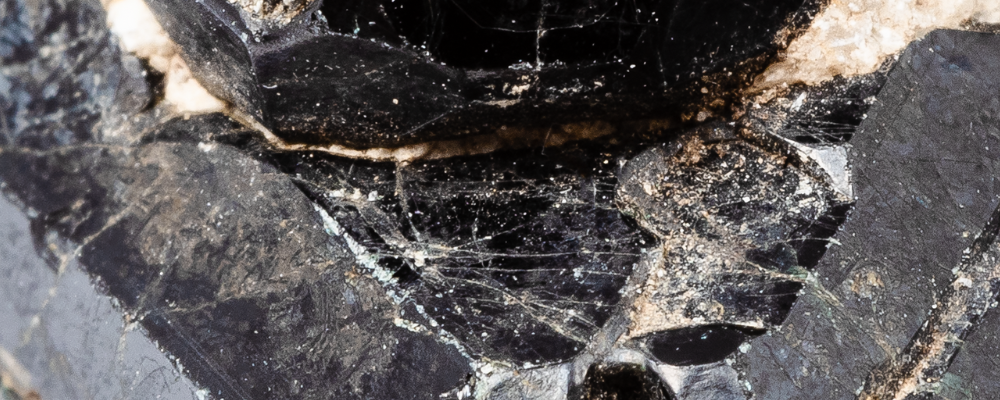
For centuries, spinel carried the prestige of the ruby before being recognized as a species in its own right. This history does not diminish it; it makes it a stone of sovereignty, courage, and rightful recognition, capable of uniting the radiance inherited from the past with the strength of a reclaimed name.
Red spinel occupies the symbolic heart of this entry. Blue, pink, purple, and black hues retain their own character, but the solar and Martian associations first arose from the great red gems once classified among the balas rubies.
To place this stone among related minerals, compare it with Corundum, Ruby, and Sapphire.
The Gemstone That Reclaims Its Name
Spinel is an oxide of magnesium and aluminum, MgAl2O4, crystallizing in the cubic system. Its hardness of 8 and lack of distinct cleavage give it excellent durability. Its crystals can form octahedra, like two pyramids joined at their bases.
Its proximity in origin and color to red corundum explains an ancient confusion. Red gems rolled by the waters arrived without their most recognizable crystal forms; observers then classified them by color, luster, and provenance. The Gemological Institute of America notes that the great spinels of Central and South Asia were known as balas rubies.
Balas Rubies and Royal Power
In the courts of Asia and Europe, red gems represented vital power, victory, and authority. Balas rubies passed from ruler to ruler, were offered as tribute, and changed hands with conquests. The National Library of France places these red stones within the sacred nature of power, beyond mere finery.
Lapidaries did not always distinguish Spinel, Ruby, and other “carbuncles” according to today’s criteria. The qualities attributed to red stones—ardor, protection, rank, and bloodline strength—therefore belonged to a broader visual family. Red Spinel can reclaim this heritage, provided it is named for what it is.
Two stones that have endured through successive reigns
The “Black Prince’s Ruby,” received by Edward of Woodstock in 1367, is actually a red Spinel. It survived wars, dynastic changes, and alterations to the British Crown. Its permanence makes it an emblem of steadfastness through adversity: the name was corrected, but the presence remained.
The “Timur Ruby” offers another facet of this memory. The Royal Collection Trust describes it as a large Spinel now mounted on a necklace. The inscriptions of several rulers engraved on its surface make it a stone archive, marked by human ambitions without losing its mineral identity.
Sun, Mars, and Fire
The Sun governs dignity, visibility, and authority exercised without borrowing another’s name. Mars brings drive, courage, and the ability to defend one’s place. Fire connects the red color to the desire to act, while the octahedron gives this intensity a stable form.
This attribution brings together the historical heritage of balas rubies and a contemporary analogical reading of rediscovered identity. Sunday suits works of radiance and recognition; Tuesday suits acts of courage, clear-cut decisions, and reclaiming abandoned ground.
Dignity, courage, and rightful recognition
Spinel accompanies situations where value already exists but remains concealed by comparison, a naming error, or a role that has become too restrictive. It suits efforts toward recognition, public speaking, title changes, and projects that require fully embracing their distinctive identity.
In protection work, it is not used to hide. It asserts a dignified presence, closes the door to imposed identities, and reminds us that dignity does not depend on imitation. Red supports boldness and honor; black may be reserved for boundaries, restraint, and safeguarding the status attained.
The Seal of the True Name
One Sunday morning, place the Spinel at the center of a blank sheet of paper. On the left, write the name, role, or label on which you no longer wish to depend. On the right, write the quality you now choose to embody, using simple, verifiable words.
Draw a circle around the second sentence, then place the stone on its edge as a seal. Say: “I return its former name to the past. I take my place under my own.” Keep the sheet until the concrete act that confirms this decision: a message sent, a document signed, a boundary stated, or a work published.
Correspondences and References
| Reference | Correspondence |
|---|---|
| Nature | Magnesium and Aluminum Oxide; cubic system |
| Historical Heritage | Balas rubies, royal treasures, and gems of sovereignty |
| Primary Planet | Sun |
| Secondary Planet | Mars |
| Element | Fire |
| Days | Sunday for radiance; Tuesday for action |
| Number | One, for the proper name and assumed position |
| Domains | Dignity, Courage, Recognition, Authority, and Reputation |
| Ritual Gesture | Sealing a Chosen Identity Through a Visible Act |