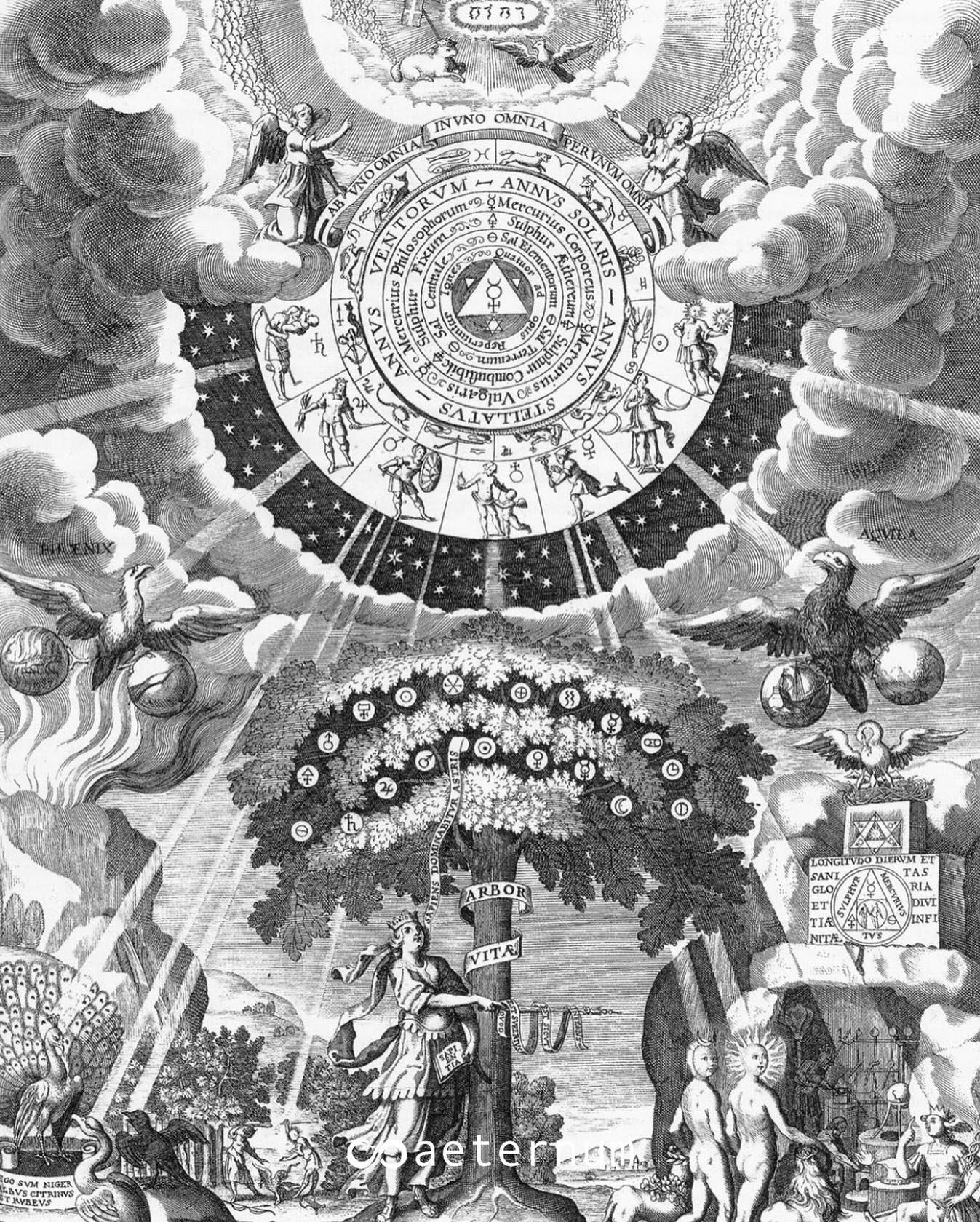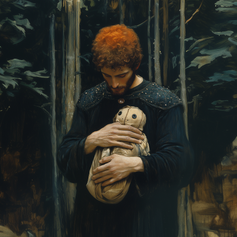







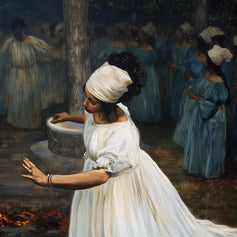















































































































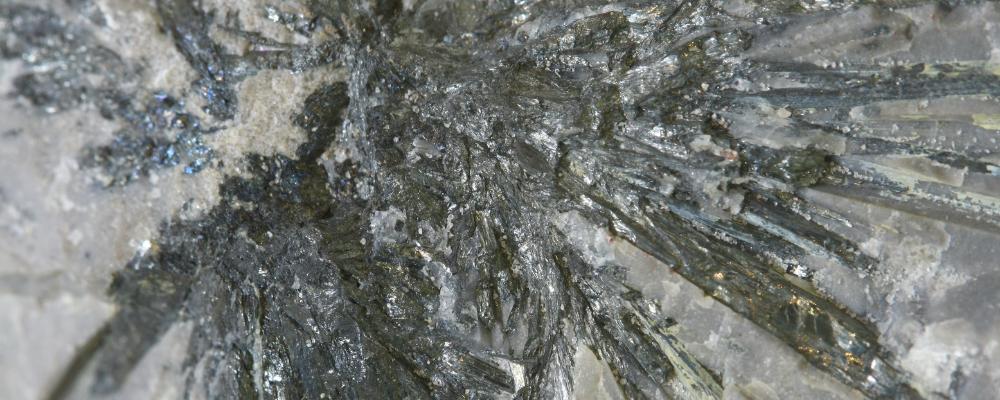
Antimony occupies a unique place in alchemy: a metal hidden in black Stibnite, it was represented by the wolf, then revealed in a silvery form capable of drawing a star. Few materials combine instinct, separation, and transformation with such force.
The trade name may refer to Native Antimony or, by extension, its principal ore, Stibnite. Their material histories differ, but alchemical imagery connects them: the ore is worked to extract the metallic regulus. The present-day rite will keep this process on a symbolic level, without heating or grinding.
To place this stone among related minerals, compare it with Stibnite, Boulangérite, and Orpiment.
The Metal and Its Black Ore
Native Antimony is the element Sb, silvery-gray and brittle. Stibnite, Sb2S3, forms gray to black crystals and is its principal ore. The U.S. Geological Survey recalls this relationship between the element and the ore.
A record or label must specify the material. Native Antimony, Stibnite, and a regulus obtained through human skill are not interchangeable. For the grimoire, they form the three stages of a single image: what is hidden, what is separated, and what takes shape.
From Ancient Stibium to Stibnite
The Latin stibium referred to a black substance used in eye preparations. The chemical symbol Sb preserves the memory of this name. Ancient use concerned the sulfide, not the pure metal as chemistry defines it today.
The Royal Society of Chemistry traces this transition from cosmetics and ancient remedies to the identification of the element. In symbolic language, the black around the eye may represent what makes things visible through contrast, provided that collection material is kept away from the face.
The Alchemists’ Wolf
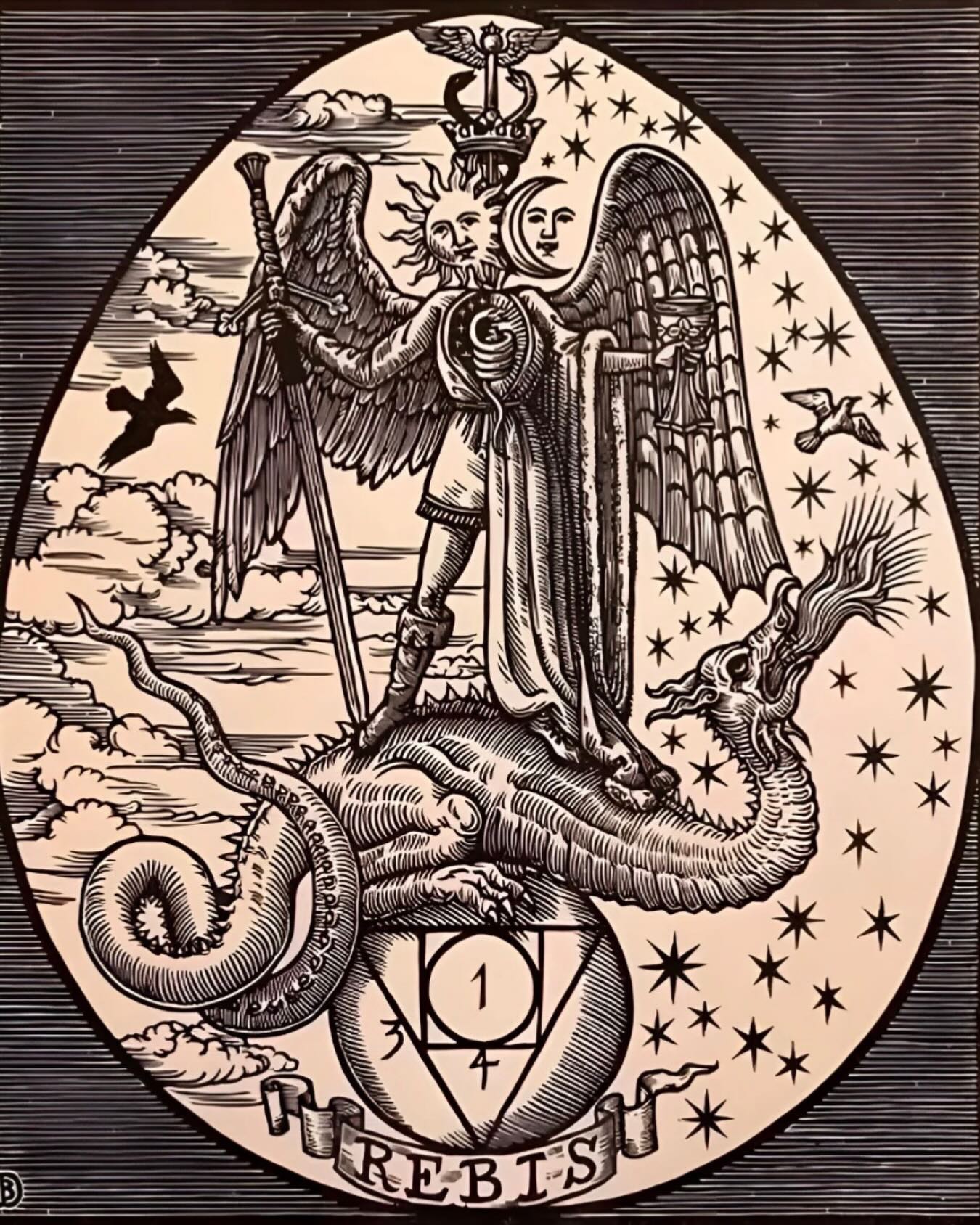
In alchemical symbolism, Antimony was associated with the wolf. The Royal Society of Chemistry connects this metal with the animal nature or wild spirit of human beings and nature.
The wolf is not merely violence: it represents the appetite that devours, the instinct that follows its trail, and the strength that must be guided. Working with Antimony means asking which impulse should be nourished, which should be restrained, and what latent ability still lies within the raw material.
The wolf preserves strength; the star gives it direction. Antimony does not ask us to stifle instinct, but to subject it to a process of discernment so that its drive serves a work rather than a compulsion.
The Starred Regulus
In the 17th century, George Starkey and Isaac Newton worked on antimony regulus. When cooled under certain conditions, the metal could show a radiating structure on its surface called starred regulus.
Princeton’s library presents a reconstruction and the manuscripts associated with this operation. The star was not a painted motif: it appeared at the end of a process of separation and crystallization. For the rite, it becomes the sign that a guided material reveals its order.
Instinct, sorting, and transformation
Antimony is suited to periods when a raw force seeks a form: anger to convert into defense, desire to transform into creation, ambition to submit to a rule. First write the impulse without embellishing it, then the work it could serve.
For sorting, draw three containers: ore, slag, regulus. Place in the first what is mixed; in the second what should be discarded; in the third what you want to preserve. The separation must produce a real decision.
The elements are Earth for the ore and Fire for the alchemical operation. Black, silver, and dark red accompany the passage from the hidden to the formed. The wolf emblem is suitable at the beginning; the star emblem, for the directed result.
The Rite of the Wolf and the Star
Leave the specimen in its box. Draw a wolf on the left and a star on the right. Between them, draw three circles named “recognize,” “separate,” and “direct.”
Write a sentence in each circle, then say: “I recognize the force, I remove what consumes it, I give it a work.” Fold the sheet toward the star and perform the action of the last circle. No material operation is required.
Correspondences and references
| Reference | Correspondence |
|---|---|
| Native antimony | Element Sb, silver-gray and brittle |
| Stibnite | Sb sulfide2S3, principal ore |
| Alchemical emblem | Wolf, instinctive nature and a force to guide |
| Operative figure | Starred regulus, order revealed through separation |
| Elements | Earth and Fire |
| Colors | Black, silver, and dark red |
| Domains | Instinct, sorting, transformation, discipline, and direction |
| Ritual gesture | Guide the wolf toward the star on the paper |