














































































































































































































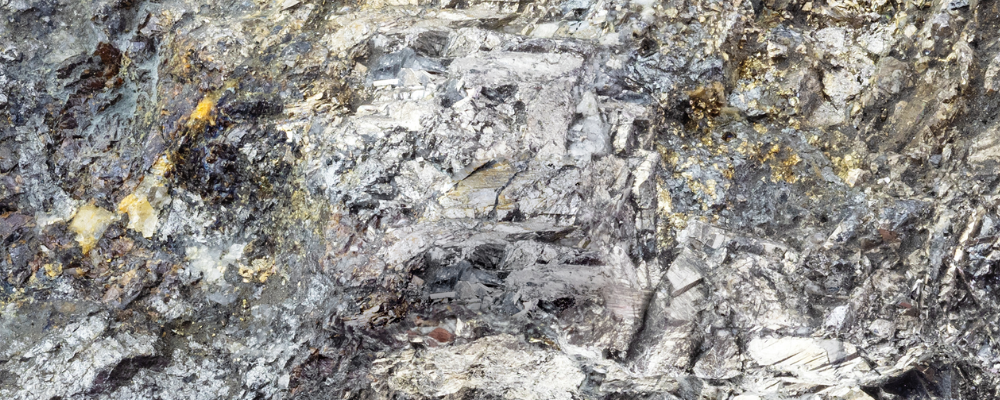
Arsenopyrite possesses the cold luster of metal and the clarity of a decision that can no longer be postponed. Its silver crystals, striated or shaped like lances, give the stone an austere and remarkable presence.
A major ore of arsenic, it requires appropriate handling, but its place is not limited to caution. In a mineral cabinet or on a protected altar, it becomes a powerful witness to discernment, boundaries, and contained strength.
To place this stone among related minerals, compare it with Iron, Hematite, and Magnetite.
The Sulfide of Iron and Arsenic
Arsenopyrite is an iron and arsenic sulfide, FeAsS. It forms silver to steel-gray crystals and occurs alongside several metallic ore deposits. Its hardness and luster distinguish it from many duller sulfides.
The Mindat entry presents its forms, chemistry, and localities. The Encyclopaedia Britannica describes it as one of the common ores of arsenic.
From Mispickel to Arsenopyrite
The mineral was long known by the German name Mispickel. The term Arsenopyrite, formed from arsenic and pyrite, became established in the 19th century to directly express its composition and metallic appearance.
The US Geological Survey recalls the role of arsenic minerals in the production and industrial history of arsenic. This history belongs to metallurgy and mining, not to an ancient magical lineage specific to the stone.
Power Held Within Its Limits
The material combines an alluring luster with a composition that demands a clear boundary. This coexistence offers a highly precise ritual image: recognizing the power of something without mistaking it for an invitation to grasp it without restraint.
Arsenopyrite teaches protection through discernment. It is suited to decisions in which fascination, genuine interest, and acceptable risk must be separated. Its magical power lies in conscious boundaries, not in direct contact with the material.
Saturn, Mars, Earth, and Fire
Saturn governs restriction, prudence, and responsibility. Mars corresponds to metal, cutting, and decision-making. Earth contains the ore; Fire recalls metallurgical transformations, without becoming a ritual method applied to the specimen.
Saturday is suitable for boundaries, and Tuesday for firm refusals. A closed box, a black line, or an iron object placed beside it can support the work.
Discernment, refusal, and decision
Arsenopyrite accompanies difficult negotiations, breaking free from a fascination, refusing an offer, and assessing a risk. It invites you to examine what attracts you, what it costs, and the point beyond which the agreement is no longer fair.
Kept in a display case or transparent box, it can represent a recognized but contained power. It is suitable for work involving intellectual protection, confidentiality, and responsible decision-making.
The Rite of the Metallic Boundary
Without taking the stone out of its box, draw a black line in front of it. On one side, write what you accept; on the other, what you refuse. Place a clean iron object on the line.
Say: “I recognize the force and set its limit.” Then state your decision in one sentence without excessive justification. Store the sheet with your documents.
Correspondences and references
| Reference | Correspondence |
|---|---|
| Nature | Iron and arsenic sulfide |
| Former name | Mispickel |
| Celestial bodies | Saturn and Mars |
| Elements | Earth and Fire |
| Days | Saturday and Tuesday |
| Ritual colors | Steel gray, black, dark red |
| Areas | Limitation, discernment, refusal, responsibility |
| Ritual gesture | Separating what is accepted from what is refused with a line |










