

























































































































|
IN THE SUMMARY...
1. What is Palo Santo? |
Palo Santo is a highly sought-after tool for purifying places and people, alongside sage. It is called "sacred wood" and comes from the spiritual and cultural traditions of South America. The name "Palo Santo" itself translates to "holy wood" in Spanish, proof of the importance of this sacred essence.
1. What is Palo Santo?
The Palo Santo tree, scientifically named Bursera graveolens, belongs to the Burseraceae family, a family of trees known for producing aromatic resins. It is mainly found in the dry forests of South America, especially in Peru, Ecuador, Colombia, and parts of Venezuela and Bolivia. This tree has adapted to arid conditions and mainly grows in sandy soils, which contributes to its unique characteristics and resilience.


Palo Santo is a tree that can reach up to 20 meters tall, but it is often much smaller. Its bark is smooth and gray in color, and it has the particularity of peeling off in thin layers, revealing underlying wood that is pale yellow to white. Its leaves are compound, alternate, oblong to lance-shaped, and light green in color. During the rainy season, it produces small, discreet flowers, usually yellow-green in color.
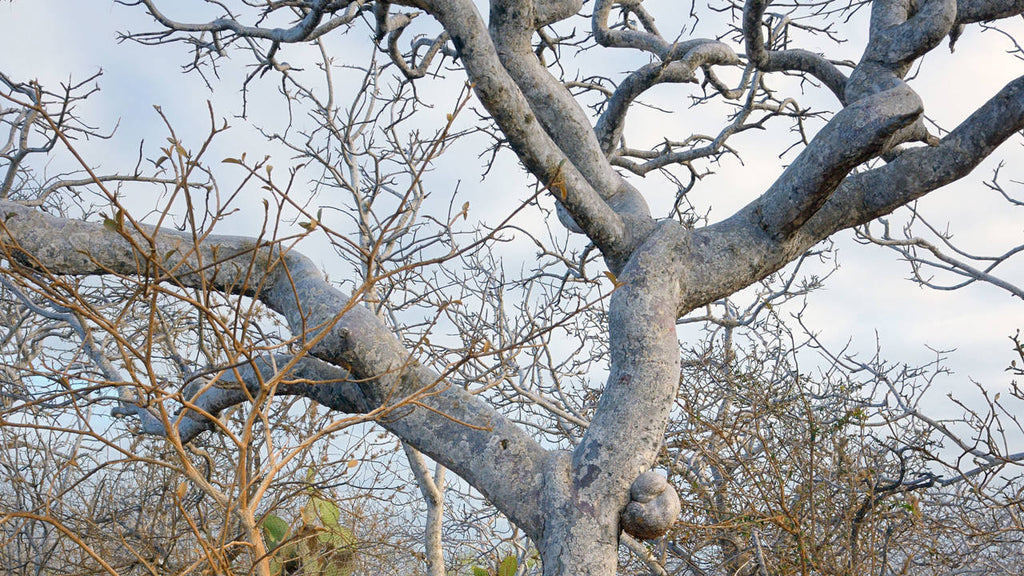
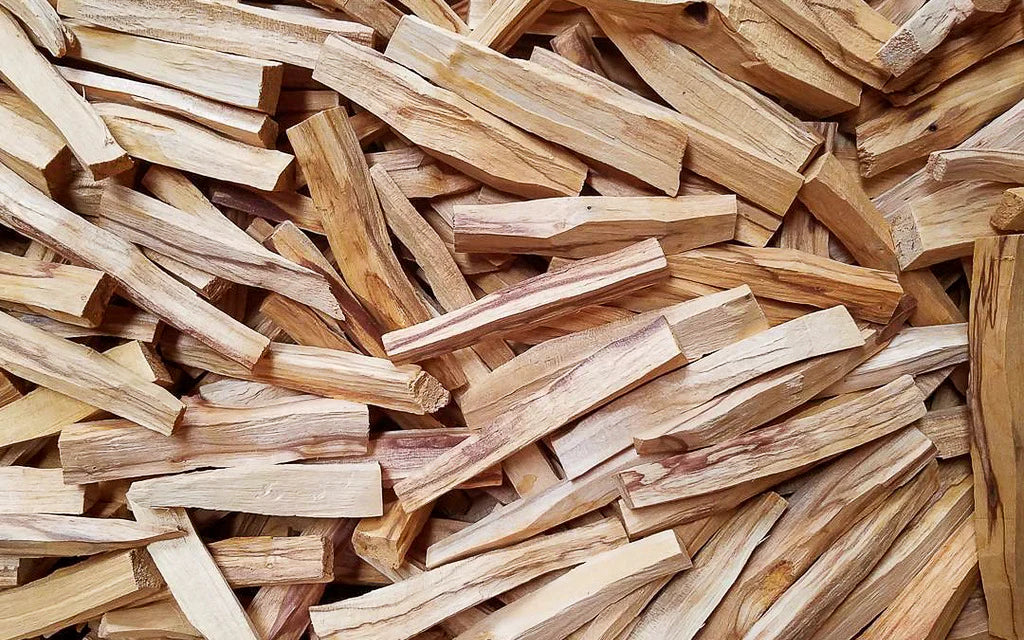
When we talk about Palo Santo, we refer to those pieces of wood that have naturally fallen and have been left to dry naturally on the forest floor for a prolonged period, often several years. This process allows the wood to develop its characteristic fragrances that are released when burned.
2. Palo Santo, the shaman's tool
Palo Santo has been used for millennia by indigenous peoples such as the Incas and their predecessors. Shamans and traditional healers burned this wood during sacred ceremonies, invoking its power to purify the spirit from negative energies and to attract luck and positivity.
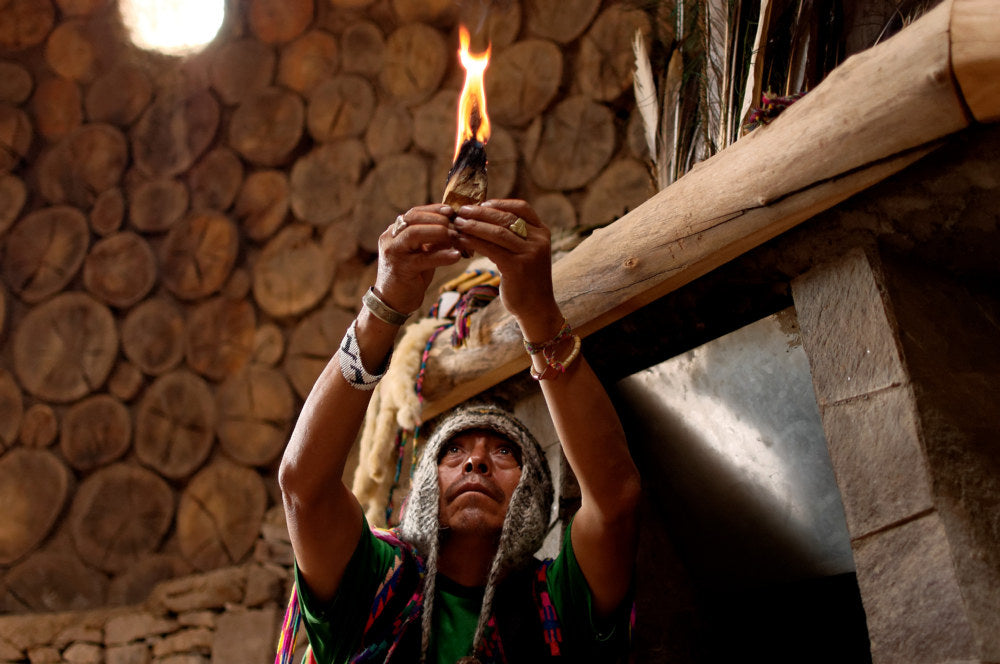
Evidence of Palo Santo use dates back more than a thousand years before our era, during which indigenous peoples of the Andean region, such as the Valdivia and Mochica, already familiar with its properties, incorporated it into their rituals and daily practices. The wood was especially valued for its ability to connect the physical to the spiritual, a characteristic trait of pre-Columbian shamanic practices.
With the rise of the Inca Empire, the use of Palo Santo became more complex. The Incas, famous for their astronomical advances and deep spirituality, used Palo Santo during ceremonies of great importance, often to mark seasonal changes, eclipses, or rites of passage. For them, the smoke of Palo Santo served to communicate with the higher world, purify sacred spaces, and ward off evil spirits.
3. How to use Palo Santo?
Using a piece of Palo Santo to purify your interior is similar to using a sage bundle. For optimal effectiveness, you should follow these steps:
| 1 | Before starting, open windows or doors to allow the smoke to escape and fresh air to enter. This will facilitate purification by allowing negative energies to leave the space. |
| 2 | Hold one end of the Palo Santo stick. Use a match or lighter to ignite the other end. Let the flame burn for about 30 seconds to a minute, then gently blow it out. The wood should start to emit smoke and a recognizable aroma. |
| 3 | Start at the entrance of the space to be purified, holding the Palo Santo so that the smoke disperses into corners and hidden areas where stagnant energy may accumulate. Move slowly through the space, paying special attention to areas around windows, doors, and behind furniture. It is also recommended to recite prayers, affirmations, or intentions to strengthen the purification effect. |
| 4 | It is often advised to follow a spiral path moving from the outside toward the inside of a room or space, symbolizing the concentration of purified energy. Be sure to pass through every room if you are purifying a house or apartment. |
| 5 | Once you have moved through the entire space, let the Palo Santo burn out in a heat-resistant container (such as a ceramic bowl or a coquille Saint-Jacques) until it extinguishes naturally. Some prefer to gently crush the ember to ensure it is completely out. |
| 6 | Leave windows or doors open a few more minutes after the ritual ends to allow any residual energy to escape and fresh air to circulate. |
4. What are the benefits of Palo Santo?
Traditionally used by indigenous peoples of South America to purify spaces from negative energies, this aromatic wood is also appreciated in aromatherapy for its calming effect. It reduces stress and promotes relaxation, helping to calm the mind during meditation.
Physically, Palo Santo is renowned for its anti-inflammatory and analgesic properties, useful for relieving muscle pain and inflammation. Its essential oil, rich in antioxidants, supports the immune system and offers antiseptic properties that can purify the air from microbes and bacteria. However, note that these are presumed benefits that are not scientifically proven and should not replace a visit to a healthcare professional.
Additionally, its unique scent acts as a natural insect repellent, making Palo Santo an ecological choice for repelling mosquitoes without harmful chemicals.
5. What is the aromatic essence of Palo Santo?
The aromatic essence of Palo Santo is quite complex, characterized by a unique blend of woody, earthy, and citrus notes that combine to create a scent that is both refreshing and soothing. When Palo Santo wood is burned, it releases a light smoke carrying distinct hints of pine and mint, enriched by nuances of lemon and a touch of vanilla.
This scent is often described as enchanting, with a richness that can recall incense but with a more pronounced freshness and less "oppressive" feel.
Now you know everything about Palo Santo and its benefits. As an alternative to smudge sticks or incense, it appears to be a good purification option, and on top of that, it smells great!