To place this metal in its material and historical context, compare it with Bronze, Or, and Silver.
Copper is a reddish metal known since Antiquity for its malleability, electrical and thermal conductivity, as well as its ability to form alloys such as bronze and brass.
1. What is the technical and scientific profile of copper?
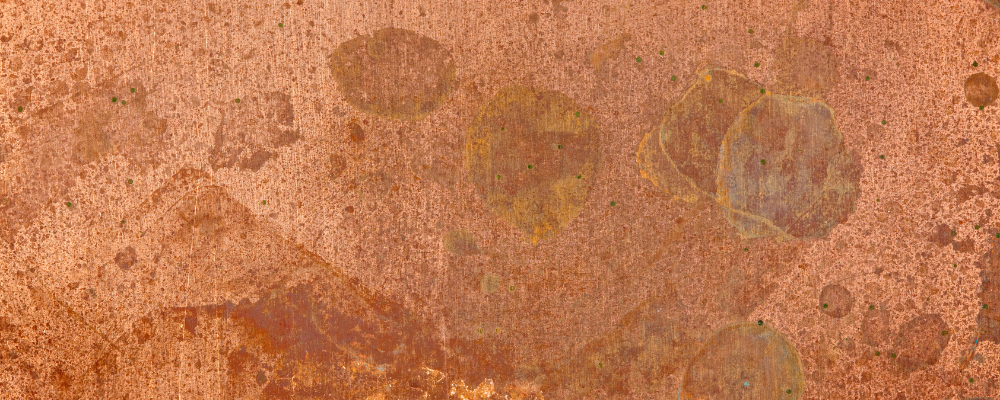
Copper, with the chemical symbol Cu (from Latin cuprum), is a metallic element with atomic number 29. It belongs to the transition metals group and is characterized by its distinctive reddish-brown color. Copper is extremely malleable and ductile, meaning it can be stretched into fine wires or hammered into thin sheets without breaking. Its density is about 8.96 g/cm³, and its hardness on the Mohs scale is 2.5 to 3, making it relatively soft. It is an excellent thermal and electrical conductor, surpassed only by silver. Copper is usually found in its native state in nature, often as metallic masses or cubic crystals, and can also be extracted from ores such as chalcopyrite and bornite.
2. Where are the copper deposits?
Copper deposits are distributed worldwide. Historically, the island of Cyprus was a major source of copper, hence the Latin name aes cyprium. Today, significant deposits are found in the United States, notably in the Keweenaw Peninsula in Michigan, where massive native copper formations have been discovered. Other notable deposits exist in Russia, Spain, Chile, Zambia, and the Democratic Republic of Congo. Copper mainly forms in cementation zones of sulfide deposits, cavities in volcanic rocks, and porous zones of mafic effusive rocks.
3. What is the rarity level of copper?
Copper is relatively abundant in the Earth's crust, with an average concentration of about 50 parts per million. However, large native copper deposits are rare and sought after by collectors. Although copper is widely available, the high industrial demand, especially in the electrical, construction, and electronics sectors, makes it a valuable and strategic metal.
4. What are the psychic virtues and benefits of copper in magic?
In magic, copper is renowned for its energy conduction properties. It promotes the flow of energy through the chakras, helping to balance the energy body. Copper is also used to amplify psychic abilities, facilitate astral travel, and enhance meditation. It is considered an energy catalyst, helping to remove blockages and harmonize the body's energies.
5. What is the history and origin of the name copper?
The term "copper" comes from the Latin cuprum, itself derived from the Greek kyprios, referring to the island of Cyprus, which was an important source of this metal in Antiquity. Copper is one of the first metals used by humans, with copper objects dating back to the Neolithic period, around 5000 BC. It played a crucial role in the development of civilizations, notably during the Bronze Age, when copper alloyed with tin allowed the manufacture of more effective tools and weapons.
6. What are the known variants of copper?
Copper mainly occurs in its native form, but it also forms alloys with other metals. The most common alloys are bronze (copper and tin) and brass (copper and zinc). Additionally, copper can form compounds with other elements, giving rise to minerals such as malachite, azurite, and cuprite, which are valued for their vivid colors and uses in ornamentation and magic.
7. What are the correspondences of copper in magic?
Copper is associated with the planet Venus and the element Water. It is linked to feminine energies, love, beauty, and creativity. Copper is used to attract love, strengthen romantic relationships, and stimulate sensuality. It is also employed in rituals aimed at balancing emotions and promoting harmony. Due to its ability to conduct energy, copper is often used to amplify the effectiveness of spells and charms. It is also associated with goddesses of love and fertility, such as Aphrodite and Ishtar.
8. What are the legends associated with copper?
In ancient Egypt, it was linked to the goddess Hathor, symbolizing femininity and fertility. In Greek mythology, copper was dedicated to Aphrodite, goddess of love and beauty. The metal was also used in rituals to attract love and abundance, and it was believed to possess protective properties against negative energies.
9. What are the methods of purification and recharging of copper in magic?
To purify copper used in magic, it is recommended to rinse it under running water or place it on a bed of coarse salt for several hours. Being sensitive to oxidation, it is advisable to dry it thoroughly after purification. To recharge it, exposure to sunlight or moonlight is appropriate, avoiding prolonged exposure to prevent any alteration.
10. What are the other names of this metal?
Copper is also known as cuprum in Latin. In some esoteric traditions, it is sometimes called the metal of Venus because of its association with the planet Venus and feminine energies. Moreover, copper is often referred to by terms related to its alloys, such as bronze and brass, which have their own correspondences and uses in magic. These different names reflect the historical and spiritual importance of copper, which continues to be used in various esoteric practices for its energetic properties and its connection to harmony and transformation.