


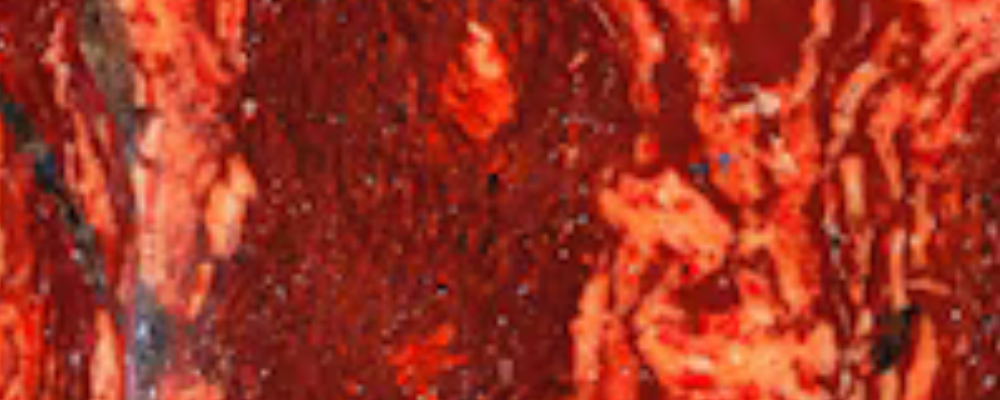
Brecciated Jasper does not conceal its ruptures. Angular fragments, broken and then reunited by new mineral matter, compose its reds, browns, and light veins. The stone retains the visible fracture while regaining cohesion: it offers a powerful image of repair, reconstructed continuity, and reorganized strength.
This interpretation aligns with its material without inventing an independent magical lineage for it. Jasper has an ancient history in seals and amulets; the brecciated structure adds a contemporary language of consolidation. Mars embodies trial and renewed action, Saturn the solidity regained, Earth receives the fragments, and Fire transforms their state.
To place this stone among related minerals, compare it with Jasper, Orbicular Jasper, and Dragon's Blood Jasper.
A Stone Made of Fragments
Breccia is a rock made of angular fragments joined by natural cement. In Brecciated Jasper, these elements are rich in silica and belong to the material family described by the Jasper mineralogical entry.
The pattern differs from a simple vein. The fragments were first broken and displaced, then mineral circulation filled the gaps. The light or dark seams show the phase that made the whole coherent.
Fracture, Displacement, and Cement
Tectonic stress, a collapse, or hydrothermal activity can fracture the rock. Silica-rich fluids then deposit Quartz or Chalcedony between the pieces. Hematite, Goethite, and other iron compounds color the reds, ochres, and browns.
Silica reaches approximately 6.5 to 7 on the Mohs scale. The stone withstands ordinary use well, but an old interface may remain more sensitive to a direct impact.
The Seals of Mesopotamia
The Metropolitan Museum houses a Paleo-Babylonian cylinder seal made of red and gray Brecciated Jasper, dated between the 19th and 16th centuries BCE. Another Kassite Brecciated Jasper seal attests to the continuity of this use.
The seal marked identity, authority, or the validation of an act. These objects attest to the ancient use of the material without assigning modern Brecciated Jasper a uniform ritual function.
The seam does not return the stone to its original state. It creates a new continuity. The symbol therefore does not ask us to erase the rupture, but to recognize what now connects the parts.
Mars, Saturn, Earth, and Fire
Mars corresponds to the break endured, the courage to begin again, and energy set back in motion. Saturn governs the time of consolidation, the framework, and the commitment that holds. Earth contains the pieces; Fire evokes the transformation that follows the ordeal.
Tuesday is suitable for resuming an action, and Saturday for stabilizing it. Brick red, brown, and gray make up its palette. A seal, a red thread, and three clean shards can accompany the stone.
Repair, Renewal, and Cohesion
Brecciated Jasper supports reconstruction after a separation, stoppage, or abrupt change. It helps reveal what remains usable, what serves as a connection, and what will not regain its former shape.
Its character also suits a group that is re-forming. Each part keeps its outline but accepts a shared structure solid enough to allow renewal.
The Seal of the Reunited Pieces
Arrange three shards or three pieces of paper around the Jasper. Write on each one a part preserved after the break: knowledge, a connection, or a resource. Connect them with a red thread without trying to conceal the gaps.
Place a seal or your hand at the center and say: “I do not deny the break. I bring together what can hold and give the whole a new form.” Keep the arrangement in place until the first reconstruction action.
Correspondences and references
| Reference | Correspondence |
|---|---|
| Nature | Breccia rich in jasper and silica |
| Celestial bodies | Mars and Saturn |
| Elements | Earth and Fire |
| Days | Tuesday and Saturday |
| Ritual colors | Brick red, brown, gray |
| Domains | Repair, renewal, cohesion, endurance |
| Associated objects | Seal, red thread, shards |
| Gesture | Connecting the parts without concealing the seams |