












































































































































































































Stanislas de Guaita was a French poet and occultist whose eventful life reflects the esoteric fervor of the late 19th century. Born into the Lorraine aristocracy, he pursued both a promising literary career and a fervent spiritual quest at the heart of Paris’s occultist circles. Co-founder of the Kabbalistic Order of the Rose-Cross alongside Papus and Joséphin Péladan, he established himself as one of the leading “mages” of the Belle Époque. A portrait.
Lorraine Origins and Literary Vocation
Born on April 6, 1861, at the Château d’Alteville near Tarquimpol in Lorraine, Stanislas de Guaita grew up in a wealthy family with a cosmopolitan pedigree. Through his mother, Marie-Amélie Grandjean, he descended from an old Lorraine lineage, while his father, Marquis François-Paul de Guaita, belonged to a noble family of Lombard origin that had settled in France at the beginning of the 19th century. Destined to bear the title of marquis, young Stanislas received a refined education. He attended secondary school at the lycée in Nancy, where he became as passionate about chemistry as he was about metaphysics and poetry. It was in Nancy that he befriended Maurice Barrès, a future renowned writer who was then his classmate and shared his literary aspirations. Together, the two young men recited Baudelaire and dreamed of the absolute. Barrès remained a close friend: years later, Guaita would even introduce him to the mystical circles of Martinism. Barrès paid tribute to this influence by writing the preface to a reissue of At the Threshold of Mystery—one of Guaita’s major works—and portraying him through the character of Saint-Phlin in his novel The Uprooted.
At the same time, Stanislas de Guaita established himself as a poet at an early age. At just twenty, he published Passing Birds (1881), a collection of fantastical verse, followed by The Black Muse (1883) and Rosa mystica (1885). His poetry, imbued with idealism and subtle esoteric references, received an encouraging welcome in literary circles. Critics detected the influence of emerging Symbolism, even though Guaita’s style remained formally close to the classicism of the Parnassians. As the historian Alain Mercier would later analyze, he seemed to be inhabited by two distinct personalities: “the generous aristocratic hermeticist on the one hand, and the tormented, anxious poet of artifices on the other.” In 1885, crowned by the publication of Rosa mystica, Guaita left his native Lorraine to settle in Paris, the cultural epicenter where artists and occultists of the fin de siècle converged. His elegant apartment in the capital soon became a sought-after salon where decadent poets, Symbolist painters, and students of the occult sciences mingled. The young marquis, an erudite dandy who, according to some accounts, was always dressed in red, fascinated his contemporaries with his brilliant mind and aura of mystery.
From Poetry to Esotericism: The Quest for Occult Knowledge
It was in Paris that Stanislas de Guaita fully opened himself to esotericism. One meeting proved decisive: that with Joséphin Péladan, a mystical writer with whom he shared student lodgings for a time. Péladan had just published roman à clef novels such as The Supreme Vice (1884), in which he depicted Rosicrucian initiates and magical arcana. This reading revealed to Guaita the existence of a universe of esoteric knowledge and secret traditions that he sensed to be the forgotten legacy of an ancestral wisdom. Eager to learn more, he immersed himself in the study of the occult masters. The work of Éliphas Lévi—a former abbot who became a mage—introduced him to the mysteries of Christian esotericism and provided him with a solid doctrinal foundation. Fascinated, Guaita quickly became one of Lévi’s most fervent exegetes and admirers, regarding his writings as the modern rediscovery of the lost “universal science.” At the same time, he studied the works of the esotericist Fabre d’Olivet, which familiarized him with the great cosmogonic myths and the sacred Hebrew language. Under the conceptual guidance of these pioneers, Guaita set out to “restore the language of myths and emblems” in opposition to the popular spiritualist doctrines of his time—notably the spiritism of Allan Kardec and the theosophy of Madame Blavatsky, whom he kept at arm’s length despite the admiration he felt for her. He believed that these movements, although fashionable, sometimes strayed far from authentic High Magic, of which he wished to be the custodian.
Stanislas de Guaita’s thought was also enriched by his intellectual encounter with the occultist Saint-Yves d’Alveydre. The latter won him over to the ideas of Synarchy, a theory of an ideal government of initiates who would secretly guide society toward harmonious order. Nourished by these many influences, Guaita gradually developed a worldview in which the Christian Tradition occupied a central place, reconciled with the contributions of the Kabbalah and Hermeticism. He advocated an exalted spiritualism in which the establishment of a spiritual Synarchy would lead to the symbolic advent of the “Kingdom of God” on earth. His ambition was to revive Christian Kabbalah—that is, the Jewish mystical interpretation adapted to Christian doctrine—while relying on rigorous scholarship. Like his teacher Éliphas Lévi several decades earlier, Guaita wanted to make this esoteric knowledge accessible to an educated public by presenting it in a modern and rational form. To this end, he assembled a vast personal library of grimoires, cabalistic treatises, works of alchemy, and other rare volumes, bringing together a veritable compendium of occult knowledge from the Renaissance to the modern era. Within this collection, which he annotated and commented on, he did not hesitate to copy, translate, or even complete ancient unfinished manuscripts himself, thus literally placing himself in the chain of the Kabbalists of old. Drawing on these intense studies, Stanislas de Guaita published his first esoteric essay in 1886, At the Threshold of Mystery, which aimed to provide a methodical introduction to the “occult sciences.” This work marked his official entry into Paris’s closed occultist world, where his erudition and fervor made a strong impression.
That same year, Guaita met Gérard Encausse, a medical student four years his junior who was also passionate about occultism. Encausse, better known by his pseudonym “Papus,” quickly became Guaita’s spiritual comrade-in-arms. Together, they frequented the capital’s esoteric lodges and circles, including the recently founded Hermetic School established by Papus, as well as the Martinist Order—an initiatory society that claimed the legacy of the 18th-century illuminist Louis-Claude de Saint-Martin. Guaita joined this Martinist circle, while teasing Papus about his exotic nickname, borrowed from a spirit in the Book of Nectanebo. This complementary duo—Papus, the energetic physician and organizer, and Guaita, the contemplative and doctrinal poet—would soon have a lasting impact on the French occultist landscape.
The Kabbalistic Order of the Rose-Cross
In 1888, driven by the growth of their shared activities, Stanislas de Guaita took action by creating, with the help of Papus and Joséphin Péladan, a new initiatory order: the Kabbalistic Order of the Rose-Cross. This foundation followed in the mythical footsteps of the Fraternity of the Rose-Cross, a legendary esoteric society that had appeared in the 17th century and that they intended to revive in the spirit of the fin de siècle. The Kabbalistic Order of the Rose-Cross (OKRC) presented itself as a structured occult academy: it offered its members graded instruction in the Kabbalah and esoteric sciences, validated by genuine internal examinations and diplomas. Guaita, an indefatigable scholar, drew on his library and knowledge to provide demanding esoteric instruction, combining the Western Hermetic tradition with mystical exegesis of the Bible. His erudition and charisma soon earned him, in some circles, the nickname “Prince of the Rosicrucians” of his era. A host of disciples and friends gathered around him: Papus, of course, but also Marquis Antoine de La Rochefoucauld, composer Erik Satie, and writer Oswald Wirth, whom Guaita recruited as his private secretary. Even the nationalist writer Maurice Barrès, initially a stranger to the “secret sciences,” became interested in the teachings offered within the Order out of friendship for Guaita.


From its creation, however, the Kabbalistic Order of the Rose-Cross was undermined by internal disagreements. Joséphin Péladan, who had been an enthusiastic co-founder, distanced himself after a few years. In 1890, Péladan split from the OKRC and slammed the door to establish his own mystical organization: the Order of the Catholic and Aesthetic Rose-Cross of the Temple and the Grail. Officially, the eccentric Péladan reproached Guaita and Papus for mixing the overly earthly practice of “operative magic”—that is, rituals of invocation and other exercises in practical occultism—with high Rosicrucian spirituality, which he considered incompatible with the purity of mystical aesthetics. In reality, the rivalry of temperament and authority between Guaita and Péladan partly explains the break. Whereas Guaita valued rigorous study of texts and esoteric experimentation, Péladan favored a more artistic and Catholic approach to esotericism, proclaiming himself “Sâr” and high priest of an aesthetic religion. In any case, Péladan’s defection created a resounding schism in the Parisian occultist microcosm. Papus and Guaita, on one side, continued their scientific esoteric path within the OKRC, while Péladan, on the other, gathered around him a circle steeped in Christian Symbolism, organizing Rose-Cross Salons from 1892 onward where the artistic elite of the time exhibited paintings, music, and literature inspired by mystical idealism. This split illustrates the tensions between two faces of fin-de-siècle occultism: one oriented toward magical experimentation and the syncretism of esoteric knowledge, the other toward a spirituality infused with art and Catholic fervor.
Occultist Disputes and the “War of the Mages”
A leading figure in occultism, Stanislas de Guaita soon found himself involved in high-profile controversies. The most famous remains the affair known as the “war of the mages,” which pitted him and Papus against another self-proclaimed mage: Abbé Joseph-Antoine Boullan. A defrocked former Catholic priest, Boullan led a mystical-sexual cult in Lyon with strange practices, the Church of Carmel. Around 1891, through mutual informants, Guaita learned of rumors about the black masses and unorthodox rites that Abbé Boullan was allegedly conducting in private. According to some accounts, Guaita and his friend Oswald Wirth even investigated on site and corresponded with two repentant disciples of Boullan, gathering confidences about ceremonies of “magical love” and other transgressions combining mysticism and sexuality. Outraged, Guaita was reportedly preparing a public warning against Boullan, but the written attack would not have time to appear.
Indeed, it was Boullan who went on the offensive first, supported by the writer Joris-Karl Huysmans. The latter, a Naturalist novelist converted to a Catholicism haunted by Satanism, was fascinated by Boullan, whom he regarded as a holy man persecuted by the forces of Evil. In 1891, Huysmans published Down There, a sensational roman à clef depicting contemporary Satanist circles. In barely veiled caricature, he portrayed Stanislas de Guaita as a cruel and decadent demonic mage, while idealizing Boullan as a mystic carrying an inverted cross—Saint Peter’s symbol—to protect himself from the Devil. The book achieved enormous notoriety and helped spread the image of Guaita as a “Satanist sorcerer” among fashionable society. A few months later, in January 1893, Abbé Boullan suddenly died of a heart attack. In his grief, Huysmans publicly insinuated that his friend’s death had been caused by a deadly spell sent from a distance by Guaita and his accomplices. The accusation was serious and poured fuel on the fire.
Furious at being accused of magical murder, Papus and Guaita demanded satisfaction. Through the press, a friend of Huysmans—the occult journalist Jules Bois—challenged Stanislas de Guaita to a duel to avenge Boullan’s honor. The duel took place in 1893 with pistols: Guaita and Bois faced each other and exchanged shots that fortunately missed their target, leaving neither man injured. At the same time, Papus reportedly crossed swords with another opponent involved in the affair. The “war of the mages” thus ended with honor intact, but it left a lasting impression. It crystallized the antagonism between Guaita and Papus’s occultist camp—advocating an active esotericism rooted in the Rosicrucian tradition—and the camp of Huysmans and Bois, supporters of a conspicuous Catholic mysticism that saw Satanists everywhere. After these duels and an exchange of bitter letters, Huysmans eventually withdrew his public accusations, while retaining a deep hostility toward Papus and Guaita in his later writings. As for Jules Bois, he later reconciled with Papus, apparently acknowledging that fears surrounding Boullan had been exaggerated.
Almost simultaneously, another controversy disturbed the already turbulent waters of French occultism: the Léo Taxil affair. Gabriel Jogand, known as Léo Taxil, was an ambiguous figure who, after campaigning for militant anticlericalism, claimed to have converted to Catholicism before launching a gigantic hoax in the 1890s. Under the pretext of exposing supposed Satanic cults within Freemasonry, Taxil published forged testimonies and serialized novels—notably The Devil in the 19th Century under the pseudonym “Dr Bataille”—in which he spun fantastic tales of a Luciferian Palladium and demonic apparitions. These ravings found a broad audience among the credulous Catholic public of the time before being exposed as a hoax in 1897. Stanislas de Guaita and his fellow occultists, initially kept at a distance from the affair, found themselves indirectly targeted: in his writings, Taxil did not hesitate to recycle and exaggerate various elements of contemporary occultism to make his story more plausible. For example, he cited reference works by Éliphas Lévi, Saint-Yves d’Alveydre, and Guaita himself, transforming real occultists—such as Péladan, whom he called a “fantastical mage”—into characters in his alleged Luciferian conspiracy. By blending truth and fabrication in this way, Taxil brought discredit upon the entire occultist milieu. Guaita, Papus, and others fought back by denouncing the imposture as soon as doubts arose: Papus notably attended the public session in April 1897 at which Taxil confessed his deception, bringing the affair to a sensational close. This troubled period showed how Stanislas de Guaita and his peers had to fight on two fronts: against external attacks from a suspicious clergy, relayed by polemicists such as Huysmans and Taxil, and against internal divisions within the esoteric camp itself.
The Essays on the Accursed Sciences: An Unfinished Esoteric Trilogy
Despite these upheavals, Stanislas de Guaita devoted most of his energy during the 1890s to developing his great esoteric work: a series of books grouped under the ambitious title Essays on the Accursed Sciences. By “accursed sciences,” Guaita meant the body of occult knowledge—magic, Kabbalah, alchemy,...—traditionally disparaged or condemned by positivist reason and religious morality. His project was to offer an in-depth, methodical, and almost scientific study of them in order to restore their intellectual dignity. In the preface to The Serpent of Genesis, he clarified that his books “claim not to disturb the peace of any conscience”: far from being grimoires of witchcraft, they instead aimed to illuminate these arcana from a rational and moral perspective.
The triptych of Essays on the Accursed Sciences opens with At the Threshold of Mystery (1886), which lays the foundations of his thought by introducing the general principles of occultism. In this inaugural volume, Guaita invites the reader to take a giant step toward the unknown, to the threshold of “Mystery”: he discusses the reality of invisible forces, the symbolism of rituals, and the importance of esoteric Tradition, thereby preparing the uninitiated to enter the sanctuary of magic with caution. The second part is entitled The Serpent of Genesis and was originally intended to contain three sections called “septenaries” (probably subdivided into seven chapters each). Guaita completed only two of them during his lifetime. The First Septenary, published in 1891 under the title The Temple of Satan, explores the dark side of the spiritual world: Guaita addresses the problem of Evil, bewitchment, demonic entities, and the traps of black magic, all in the form of essays combining cabalistic erudition with philosophical reflection. This audacious work, whose title gave it a scandalous air, caused some consternation among the public—people whispered that the author must have made a pact with the Devil to write such pages—but it definitively established Guaita’s reputation as a thinker of occultism. The Second Septenary appeared in 1897 under the title The Key to Black Magic. Published in the same year as Guaita’s death, this volume develops the themes of the previous one by offering “keys” for interpreting magical rites and symbols, particularly through the study of pentagrams, talismans, and other esoteric seals. It includes, for example, a famous illustration of an inverted pentagram with a goat’s head, drawn by Guaita himself, which would later become an icon associated with depictions of Baphomet and Satanism. As for the Third Septenary, planned under the title The Problem of Evil, Stanislas de Guaita would not have time to complete it: it remained in the form of scattered manuscripts. His faithful secretary Oswald Wirth partially continued the writing after 1897, and it was ultimately the occultist Marius Lepage who compiled and published the posthumous work in 1949. Thus, nearly fifty years after the author’s death, the cycle of the Essays on the Accursed Sciences came to a close.
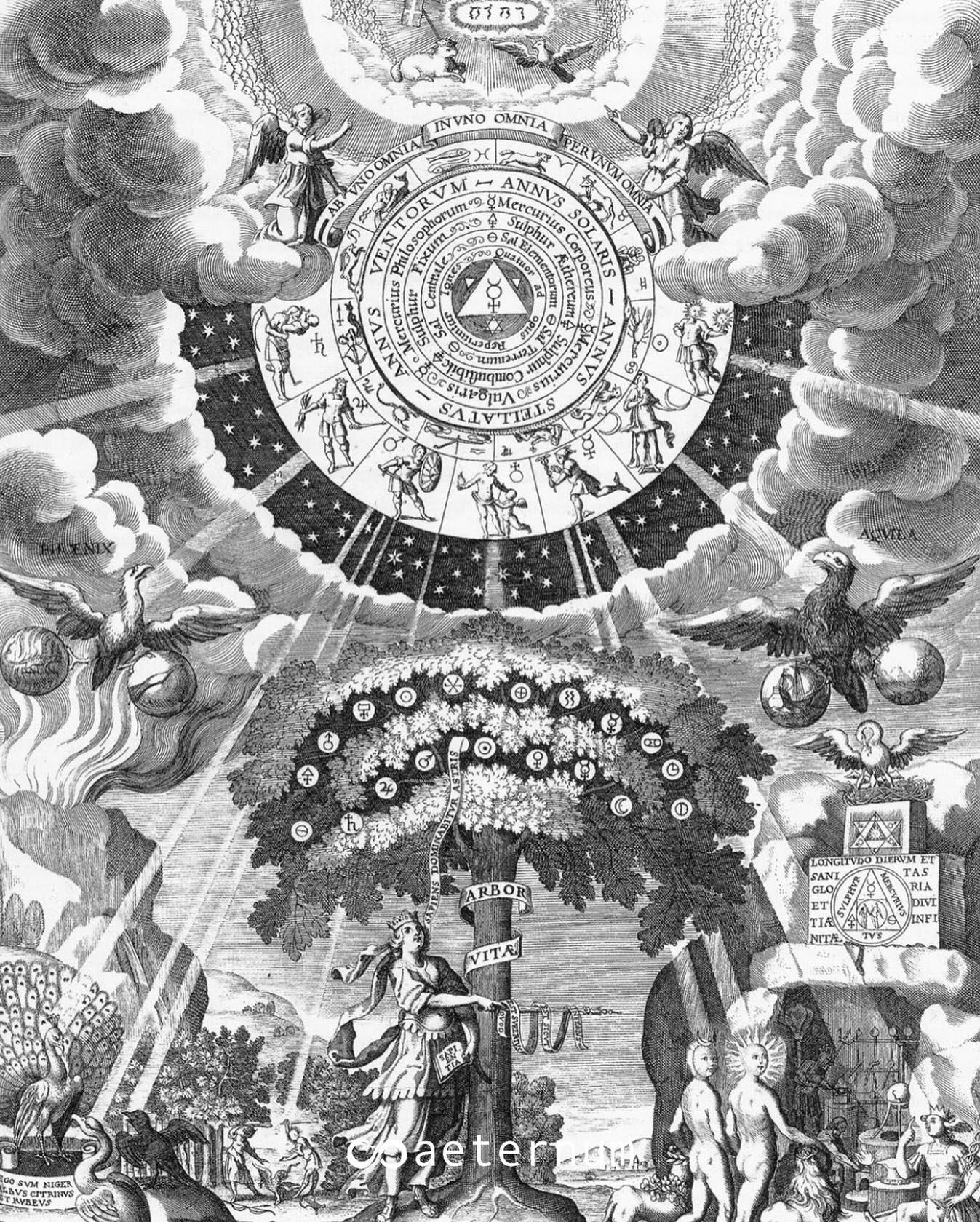
In addition to his books, Guaita left a few short texts, such as a Discourse on Martinist Initiation delivered in 1889 for a reception into the third degree of the Martinist Order. Above all, he made an original contribution to the esoteric aesthetics of his time by encouraging the creation of new symbols and teaching aids. In collaboration with Oswald Wirth, he thus designed an innovative esoteric tarot in 1889 known as the Tarot of the Bohemians or Tarot of the Medieval Image-Makers. Guided by Guaita, Wirth redrew the tarot’s 22 major arcana, incorporating Kabbalistic correspondences: each card was associated with a letter of the Hebrew alphabet and bore extensively reworked symbols. This colorful Kabbalistic tarot, rich in occult signs, was published with Guaita’s financial support and became a reference in the small world of Symbolist cartomancy. Likewise, under Guaita’s guidance, the Kabbalistic Order of the Rose-Cross undertook the translation and reissue of ancient esoteric treatises: the first French translation of Amphitheatre of Eternal Wisdom by the German Rosicrucian Heinrich Khunrath appeared in 1900 from the publisher Chacornac, the result of collective work begun during Guaita’s lifetime. These endeavors testify to Stanislas de Guaita’s desire to transmit a legacy and create tangible bridges between the esoteric past and fin-de-siècle modernity, through his writings as well as through images and rites.
Early Death and Posthumous Legacy
Physically worn down by years of relentless study, feverish nights of writing, and perhaps the abuse of stimulants, Stanislas de Guaita’s health deteriorated toward the end of the 1890s. Like many artists of his time, he used morphine, opium, or cocaine both to sustain his inspiration and relieve chronic pain. This life of “addicted bohemia,” in the words of a modern historian, eventually caught up with him. In December 1897, exhausted, Stanislas de Guaita left Paris to take refuge in the peaceful surroundings of his family château at Alteville in Lorraine. It was there that he died suddenly on December 19, 1897, at just 36 years of age, overcome by what was reported as a narcotics overdose. News of his premature death deeply saddened his friends—Papus delivered his funeral oration—and caused a sensation in the press, where people spoke of the “tragic end of the mage of the Rose-Cross.” Guaita was buried in the family vault at Tarquimpol, where his discreet grave bears the Latin epitaph In Cruce Salus (“In the Cross, salvation”), a symbol of his esoteric faith.
Despite his short life, Stanislas de Guaita left a lasting mark on the history of Western occultism. As early as 1898, his friend Maurice Barrès published a moving tribute entitled Stanislas de Guaita (1861-1898): A Reviver of Occultism, praising him as the man who had breathed new life into neglected esoteric sciences. Papus and Oswald Wirth, his closest companions, perpetuated his legacy within initiatory orders and specialized journals. In 1935, Wirth published Memoirs of His Secretary, recounting from the inside the fertile atmosphere that surrounded Guaita during the era of the Kabbalistic Order of the Rose-Cross. He describes a man whose generosity and nobility of heart matched his thirst for knowledge, always ready to guide younger people along the path of “High Science.” Guaita’s works, particularly The Temple of Satan and The Key to Black Magic, were regularly reissued in occultist circles during the 20th century, where they came to be regarded as classics. His scholarly approach to the Kabbalah and magic contributed greatly to grounding French occultism in an intellectual perspective, far removed from mere superstitious folklore. By taking up Éliphas Lévi’s legacy, he helped rehabilitate a Christian Kabbalah conceived as an esoteric complement to religion. Numerous 20th-century esotericists—from René Guénon to Aleister Crowley—acknowledged the influence of his ideas or of his example of a life devoted to the quest for Hidden Truth. In Rosicrucian circles, Stanislas de Guaita is honored as a leading thinker of the Belle Époque generation, alongside Péladan, Sédir, and Papus. His name remains associated with the Symbolist aesthetic, of which he was one of the inspirations: the figure of the mage who traverses late-19th-century literature, from Huysmans’s Down There to the poems of Jean Lorrain, owes much to Guaita and his distinctive aura. As proof of this legacy, the Académie de Stanislas, a Lorraine learned society, awarded a Stanislas de Guaita Prize until 1984, recognizing literary or historical works in the spirit of his search for mystery.
Thus, within the space of a few years, Stanislas de Guaita remarkably embodied the convergence between the Symbolist movement and the occultist revival of the late 19th century. He therefore remains an emblematic figure of the Belle Époque: a visionary aristocrat who sought to bring poetry and magic, faith and science, into dialogue in order to approach the ineffable mystery of invisible worlds.
Sources:
-
Maurice Barrès – Stanislas de Guaita (1861-1898): A Reviver of Occultism – Memoirs. Chamuel, Paris, 1898.
-
Oswald Wirth – Stanislas de Guaita, Memoirs of His Secretary. Éditions du Symbolisme, Paris, 1935.
-
Antoine Faivre – “GUAÏTA, Stanislas de (1861-1897),” Encyclopædia Universalis (article updated January 29, 2025).
-
Arnaud de l’Estoile – Guaita (the “Who Am I?” collection). Éditions Pardès, 2004.
-
Rémi Boyer, Gilles Bucherie, Serge Caillet, et al. – Stanislas de Guaita, Forerunner of Occultism. Éditions du Cosmogone, Lyon, 2018.
-
Emmanuel Dufour-Kowalski – Stanislas de Guaita (1861-1897). Grand Master of the Kabbalistic Rose+Cross. Éditions Archè, Milan, 2021.








Assez bref et néanmoins, à ce qu’ il me semble, complet.
Pour un néophyte absolu, quel serait le premier ouvrage
à lire dans ce domaine ?
Merci.