














































































































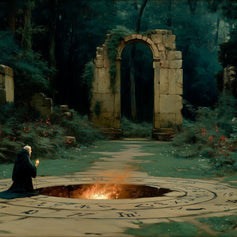
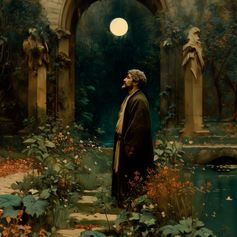
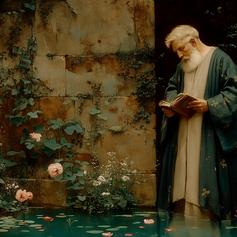
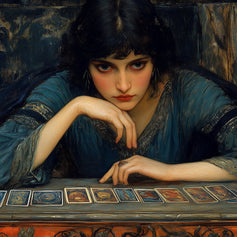
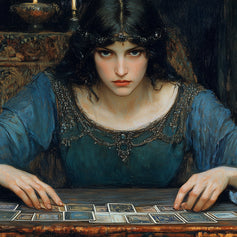
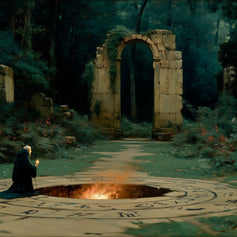

The intellectual scene of the Belle Époque belonged to figures of great stature, but few matched the influence of Gérard Encausse. This French physician, better known by his pseudonym Papus, worked tirelessly to reconcile modern knowledge with the traditions of Antiquity. His life unfolded in a state of constant activity between medical consultations and work within societies devoted to philosophical inquiry, earning him the title of the “Balzac of occultism.”
An education between scientific rigor and spiritual curiosity
Gérard Anaclet Vincent Encausse was born on July 13, 1865, in La Coruña, Spain, into a family environment that already brought together two strong and complementary influences. His father, Louis Encausse, a chemist of French origin, embodied a rigorous approach based on observation and experimentation, while his mother, descended from the Spanish nobility, passed on an older cultural heritage marked by intellectual refinement and a sensitivity to tradition. In 1869, the family left Spain and settled in Paris, a decisive move that placed young Gérard at the heart of an exceptionally rich intellectual environment, where science, literature, and the most varied currents of thought of the late nineteenth century intersected.
In this setting, he grew up surrounded by books and ideas, developing an early and sustained curiosity for knowledge, whether related to medicine, philosophy, or more discreet disciplines. He naturally turned toward medical studies, a path that reflected both his father’s influence and his interest in understanding the human body. He regularly attended the wards of the Hôpital de la Charité, where he observed patients, medical practices, and the concrete limits of the science of his time. It was in this demanding yet practical environment that a dual vocation gradually took shape: on one side, the physician eager to understand the mechanisms of the body; on the other, the researcher drawn to what could not be explained by material causes alone.
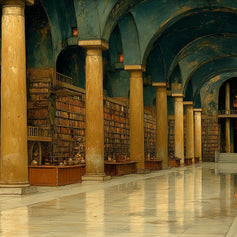
Alongside his university education, he pursued personal research of remarkable intensity. He went almost daily to the Bibliothèque nationale de France, where he devoted long hours to studying ancient manuscripts, treatises on alchemy, and Kabbalistic texts. This immersion in ancient sources was not merely an exercise in curiosity, but a genuine, structured investigation aimed at understanding symbolic systems and the correspondences between body, mind, and the world. The writings of Éliphas Lévi held a central place in his intellectual development, serving as a foundation for his thinking and permanently shaping his approach to the relationship between science and tradition.
In 1894, he obtained his medical doctorate, officially completing his university education. His thesis, devoted to philosophical anatomy, already demonstrated a clear desire to move beyond a strictly material reading of the human body by incorporating a broader dimension connected to the correspondences and invisible principles that structure the individual. This position, at the crossroads of medicine and symbolic thought, characterized his entire subsequent body of work. A few years earlier, around 1888, he had adopted the pseudonym Papus, a name taken from a Neoplatonic text in which it referred to a healing spirit. This choice was far from insignificant, as it affirmed his intention from that time onward to place himself within an ancient tradition in which medical knowledge and knowledge of invisible forces were not opposed, but formed part of the same comprehensive quest to understand humanity.
The principle of analogy, or the key to understanding the universe
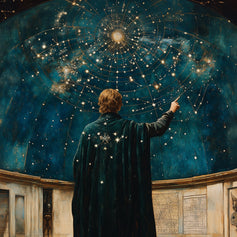
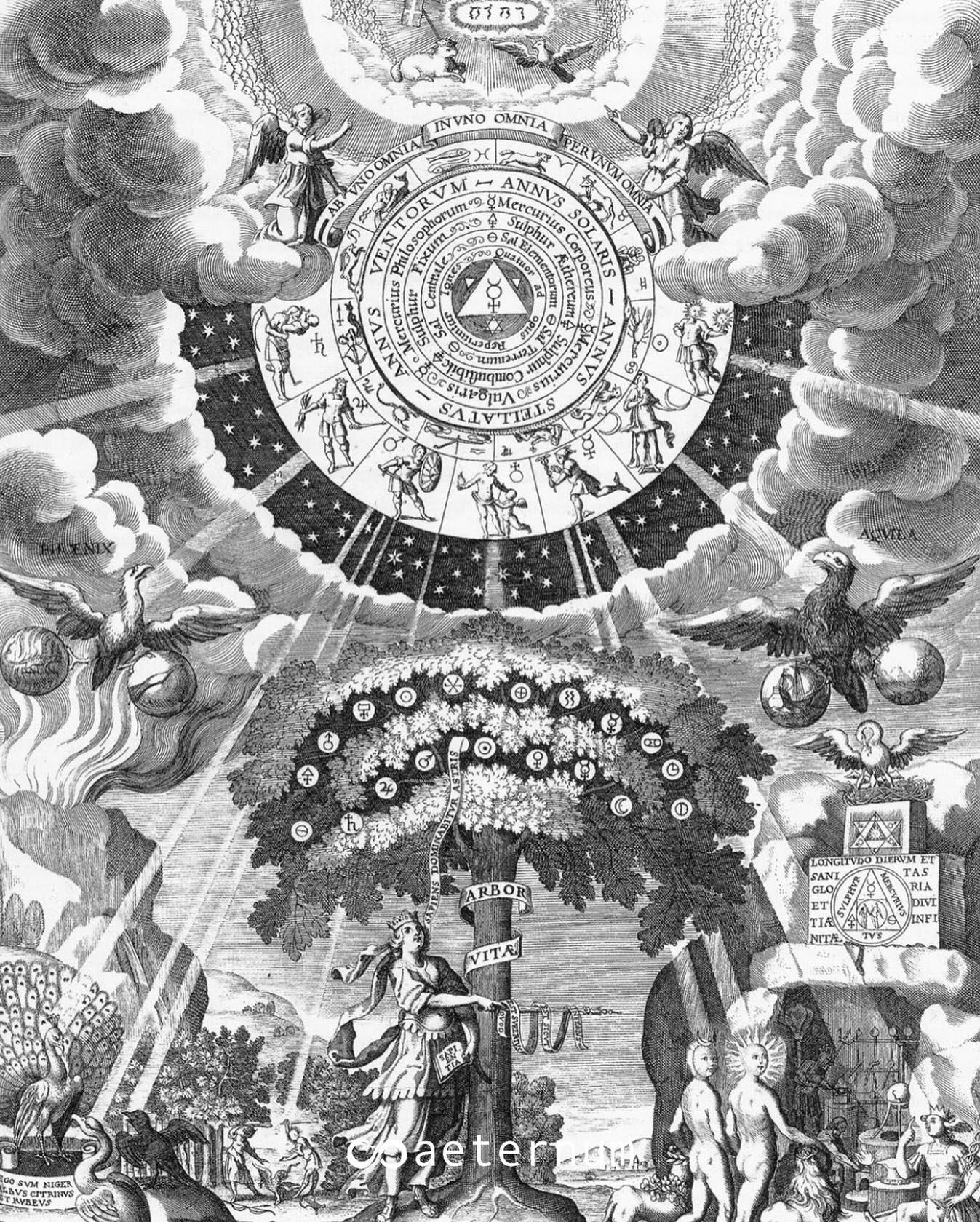
Papus’s thought was organized around a central principle: analogy, which he regarded as the key to understanding the world. In his view, the universe was not an assemblage of separate elements, but a coherent organism in which each part reflected the whole, like a fragmented mirror reproducing the same image in many forms. This conception led him to oppose the dominant scientism of his era, which restricted the study of reality to what could be directly measured and observed. For him, occult science was not an imaginary construction or a mere ancient legacy; rather, it was a structured method based on observing the connections between the visible and the invisible, and on an internal logic as rigorous as that of the classical sciences. This method rested on the principle of correspondences, according to which every element of the earthly world formed part of a broader chain linking it to higher spheres, the stars, and celestial intelligences, creating an ordered network in which nothing stood alone. By understanding these relationships, the initiate did not merely accumulate theoretical knowledge; he acquired the ability to act, because a trained and disciplined will could influence these connections and produce tangible effects in the world.
This logic also appeared in the doctrine of signatures, which illustrated this system of analogies in tangible form by directly linking natural shapes to their uses. According to this conception, a plant carried visible indications of its function, like a discreet script expressed through its shape, color, or structure. A leaf that resembled a human organ thus indicated a particular connection with it, suggesting a specific application in the art of healing. This way of reading nature was not an arbitrary interpretation, but belonged to an ancient tradition in which every element of the world participated in a global symbolic language. In the same spirit, Papus represented the human constitution through the image of a carriage, which made it possible to understand clearly how the different components of the individual were connected. The physical body corresponded to the carriage, a material support that provided structure but was incapable of movement on its own, while the astral body took the place of the horse, ensuring the circulation of vital forces and setting the whole system in motion. The spirit, or will, occupied the position of the coachman, responsible for directing and guiding the system according to a precise intention. Health thus appeared as the result of a balance between these three levels, since disorganization in the astral body eventually produced a direct effect on the physical body, revealing the profound continuity uniting all dimensions of the human being.
A monumental literary output
Papus wrote with a speed that astonished his contemporaries. He published approximately 160 volumes during his career. His ambition was to make the secrets of Antiquity accessible to a wider audience. He worked so that every seeker could have the tools needed for their development. His most substantial work appeared in 1891: the Methodical Treatise on Occult Science. This book of more than a thousand pages offered an overview of Kabbalah, alchemy, and astrology. It explained how the ancients used symbols to transmit immutable truths.


Another landmark text was the Methodical Treatise on Practical Magic. In it, Papus defined magic as the action of the will upon living forces. He addressed practitioners of magic seeking to understand astral fluids. He emphasized the operator’s preparation. Above all, the operator had to master his senses and passions before commanding the spirits of nature. The Tarot of the Bohemians appeared in 1889. This book established itself as the absolute key to the occult sciences.
The Martinist Order and initiatory brotherhood
In 1891, Papus founded the Martinist Order alongside Augustin Chaboseau, following a discovery that gave their undertaking particular legitimacy. The two men realized that each possessed an initiatory lineage descending from Louis-Claude de Saint-Martin, a major figure in the Martinist movement. This led them to structure and organize the transmission so that it could assume a stable and transmissible form. Their project emerged in a specific context marked by the growth of Eastern doctrines disseminated in Europe by the Theosophical Society, to which they countered a clear desire to preserve and restore a Western tradition rooted in its own texts and methods. The Martinist Order thus presented itself as a framework for inner work and fellowship, open to both men and women, in which study and personal experience progressed together, with the aim of reintegrating the human being into their original states, according to a conception inherited directly from Saint-Martin.
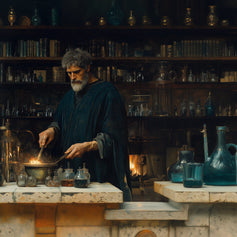
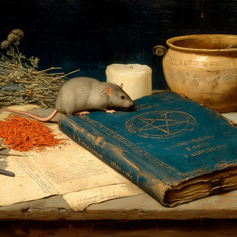
The influence of this order soon extended beyond the Parisian circle to the international level, with lodges opening in Europe, America, and Russia, testifying to its considerable reach. Papus played a central role in this expansion by using his journal, L'Initiation, as a tool for dissemination, correspondence, and coordination among dispersed members. At the same time, he maintained close ties with the Kabbalistic Order of the Rose-Cross founded by Stanislas de Guaita, with whom he shared a common vision of renewing esoteric studies. A strong relationship developed between the two men, nourished by collaborative work on texts, traditions, and practices, particularly ancient bibliography and alchemy. This collaboration formed part of an active research dynamic in which theory and experimentation met. An anecdote reported among their circle even mentions an allegedly successful transmutation following the rediscovery of a red powder described in an old book—an episode that illustrates the mindset of these circles, where study was not limited to reading but extended into concrete and deliberate experiments.
Practices and training of the operative mage
For Papus, magic was not an imaginary construction or a mere intellectual backdrop; it asserted itself as a genuine applied science based on precise laws that the operator had to learn to recognize and master. From this perspective, every external action first required rigorous inner work, because an individual could not claim to influence the world without first governing their own organism with discipline. The will occupied a central place—not as a vague intention, but as a directed force acting from a point of support on the astral plane, which served as an intermediary between idea and realization. Papus stressed the need for regular exercises intended to strengthen the will through learning bodily stillness, mastering the breath, and maintaining constant attention to inner movements. In this context, imagination did not mean escaping into dreams or distracting the mind; it was an active tool capable of giving form to subtle currents by shaping what Papus called astral fluids, thereby enabling the operator to organize their action coherently and effectively.
This vision extended to the entire invisible world, which Papus described as an animated and organized domain populated by forces and entities with which it was possible to establish contact. In this regard, he drew on the teachings of Paracelse, particularly his classification of elemental beings, which divided these entities according to the four fundamental elements. Gnomes were associated with earth and watched over buried riches, embodying a form of stability and preservation linked to the subterranean world. Undines belonged to the element of water and were attuned to the movements of life and emotions, contributing to the circulation of vital forces. Sylphs inhabited the domain of air, associated with intellect and thought, while salamanders manifested in fire, the principle of energy and transformation. In this approach, the operator did not seek to compel these beings, but to establish a relationship with them based on knowledge and respect, since tradition held that understanding their names and functions made it possible to obtain their assistance in certain operations, particularly healing and protection, provided that one acted within a controlled framework and in accordance with the laws governing these invisible planes.
Synarchy as a social model founded on harmony
Gérard Encausse did not limit his activity to study and experiments within restricted circles, as his thinking extended directly to the organization of society and the future of European nations. Under the influence of Saint-Yves d'Alveydre, he adopted and defended the principle of Synarchy, a model presented as a structured response to the political disorders and tensions of his time. This system opposed anarchy by proposing an order founded on principles considered stable and lasting, in which every function found its place within a hierarchical yet balanced whole. Synarchy rested on a division into three distinct councils, each reflecting an essential aspect of collective life: a Council of Economics responsible for production and material exchanges, a Council of Justice safeguarding legal balance and relations between individuals, and a Council of Authority bringing together those who embodied the moral and spiritual direction of society. This organization did not aim at arbitrary domination, but at a clear distribution of responsibilities, with each sphere operating according to its own logic while remaining connected to the others.
From this perspective, Papus saw Synarchy as a means of restoring a form of balance capable of preventing the conflicts threatening Europe in his time. He viewed with concern the rise of nationalism and the growing grip of a materialism he considered reductive, because it severed societies from any higher dimension. In response to this development, he imagined a reconciliation of peoples based on recognition of a shared spiritual authority capable of transcending particular interests and restoring an overall coherence. His social vision rested directly on the principle of analogy that ran throughout his thought, considering that society should function like a healthy human body, in which each organ fulfilled its function without encroaching on that of the others while contributing to the overall balance. This conception did not remain theoretical, as he regularly developed these ideas in the pages of L'Initiation, where he addressed the reforms he considered necessary, seeking to connect traditional principles with the concrete problems of his time in an attempt to give real scope to a philosophy that was not confined to speculation.
The turn toward faith and missions at the Russian court
From 1894 onward, Papus’s path underwent a marked change connected with an encounter that had a lasting impact on his inner development. He met Nizier-Anthelme Philippe, a singular figure in the spiritual landscape of the era, renowned for his healing abilities and for an authority based not on book learning but on direct, lived experience. This contact gradually changed the way Papus conceived of practice, as he moved away from the elaborate constructions of ceremonial magic toward a more inward approach centered on prayer, simplicity, and surrender to a higher will. This change did not represent a renunciation, but a maturation in which the discipline and knowledge he had acquired found an extension in a more direct relationship with the divine. In his correspondence, he expressed profound gratitude toward the man he regarded as a guide, going so far as to describe the rediscovery of faith and Christ as a decisive turning point in his life.
At the same time, his influence extended far beyond French circles to reach imperial Russia, where his name circulated among circles close to the centers of power. He traveled to Saint Petersburg several times, in 1901, 1905, and 1906, and formed close ties with Nicholas II and Alexandra Feodorovna, who saw him as an adviser capable of offering spiritual insight during a troubled period. In this context, Papus acted as a vigilant presence, seeking to protect the imperial family from influences considered harmful and to establish a more stable framework around them on the invisible plane. He also founded a Martinist lodge within the court, thereby extending his work of organization into an unexpected environment. A widely reported anecdote recounts that he told the Tsar that revolution could not break out as long as he remained alive—a statement that took on particular significance when his death shortly preceded the fall of the imperial dynasty, reinforcing the image of a man whose words and presence seemed, in the eyes of his contemporaries, connected to forces extending beyond the merely political sphere.
The Great War and the physician’s final sacrifice
In 1914, when war broke out in Europe with the beginning of the First World War, Gérard Encausse did not remain on the sidelines and immediately volunteered as a senior military physician, faithful to the vocation he had never abandoned. He left for the front, where he took charge of an ambulance unit and confronted the brutal reality of the conflict, severe injuries, and the constant urgency of medical care each day. In these arduous circumstances, he applied his medical knowledge with remarkable rigor and dedication, devoting himself entirely to relieving the soldiers’ suffering without sparing himself or seeking to preserve his own strength. This total commitment, reflecting a keen sense of duty and constant self-sacrifice, eventually had direct consequences for his health, as he contracted pulmonary tuberculosis through contact with the sick during the winter of 1914, under particularly difficult sanitary conditions.
Little by little, his condition deteriorated under the combined effects of accumulated fatigue and infection, forcing him to leave the front and return to Paris in the hope of a recovery that never came. The disease ran its course and gradually weakened a body already worn down by years of intense work. He died on October 25, 1916, leaving behind a considerable body of work that extended far beyond the limits of his personal life. He now rests in Père-Lachaise Cemetery, an emblematic place where the memories of many notable figures converge. His influence did not disappear with him, as his writings continue to fuel the reflections of those interested in Western traditions and their transmission. He succeeded in making complex ideas accessible without compromising their coherence, maintaining a balance between clarity and rigor. His life as a physician and occultist was not a contradiction, but a continuity in which knowledge of the body and knowledge of invisible laws answered one another, leaving the image of a man who sought to restore to human beings a more complete understanding of themselves and their place in the order of the world.








Je vous remercie pour vos articles que je lis avec plaisir chaque semaine. Ceux-ci sont vraiment bien écrits, bien documentés et d’une grande clarté tout en restant concis, et donc donnant envie d’en connaître d’avantage !
Merci beaucoup pour votre travail.