












































































































































































































In summary...
This dossier explores the world of Elemental magic, an ancient and profound practice that looks at the interaction between human beings and the fundamental forces of Nature. Through the study of the classical elements - earth, air, fire, water - and fundamental principles, this dossier offers you an overview of how Elemental magic has developed and continues to evolve. This exploration will also lead us to consider the future prospects of magic Elemental, examining its potential role in technology, innovation, and our growing understanding of the universe.
1. Introduction to Elemental magic
1.1. Definition of Elemental magic
Elemental magic, in its purest and most traditional form, is an ancient practice that focuses on the use and manipulation of the fundamental natural forces of the universe. These forces are often represented by the four classical elements: earth, air, fire, and water (and possibly ether). Each of these elements symbolizes not only a physical component of the world but also metaphysical and spiritual aspects.

Earth is associated with stability, fertility, and solidity. It embodies foundation and strength. Air represents intellect, communication, and freedom. It is elusive, always in motion, symbolizing spirit and thought. Fire, with its dynamic and sometimes destructive nature, is a symbol of transformation, passion, and purification. Finally, water, fluid and adaptable, is linked to emotions, intuition, and the mysteries of life.
1.2. Brief history of Elemental magic
Elemental magic finds its origins in Antiquity, where it was often intertwined with the religious beliefs and spiritual practices of early civilizations. The ancient Greeks, for example, attributed these elements to specific gods, such as Demeter for earth and Poseidon for water, highlighting their importance in mythology and understanding of the world. Similarly, in other cultures, like Hindu or Chinese traditions, the elements are integrated into a broader cosmological framework, associated with energetic and spiritual principles.

Over time, magic Elemental have evolved, blending with philosophy, alchemy, and even early forms of science. In the Middle Ages and Renaissance, alchemy, in particular, played a crucial role in transforming the magical understanding of the elements into a more empirical and experimental approach. These practices, although rooted in mysticism, laid the foundations for what would later become modern chemistry. If this topic interests you, you can read our note on the Alchemical Work.
In the contemporary context, although Elemental magic is no longer at the center of the scientific or spiritual beliefs of the majority, it continues to exert significant influence in many cultural fields. From literature to psychology, through visual arts and cinema, the symbols and principles of magic Elemental continue to fascinate and inspire.
Thus, by exploring magic Elemental, one does not just dive into a set of occult practices, but also discovers a rich cultural and philosophical heritage, a mirror of humanity’s beliefs, hopes, and fears throughout the ages. Let’s get started.
2. The fundamental principles of Elemental magic
2.1. Explanation of the basic laws and rules
Elemental magic is based on several fundamental laws and rules that structure its practice and theory.
2.1.1. Rule 1: interconnection

The first fundamental law of Elemental magic is that of interconnection, a concept rooted in the ancient understanding of the world as a tightly woven fabric of interdependent energies and forces. This law suggests that the elements – earth, air, fire, water, and others in some traditions – are not isolated entities, but components of a complex and dynamic system.
Interconnection in Elemental magic is not simply a cause-and-effect relationship between the elements, but a holistic vision where each element influences and is influenced by the others. For example, water can extinguish fire, but it needs earth to contain its flow. Air is necessary to fuel fire, but it can also disperse earth. This interdependence is a metaphor for how natural forces interact in the universe.
Although conceptualized uniquely in different traditions, the idea of interconnection is a universal theme. In Eastern philosophies such as Buddhism and Hinduism, it resonates with the concepts of non-duality and karma. In Western traditions, it echoes the Hermetic ideas of "as above, so below" (from the famous alchemical text The Emerald Tablet), illustrating how microcosms and macrocosms reflect each other.
2.1.2. Rule 2: correspondence

The second fundamental law of magic Elemental, the law of correspondence, establishes a deep connection between the physical elements and the metaphysical aspects of existence. According to this law, each natural element—earth, air, fire, water—possesses characteristics that manifest on multiple levels: physical, emotional, mental, and spiritual.
Earth is traditionally associated with solidity, stability, and fertility. On a metaphysical level, it represents the solidity of structure, reliability, patience, and growth. Earth symbolizes the foundation on which all constructions are established, whether physical, emotional, or spiritual. Air, on the other hand, is linked to mobility, lightness, and the invisible. It embodies the qualities of intellect, communication, and abstraction. In magic Elemental, air symbolizes the movement of ideas, freedom of thought, and mental clarity. Fire, with its dynamic nature, is associated with transformation, energy, and passion. On a metaphysical level, it represents the power of transformation, motivation, and willpower. Fire is often invoked to stimulate change and strengthen determination. Finally, l'water, fluid and changing, is linked to emotions, intuition, and the mysteries of life. It symbolizes emotional depth, adaptability, and the world of dreams. Water is essential for emotional healing and for navigating the depths of the unconscious.
2.1.3. Rule 3: transformation

The third fundamental law of magic Elemental is that of transformation. This law highlights the ability of the elements to change form and state while retaining their intrinsic essence. This concept is essential for understanding the dynamics of creation, change, and destruction that lie at the heart of magical practice. Elemental.
At the heart of the law of transformation is the idea that creation and destruction are not opposites but complementary aspects of the same process. For example, combustion (fire) transforms matter by releasing energy, while growth (earth) involves transforming energy into matter. This duality is fundamental to understanding the cyclical nature of the universe in magic. Elemental. Transformation manifests both physically and spiritually. Physically, this can be seen in changes of states of matter—solid, liquid, gas—or in natural cycles, like the passing of seasons. Spiritually, it is reflected in processes of personal growth, healing, and evolution of consciousness.
Alchemy, often considered a branch of magic Elemental, explicitly focuses on transformation. Alchemists sought not only to transform base metals into gold but also to achieve spiritual transformation, symbolized by this material transmutation.
2.2. The different schools of thought in Elemental magic
2.2.1. The Hermetic School

The Hermetic school, drawing its teachings from texts attributed to Hermes Trismegistus, is one of the most influential in the history of Western magic. It is based on principles such as "the All is in the All" and "as above, so below", indicating a correspondence between different levels of reality. From this perspective, the elements are not simply physical forces but key symbols for understanding the universe and man. Their manipulation goes beyond simple magical practice to touch on spiritual transformation and the quest for esoteric knowledge.
2.2.2. The Alchemical School
The Alchemical school, closely linked to Hermeticism, focuses on transformation, both material and spiritual. The elements, for alchemists, are metaphors for internal processes such as purification, illumination, and spiritual transmutation. Alchemy seeks to transform lead (symbolizing ignorance, raw matter) into gold (wisdom, spiritual perfection), a process that reflects the inner changes of the alchemist themselves.
2.3. Elemental magic across cultures
2.3.1. European traditions

In Europe, Elemental magic has woven its influence through the ages, deeply intertwined with pagan beliefs and witchcraft practices. This relationship is not just a relic of the past but continues to live and evolve in contemporary practices. If this topic interests you, you can consult our dossier on Neopaganism.
In European pagan traditions, the elements were considered sacred and vital forces. They were often personified and worshiped as spiritual entities. These traditions saw the elements not only as physical components of the world but also as symbols of deep spiritual and psychological forces.
European pagan practices placed great importance on natural cycles, such as seasonal changes, solstices, and equinoxes. These periods were often marked by rituals honoring the elements and their respective influences. For example, Beltane celebrations in spring were associated with fire, symbolizing light and fertility, while autumn rituals like Samhain were linked to earth and ancestor remembrance.
In European witchcraft, the elements were and still are used for practical purposes such as healing, protection, divination, and manifesting will. Water is used for purification, earth crystals for healing, air for clairvoyance, and fire for transformation rituals. Neopagan traditions, like Wicca and Neodruidism, have inherited and adapted these ancient practices. In these modern traditions, the elements are often central to ceremonies, serving to create sacred spaces, invoke specific energies, and facilitate connection with the divine and nature.
2.3.2. African traditions

In Africa, interaction with natural elements is deeply rooted in a rich fabric of animist beliefs, rituals, and spiritual traditions. These practices, diverse and varied across the continent, illustrate an intimate and complex relationship between humans, nature, and the divine.
Animism, at the heart of African spiritual traditions, is based on the belief that all elements of nature are inhabited by spirits or vital forces. This worldview recognizes a soul in every stone, river, tree, and wind, creating a universe where humans are in constant interaction with the elemental forces around them. Natural elements are often seen as manifestations or channels of communication with nature spirits, ancestors, and local deities. For example, a watercourse may be considered the home of a water spirit, and specific rituals may be performed to invoke its blessing or guidance.
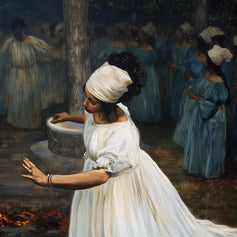
African rituals involving the elements are diverse and reflect a deep understanding of their power and symbolism. These rituals may include offerings, dances, chants, and the use of symbolic objects. They often aim to ensure healing, protection, fertility of the land and people, as well as divination to guide community decisions.
A recurring theme in African traditions is the quest for balance and harmony with nature. This perspective encourages respect and preservation of the natural environment, considered a vital partner and a source of wisdom and power. Rituals and beliefs around the elements often aim to maintain or restore this balance, especially in the context of environmental or social changes.
2.3.3. Eastern traditions
In Eastern traditions, the conception of the elements and their interaction with the living world takes on a particularly dynamic and cyclical dimension. Taoism, one of the most influential spiritual philosophies and practices of East Asia, offers a unique and profound vision of this interaction.
Taoism is distinguished by its approach to Wu Xing, or the "Five Movements", which expands the traditional palette of elements to include Wood and Metal alongside Water, Fire, and Earth. These five elements are seen not as static substances but as dynamic phases of constant movement in the universe. Each element has a specific role in the cycle of nature and is closely linked to the others, creating an interdependent and ever-changing system.
In Wu Xing, the elements generate and control each other in an endless cycle. For example, Water nourishes Wood, Wood feeds Fire, Fire creates Earth (ashes), Earth contains Metal, and Metal enriches Water. This cyclical interaction symbolizes the natural balance and harmony that must be maintained for health and prosperity.
Beyond their practical application, the elements in Taoism represent different aspects of spirituality and philosophy. They are often used to illustrate concepts such as transformation, adaptability, and the interconnectedness of all things, which are key ideas in Taoist thought.
2.3.4. Native American traditions
For the indigenous peoples of America, the relationship with the earth and natural elements is at the heart of their cultures, spiritualities, and ways of life. This deep connection is marked by respect, recognition, and harmonious coexistence with the environment. Indigenous peoples consider the earth and elements sacred. The earth is not seen as a resource to exploit but as a nurturing mother, a living entity that provides sustenance and shelter. Rivers, mountains, forests, and animals are treated with deep respect and veneration, often seen as brothers and sisters or spiritual teachers.
In many indigenous cultures, the elements are personified and considered spiritual beings with whom one can communicate. For example, water may be seen as a purifying spirit, wind as a messenger, and fire as a transformer. These elemental spirits are regularly invoked in rituals and ceremonies to seek their guidance or help.
The cycles of nature, such as the seasons, moon phases, and solstices, play a crucial role in planning community activities and ritual ceremonies. These events are often occasions to thank the elements for their gifts and to celebrate the harmony of nature.
2.3.5. Asian traditions
Asian traditions, especially in India and China, offer a unique and integrated perspective on Elemental magic, closely linking it to complex philosophical, spiritual, and medical systems.
Ayurveda, the traditional system of medicine in India, is based on the theory of the five elements (Pancha Mahabhuta): space (or ether), air, fire, water, and earth. These elements are considered the fundamental building blocks of nature and the human body. In Ayurveda, the elements are combined into three main doshas - Vata (space and air), Pitta (fire and water), and Kapha (water and earth) - which regulate the physiological, mental, and emotional functions of the body. Understanding and balancing these doshas are essential for maintaining health and well-being.
Feng Shui, literally "wind and water", is an ancient Chinese art of spatial arrangement. It aims to harmonize individuals with their environment by optimizing the flow of energy, or Qi, through the layout and design of living and working spaces. Feng Shui uses the five elements of Wu Xing - Wood, Fire, Earth, Metal, and Water - to balance and enhance the energy of a space. Each element has specific characteristics and can be used to counter imbalances and improve different aspects of life, such as health, wealth, or relationships.
In Feng Shui practice, furniture arrangement, color choices, structure orientation, and object placement are all carefully considered to create a harmonious environment. Element balance is essential to attract positive energy and avoid stagnation or Qi blockages.
3. The four classical elements
3.1. The Earth element

Earth represents stability, solidity, fertility, and perseverance. It symbolizes structure, tangible reality, quiet strength, and sustained growth. In magic Elemental, Earth is often associated with nature, motherhood, abundance, and prosperity.
Magical practices involving Earth include healing, fertility, prosperity, and protection. Rituals may involve the use of crystals, stones, plants, salts, and soil. These elements are often used in magic circles to ground and stabilize energy.
Historically, Earth was revered in fertility rituals and seasonal celebrations in many ancient cultures, such as the rites of Demeter in ancient Greece. Today, Earth is central in ecological and holistic healing practices, emphasizing connection with nature.
3.2. The Air element

Air symbolizes intellect, communication, freedom, and movement. It represents the immaterial, thoughts, ideas, and dreams. In magic, Air is associated with mental clarity, inspiration, and wisdom.
Practices related to Air include divination, clairvoyance, astral travel, and rituals to promote communication. Incense, feathers, and fans are often used in these practices to symbolize and channel the energy of Air.
Historically, Air was revered in oracular practices, such as the Pythia of Delphi in ancient Greece, where vapors were interpreted as divine messages. Today, Air is used in practices like meditation and mindfulness to promote mental clarity and inner peace.
3.3. The Element Fire

Fire is associated with transformation, passion, willpower, and energy. It symbolizes change, purification, creative destruction, and renewal. Fire embodies life force, light in darkness, and warmth.
In magic, Fire is used for purification rituals, manifestation magic, protection, and strengthening willpower. Candles, bonfires, and burning oils are commonly used to channel Fire's energy.
Historically, Fire played a central role in solstice rituals and sacrificial offerings. Today, Fire is present in candle flame meditation practices and release rituals, where what no longer serves is symbolically burned.
3.4. The Element Water

Water is linked to emotion, intuition, healing, and flow. It symbolizes emotional depth, purification, reflection, and adaptability. Water is seen as an element of cleansing, regeneration, and emotional connection.
Magical practices involving Water include emotional healing, purification rituals, divination, and strengthening intuition. The use of spring water, seawater, potions, and ritual baths is common in these practices.
Historically, Water has been revered in purification rites and baptisms across various religious traditions. In contemporary practice, Water is essential in water therapy, full moon rituals, and meditative practices related to flow and fluidity.
4. The New Elements of Elemental Magic
4.1. The Elements Lightning, Metal, and Wood
Lightning, metal, and wood, among others, have been integrated into the modern practice of Elemental magic for several reasons. These elements represent aspects of nature and human experiences not fully covered by the four classical elements. For example, lightning embodies raw and powerful energy, metal symbolizes resilience and transformation, and wood represents growth and connection.
In contemporary practices, these additional elements are often used for specific intentions that correspond to their attributes. For example, lightning can be invoked for rituals requiring rapid and powerful change, while metal can be used for work focused on protection or inner strength. Wood, with its growth and flexibility, is often chosen for healing and growth rituals.
4.2. Interactions with the Classical Elements
These additional elements interact with the four classical elements in complex ways. For example, wood can be seen as a combination of earth (matter) and water (growth). Similarly, metal can be associated with fire (its forging) and earth (its origin). This interaction enriches the traditional framework of magic Elemental, offering more diverse possibilities for practice and exploration.
While the four classical elements are often associated with fundamental qualities and states of matter, the additional elements tend to represent specific processes or transformations. For example, lightning is more transient and dynamic than stable air or persistent fire. Metal and wood, meanwhile, offer a more tangible and material perspective compared to the abstraction of water or earth.
5. Practices and Rituals of Elemental Magic
Elemental magic is rich in practices and rituals, ranging from basic techniques to more advanced methods. These practices are integrated both into daily life and special ceremonies, allowing practitioners to harmonize their energy with natural forces.
5.1. Basic Techniques
Basic Elemental magic techniques often involve meditation, visualization, and energy concentration. This can include simple exercises to connect with a particular element, such as meditating while focusing on the sensation of the wind for the Air element, or feeling the solidity and stability of the Earth by walking barefoot. These practices help develop sensitivity to elemental energies and establish a personal connection with them.
5.2. Rituals and Ceremonies
Rituals in Magic Elemental can range from simple to complex. They may include creating magic circles to establish a sacred space, using symbols and objects representing different elements, and invoking elemental energies for specific goals. Rituals can serve many purposes, such as healing, protection, purification, divination, or manifesting intentions.
Each element can be invoked specifically according to the ritual’s purpose. For example, water can be used in purification rituals, while fire can be used for transformation or renewal rituals. Additional elements like lightning or metal can also be used for specific intentions, adding extra dynamics to the ritual.
In special ceremonies, such as equinoxes, solstices, or rites of passage, magic Elemental is often used to mark and honor seasonal changes, life transitions, or natural cycles. These ceremonies can be highly personalized and involve entire communities, creating a connection between participants, the elements, and the broader cycles of nature and life.
5.3. Elemental Magic in Daily Life
Beyond formal rituals, Elemental magic can be integrated into daily life. This can include practices such as aligning living spaces with the elements (like Feng Shui), using herbs and crystals corresponding to specific elements for healing or energy balancing, or even everyday activities like cooking or gardening with awareness of elemental energies.
6. Evolution of Elemental Magic
Elemental magic, although rooted in historical traditions, continues to evolve and find new applications in the modern world. Its future looks promising, with possibilities ranging from technological integration to conceptual advances.
As our understanding of the world and the universe expands, magic Elemental could undergo significant transformations. This evolution might include a deeper integration of scientific knowledge, such as quantum physics and ecology, into the understanding and practice of magical traditions. Practitioners could develop more sophisticated methods to manipulate and understand elemental energies, based on a blend of ancient wisdom and modern knowledge.
There is a growing potential for the intersection between magic Elemental and technology. This could manifest in various ways, such as using augmented or virtual reality to create immersive magical ritual experiences, or applying elemental principles in ecological design and sustainable technologies. Additionally, understanding elemental energies could influence innovations in renewable energy and biomimicry.
In the future, we might see a revival and reevaluation of magic Elemental within the framework of an increasingly sustainability- and interconnection-focused society. Magic Elemental could be recognized not only as a spiritual practice but also as a way to reconnect with the natural world and find solutions to ecological challenges. Furthermore, the fusion of spirituality and science could give rise to new theories about the interaction between human consciousness and the elemental forces of nature.
Let’s dream a little and imagine that Elemental magic could also play a role in evolving social and cultural perspectives, encouraging greater ecological awareness and respect for the natural world. This could translate into an increase in earth-centered practices within communities, celebrations that recognize the importance of natural cycles, and education that integrates the principles of magic Elemental to promote environmental harmony.
7. The final word
This journey through the elements – earth, air, fire, water, and beyond – reveals a rich landscape of symbolism, ritual, and spirituality that has permeated many cultures and traditions throughout history. The fundamental principles of magic Elemental principles, such as interconnection, correspondence, and transformation, offer frameworks to understand not only the outer world but also our inner world. The evolution of this practice through the ages, from Hermetic and Alchemical schools to modern interpretations and the integration of new elements, shows its ability to adapt and remain relevant.
Finally, the future of magic Elemental seems full of potential. With the possibility of a deeper fusion with science, technology, and ecological concerns, magic Elemental could play a key role in our collective journey toward a deeper understanding and respect for our world and ourselves.




Article approfondi,complet,passionnant,accrochant et très instructif