











































































































































































































Love magic—or red magic—is the set of occult practices intended to provoke or influence romantic feelings and carnal desire. It is an ancient occult art: Mesopotamian cuneiform tablets (~2200 BC), Egyptian or Greek papyri, and medieval manuscripts attest to rituals intended to attract a person’s affection or rekindle passion within a couple. Unlike simple seduction, love magic seeks a way to act upon another person’s heart and free will.
Foundations of Love Magic
The earliest traces of love magic appear as early as pharaonic Egypt, where figurines and formulas intended to enchant a loved one have been found. Similarly, the Greco-Roman tradition made extensive use of defixiones—curse tablets—used to bind a person through love. These practices are documented as early as the 5th century BC and continued for nearly a millennium in the Greco-Roman world. Their stated purpose was to “make love arise in a disdainful person” by invoking occult forces, while meticulously describing the physical torments that would afflict the intended target until they succumbed to passion. Notably, magicians in Antiquity rarely invoked Aphrodite or Eros (benevolent deities of love), but rather demons or infernal deities to carry out their charms. Such amorous coercion was indeed considered to require formidable powers with little inclination toward pity. Coercion was central: ancient formulas explicitly demanded that the target be “forced into submission through the generous use of torture.” In particular, a Greek magical papyrus orders demons to “draw Gorgonia… to torture her body night and day, to tame her so that she leaps out of every dwelling, mad with love.” Violence was therefore not spared in these love spells.


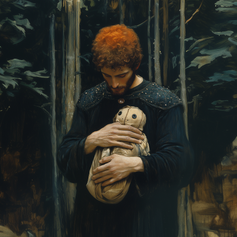
The Louvre enchantment figurine (4th century AD) is a striking example: this terracotta statuette depicts a naked woman kneeling, bound, and pierced with thirteen pins. It was found in a sealed vessel together with a curse tablet bearing a love-binding formula. Such effigies served as physical supports for the ritual: by symbolizing the intended person, the magician believed they could act upon them from a distance through analogy. The associated lead tablet contained the written incantation, addressed to the invoked powers and detailing the torments to be inflicted until the victim, overwhelmed by insomnia and unfulfilled desires, finally gave in and came of their own accord to the feet of the spell’s instigator. These ancient recipes of erotic magic thus rely on the principle of sympathetic magic: the figurine pierced with needles and the engraved words act at a distance upon the beloved’s body and soul, making them obsessed and unable to sleep, eat, or find satisfaction until their “hunger for love” is fulfilled with the person casting the spell.
Heretical... Yet Popular Witchcraft
In medieval and Renaissance Europe, love magic persisted through philtres, talismans, and enchantments, even though the Church condemned it as heretical witchcraft. Official Christianity disapproved of any practice intended to alter affections through occult means: as early as the 4th century, Christian authors denounced love spells as contrary to Scripture. Throughout the Middle Ages, clerics urged confessors to seek out these particular sins in parishes. The practice nevertheless continued underground, partly entrusted to local healers or witches who prepared potions and charms for lovestruck clients. Inquisition archives and witch-trial records frequently mention love philtres—drinks made from herbs or bodily substances—administered to arouse passion. Ecclesiastical judges often regarded this type of erotic magic as the preserve of women, particularly matchmakers, courtesans, or alleged witches, reflecting the misogynistic prejudices of the period. In reality, men also used these charms, but knowledge of love magic was often passed through female networks, and discretion was essential. Renaissance witchcraft manuals, such as the Malleus Maleficarum (1486), also devote considerable attention to love and sterility maleficia attributed to witches, fueling fear of these occult practices associated with sexuality.
At the same time, love magic became integrated into the learned esoteric traditions of the period. Grimoires and treatises on natural magic explained how to attract affection by drawing upon astral influences and the occult properties of nature, rather than through demonic pacts. The Neoplatonist philosopher Marsilio Ficino (15th century) advised using the planetary correspondences of Venus—the goddess of love—employing perfumes, songs, or specific images to channel a favorable influence upon lovers. Numerous recipes circulated, combining astrology, the alchemy of scents, and symbols to create conditions conducive to awakening attraction. The stated aim differed from the brutal coercion of ancient enchantments: it was rather to naturally encourage romantic harmony or inspire sympathy. Nevertheless, the boundary remained tenuous—in the eyes of the Church, these practices were still condemnable superstitions.
It was in the 19th century that the term red magic emerged to explicitly designate the magic of love and sexuality. Around 1840, the French esotericist Simon Blocquel popularized the expression by publishing La Magie rouge (1843). The classification of “white, red, and black” magic then became established: red magic focuses on carnal pleasures, rites of union, and seduction. It is sometimes presented as a branch of so-called white magic (intended to be beneficial), for example when used to strengthen harmony within a lawful couple. But other voices instead associate it with black magic, emphasizing its potential for coercion and the excesses to which it can lead. Indeed, some more “obscure” love rituals involve the use of bodily fluids (menstrual blood poured into a drink, consecrated semen,...) or animal sacrifices to seal a passionate enchantment—practices that move red magic into transgressive territory. Thus, red magic occupies an ambiguous position: celebrated as the “cream of the occult sciences” associated with love and fertility, yet feared for its potentially manipulative and perverse aspects.
Practices and Methods of Love Magic
Despite the diversity of periods and cultures, the methods of love magic remain comparable to those of other forms of magic. They employ a broad range of ritual tools: spoken or written incantations, anthropomorphic figurines (dolls bearing the target’s likeness), talismans engraved with planetary symbols, amulets worn on the body, philtres and potions consumed, ointments applied to the body, colored candles (red or pink) consecrated during ceremonies, etc.. These objects and actions serve as channels for concentrating the magician’s will and occult influences toward the desired goal. For example, a traditional love philtre consists of giving the intended person a drink mixed with aphrodisiac herbs and symbolically charged ingredients (rose petals, honey, fiery spices…). In magical thought, ingesting these substances establishes an intimate link that ignites the target’s heart in favor of the person who prepared the drink. Likewise, lighting a red candle bearing two names is understood as sending passionate energy toward these two people, under the gaze of entities invoked to bless or force their union.
Two major esoteric principles underlie these practices. First, the law of similarity (sympathetic magic): one works upon a representation or an element connected to the beloved in order to produce a corresponding effect in them. Thus, piercing a wax doll at the heart or temples is intended to provoke a gentle torment of love in the target’s heart or mind. Alternatively, carrying an object that belonged to the desired person (hair, photograph, garment) is believed to strengthen the mystical bond between them and the practitioner, facilitating influence at a distance. Second, the principle of invocation: the mage addresses invisible forces—nature spirits, patron saints of love, planetary angels of Venus, or even demons specializing in lust—to intercede on their behalf. Depending on the tradition, one may pray to a saint associated with matters of the heart (for example, Saint Sarah or Saint Anthony), or recite formulas drawn from grimoires to summon a spirit and command it to inspire irresistible love. The choice of invoked entity affects the nature of the ritual: appealing to a benevolent entity is intended to soften the beloved’s heart, whereas a spirit bound by a magical oath will violently impose passion, even if it disturbs the target’s reason.
The astrological aspect is also highly prominent. Magical practice recommends acting during the hours and days favorable to Venus (the planet associated with love)—on Friday at sunrise, during a waxing moon—in order to maximize the chances of an effect. The ingredients in philtres or talismans are chosen for their correspondences with love: copper, the metal of Venus; the color red or pink, evoking blood and passion; flowers such as the rose or jasmine, known for their voluptuous qualities; or stones such as emerald and rose quartz, reputed to encourage romantic emotions. All these components act in symbolic synergy to attract the vibrations of love toward the intended person. Love magic thus presents itself as a complex recipe combining poetry, mysticism, and occult science, in which each gesture aims to create a vibrational state conducive to the fulfillment of desire.
Insights into Love Magic Around the World
The desire to influence the impulses of the heart through occult means is an almost universal trait of humanity. Love and seduction spells are found in nearly every culture and period. In the medieval Islamic world, despite the religious prohibition against magic (siḥr), Arabic grimoires are filled with recipes for provoking passion or affection. Medieval Arab scholars distinguished several branches: astral magic (based on talismans and the influence of the stars), natural magic (the use of herbs, philtres, and perfumes), and the science of letters and magic squares (a form of learned esotericism comparable to Kabbalah). All of them include procedures for making someone fall in love, evidence that such a demand existed in society. A 13th-century Andalusian magical treatise proposes a talisman engraved with Quranic inscriptions to be worn on the body in order to become irresistible, while another, more esoteric manual teaches how to compose a magic square of letters to inflame a specific target’s heart. These practices often adapted ancient or foreign recipes to local culture: Muslim scholars translated and incorporated elements of Greek and Egyptian magic, particularly in the area of love philtres. This was sometimes done by rationalizing the process—what was called learned magic—but the objective remained the same: mastering the arcana of desire.
In the Indian subcontinent, Tantric and Ayurvedic traditions also explored love magic. Vātsyāyana’s celebrated Kāmasūtra (4th century) is not limited to an erotic treatise: its final chapter provides recipes for aphrodisiac ointments and potions intended to increase attraction and the partner’s submission. It states, for example, that by applying a mixture of honey, long pepper, and datura (a hallucinogenic plant) to one’s lingam (male organ), then engaging in sexual intercourse with a woman, “he will make her submit to his will.” Other formulas recommend using exotic plants or animal bones reduced to powder, to be worn as an amulet or discreetly mixed into the desired person’s food in order to bewitch them with love. These Indian practices combine natural pharmacopoeia with the recitation of sacred mantras—sometimes drawn from the Atharva Veda, a Vedic text containing magical charms. The guiding idea is that certain substances and sounds possess a vibration capable of awakening Kama (the desire for love) in the soul of the intended person. Through the fervor of faith and meticulous observance of the ritual, the practitioner then hopes to channel the cosmic energies of love for their own benefit. A similar concept is found in the Far East, where popular traditions advise writing the names of two lovers on the same red paper and burning it during a full-moon night, or using paper figures representing the lovers to influence their romantic destiny. In Africa and the Americas, syncretic traditions such as Haitian Vodou or Cuban Santería also include works intended to bind a couple or seduce a target, calling upon the lwa or orishas (deities) of love and creating gris-gris or herb sachets endowed with attractive power. Everywhere, love magic takes on the colors of the local culture while responding to the same universal aspirations: attracting one’s soulmate, preserving the affection of an unfaithful spouse, or winning a forbidden love.
Ethical and Occult Issues of Red Magic
Love magic occupies a special place because it touches upon one of the most exalted and vulnerable feelings of the human being. Its proponents present it as valuable help for healing heartbreak or fostering the emergence of happy relationships. When used with good intentions—to rekindle the flame in a legitimate couple undergoing a crisis—it would then be a magic of harmony, seeking to strengthen existing bonds of love without harming anyone. In this consensual context, some do not hesitate to speak of benevolent red magic. However, the other side of the coin is the potentially coercive nature of these rituals. Many love spells are in fact intended to influence or even subjugate someone who has asked for nothing, thereby infringing upon their free will. This is why moralists, and even many occultists themselves, warn against the abuses of love magic. Artificially imposing a romantic feeling is considered contrary to the natural order and to ethics. Similarly, 20th-century high-magic manuals generally classify forced love enchantments among dangerous operations, close to black magic, because of the selfish and manipulative intention they convey.
A fundamental issue therefore lies in the ritual’s intention and purpose. Is the aim to help or to enslave? If red magic is used to encourage a romantic encounter by improving one’s own energies (for example, a spell to increase personal charm or heal emotional blocks), it may resemble a somewhat mystical form of personal development, without a direct victim. By contrast, attempting to force passion upon someone who does not share that feeling raises a problem of consent—a form of psychic manipulation. Historically, this debate is illustrated by the distinction between “positive” love filters (reuniting two people who are already attracted to each other by dispelling obstacles) and “coercive” enchantments (turning a refusal into an obsession).
Finally, from an occultist perspective, love magic reveals a symbolic truth: love itself is a powerful force, sometimes described as a high vibrational energy, which one manipulates at one’s own risk. Seeking to channel this force requires great mastery of oneself and one’s motivations. Many practitioners emphasize that a pure heart and sincere intention are essential for the ritual to succeed favorably—otherwise, the spell may produce harmful effects (unbalanced relationships, emotional dependency,...). In fact, red magic acts as a magnifying mirror of human desires: used well, with wisdom and consent, it will bring joy and union; misused through selfishness or coercion, it becomes manipulation and can lead to suffering and disillusionment.
More complex than it may seem, love magic embraces the hopes and torments of the human heart. Ultimately, it reveals above all the intensity of the desire to be loved—a magic in itself, as old as humanity.








Merci très intéressant