























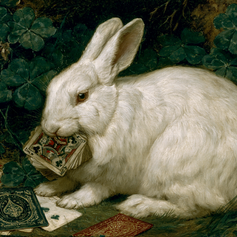
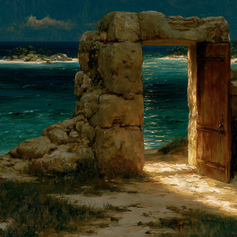











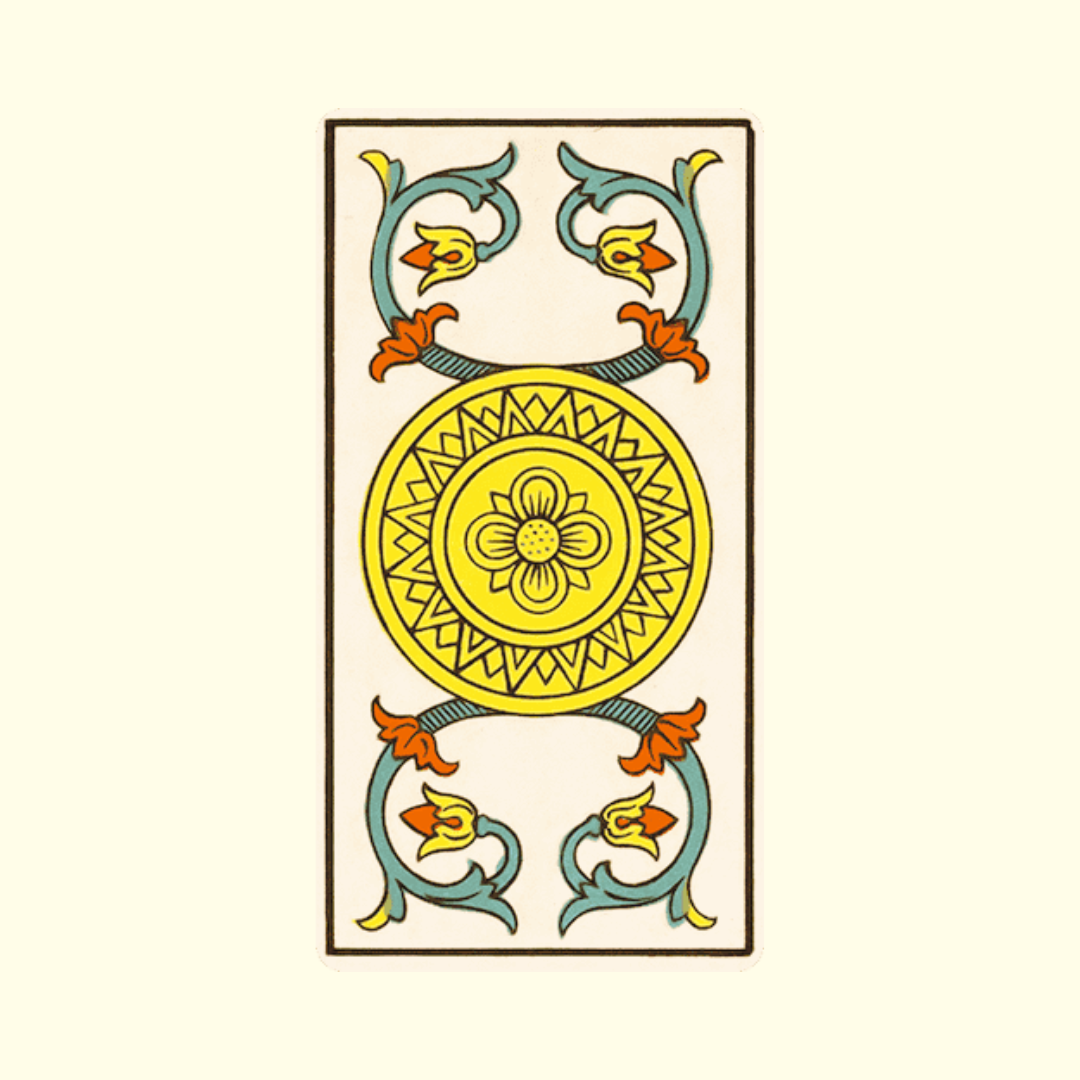

A large pentacle occupies the center of the card. In the Tarot de Marseille, it asserts the emblem of its suit with the clarity of a coin, seal, or emblem. In the Waite-Smith, a hand emerges from a cloud and presents a pentacle above a garden crossed by a path. The Ace of Pentacles does not promise a fortune: it places in the querent's hands a resource that still needs to be evaluated, received, and put to work.
The Ace opens the material register: money, body, housing, work, time, tool, land, and measurable result. It may signal an available sum, a possible contract, an object to acquire, a skill to employ, or the first stone of a project. The existence of the resource guarantees neither its yield nor its proper use.
Three layers must remain distinct. Marseille contributes the pentacle as the emblem of the suit. Mathers transmits a divinatory list centered on contentment and prosperity. The Golden Dawn names the card “Root of the Powers of Earth,” then Waite and Smith give it the hand, garden, arch, and path. Earth is a later occultist attribution, not an inscription found in the old French tarots.
From the heraldic pentacle to the open garden
In Nicolas Conver's Tarot de Marseille, the Ace shows a large ornamented pentacle surrounded by plant motifs. Depending on the editions, the center may contain letters, a workshop mark, or a geometric design. There is no hand, garden, or mountain. The emblem's size gives the Ace rank a full presence: the suit is gathered into an object that can be counted, transferred, or committed.
Smith reuses the radiant hand already described in the Golden Dawn material. It holds a pentacle above an enclosed garden, where a path leads toward a leafy arch and then toward the heights. This image adds a trajectory: the resource is offered in the foreground, but realizing it requires passing through the opening and covering the distance. Waite, for his part, emphasizes prosperity and comfortable material conditions, whose benefit depends on how they are used.
Iconographic marker. The large Marseille pentacle is an emblem, not a coin fallen from the sky. The hand, cloud, and garden belong to the English occultist traditions and the Waite-Smith. In both decks, the card makes matter available; it says neither the price, nor the source, nor the destination of that matter.
Divinatory transmission
In 1888, Mathers attributed contentment, fulfillment, happiness, prosperity, and triumph to the Ace of Pentacles. Reversed, it indicates a purse of gold, money, gain, aid, profit, and riches. This reversal is surprising by current standards: a reversed card is not automatically a loss. It can bring the happy experience back to its monetary or utilitarian expression.
Book T calls the Ace the “Root of the Powers of Earth.” A radiant hand holds a rose branch bearing a complex pentacle. The text associates it with materiality in its favorable and unfavorable aspects, then with gain, labor, power and wealth. The Aces there represent the radical forces of their element: they therefore do not receive the decan or planet of the subsequent numbered cards.
Waite takes up contentment, felicity, gold and prosperity. His formula remains ambivalent: comfortable material conditions can serve or hinder their holder. The Ace thus invites us less to believe in an imminent gain than to ask what the resource is worth, what obligations accompany it and what work will turn it into a result.
Meaning in a spread
In a favorable reading
The Ace of Pentacles indicates a concrete foundation. A proposal can be quantified, financing becomes accessible, premises become available, a skill finds a use or a project receives its first tool. The card favors what can be verified: amount, area, deadline, material, time available and each person’s responsibility.
It supports modest beginnings with a real foothold. A small sum allocated properly may matter more than a brilliant promise. The Waite-Smith path reminds us that the offer is only the entrance: between the presented pentacle and the heights lie the contract, learning, maintenance and duration.
In a tension reading
The resource may be overestimated, conditional or too costly to maintain. A gift creates an implicit debt, an investment ties up cash, a job provides compensation without offering a viable framework, or an appealing object distracts from the real need. The Ace may also show available material that is not being used.
The card is neither purchasing advice nor a guarantee of returns. In a tense context, it asks you to verify ownership, liquidity, fees, provenance and the possibility of withdrawal. What appears solid at first glance must still withstand the accounts and the passage of time.
Love, work and finances
The Ace provides an initial resource. The area specifies its nature, and the neighboring cards show who provides it, what it costs and the result it can support.
| Area | Favorable reading | Tension aspect | Question to ask |
|---|---|---|---|
| Love | Common foundation, reliable gesture, household project discussed with real means. | Relationship assessed by comfort, gift used as proof of commitment, security without exchange. | What concrete act is freely consented to by both people? |
| Work | Offer, assignment, tool, training or launch budget. | Attractive compensation with unclear conditions, means available without a plan. | Which clauses and resources make leaving viable? |
| Finances | Money received, savings started, asset identified, budget finally calculated. | Blocked capital, overstated gain, hidden fees, or concentration of risk. | What is the net amount, available and actually exposed? |
| Housing | Deposit, land, key, work launched on a documented basis. | Forgotten maintenance burden, uncertain ownership, purchase dictated by prestige. | What costs will continue after acquisition? |
| Creation | Material, workshop, time, or commission enabling a start. | Accumulation of supplies without production, value conflated with the price of the material. | What first realization will use this resource? |
Read the associations
The Ace provides the raw material. The associated card indicates the project that receives it, the person who controls it, or the obstacle preventing its conversion into a result.
| Association | Possible dynamic | Point of attention |
|---|---|---|
| Ace of Pentacles + Magician | Tool and know-how come together to launch a realization. | Verify that the demonstration produces a measurable result. |
| Ace of Pentacles + Three of Pentacles | Funding, material, or commission entrusted to skilled work. | The estimate and roles must precede execution. |
| Ace of Pentacles + Four of Pentacles | Protected capital, retained acquisition, secured foundation. | Protection may immobilize the resource. |
| Ace of Pentacles + Six of Pentacles | Aid, grant, gift, or advance made available. | Clarify the debt, consideration, and donor's power. |
| Ace of Pentacles + Devil | Powerful resource linked to a contract, debt, or desire for possession. | Examine dependency, rate, exit clause, and freedom to refuse. |
| Ace of Pentacles + World | Completed material realization or a resource integrated into a viable whole. | Plan for maintenance, transfer, and accounting closure. |
Correspondences according to the schools
The old chart attributed Mercury, winter, quartz, oak, and Aleph. These elements do not come from the same transmission. For the Ace, the dated file brings together the Marseille pentacle, prosperity in Mathers, Earth in the Golden Dawn, and the offered hand of the Waite-Smith.
| Reference | Attribution | Historical scope |
|---|---|---|
| Family | Minor Arcana, suit of Pentacles, rank of Ace | Structure of the 78-card tarot. |
| Tarot de Marseille | Large ornate pentacle surrounded by plant motifs | Central emblem without a hand or garden. |
| Mathers, 1888 | Contentment, bliss, prosperity, triumph | Reversed: money, gain, aid, profit, and wealth. |
| Golden Dawn | Root of the powers of Earth | Occult title from Book T. |
| Element | Earth | English occult attribution to the color of Pentacles. |
| Decan and planet | None | The Aces represent the root of the element, not a zodiacal decan. |
| Waite-Smith | Hand in the cloud, pentacle, garden, arch and path | Composition published in 1909. |
| Hebrew letter | No letter specific to the card | Aleph belongs to the Fool in the Golden Dawn system. |
| Stone, plant, season | No common historical agreement | Quartz, oak and winter are editorial additions and should be announced as such. |
| Reading words | Resource, matter, beginning, value, work, result | Accounts and context determine the actual advantage. |
Reading advice
Name the resource without metaphor: how much, what, where, for how long and in whose name? Then note what will need to be provided to preserve it or make it grow. This method turns a promise of prosperity into an examinable decision.
With a Marseille deck, observe the coin as seal, center and unit of account. With a Waite-Smith deck, follow the path between the offering and the arch. For a financial question, compare any reading with the documents and seek qualified advice when the stakes require it.
Choose a tarot deck for working with this card
To find this arcana in a complete deck, compare the Tarot de Marseille, Rider-Waite-Smith and all of our divinatory tarot decks. If you are just starting, also consult How to choose your first tarot deck?.
Reference sources and texts
For the history of tarot decks and suits: Victoria and Albert Museum, A History of Tarot Cards; British Museum, reproduction of Nicolas Conver’s Tarot de Marseille.
For divinatory and occult texts: S. L. MacGregor Mathers, The Tarot, 1888, card meanings; Liber LXXVIII, “The Root of the Powers of the Earth,” publication of material from Book T; Arthur Edward Waite and Pamela Colman Smith, The Pictorial Key to the Tarot, Ace of Pentacles, 1911.