A stone of peace, affection, and fidelity in contemporary magic, Rose Quartz focuses less on conquest than on the quality of the bond. Its gentle color suits reconciliation, friendship, family tenderness, and love that respects consent. It helps express what we wish to nurture rather than force someone to respond.
Rose Quartz objects have an ancient history, but their detailed romantic associations are mostly modern. We must therefore set aside the legends of Aphrodite or Cupid presented as ancient facts. Gemological sources shed light on the material; Cunningham documents its reception in magic at the end of the 20th century.

To place this stone among related minerals, compare it with Quartz, Clear Quartz, and Smoky Quartz.
Quartz with pink hues
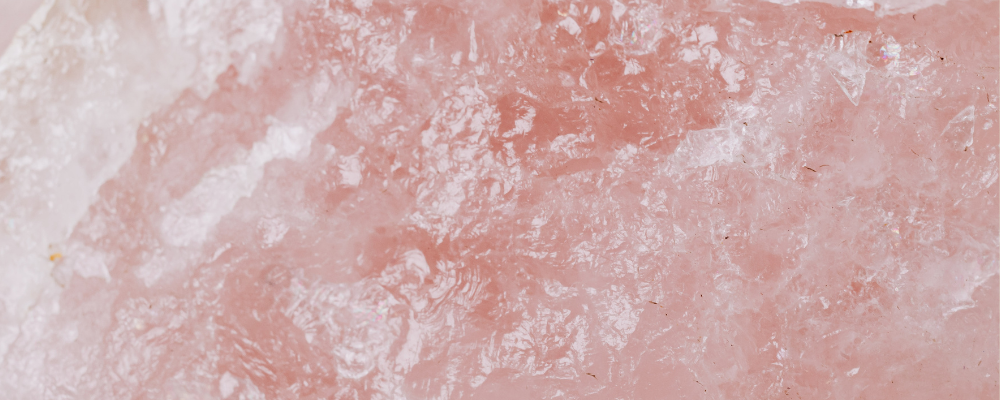
Rose Quartz is a variety of Quartz, with a hardness of 7. Its color ranges from pale pink to deep pink and may be cloudy. The GIA distinguishes ordinary massive material from rare transparent crystals whose color has a different origin.
This shade may fade under prolonged exposure to light. The material therefore invites a magic of caring for the bond: affection exists through the gestures that preserve it, not because an object makes it guaranteed.
A material loved before its modern magic
Rose Quartz has been carved into beads, seals, small objects, and decorative elements. These ancient uses prove the appeal of its color, but not all the emotional properties attributed to it today.
Historical caution does not diminish its power. It simply makes it possible to say that pink has become, in recent Western magic, a language of love, friendship, peace, joy, relationships, and family.
Love, peace, and fidelity
In his work published in 1988, Scott Cunningham associates Rose Quartz with love, peace, happiness, and fidelity within an established relationship. His color system extends pink to friendship, joy, and family.
This source has largely shaped current practices. Rose Quartz is suitable for repairing an atmosphere, maintaining affection, and welcoming a new connection. It does not guarantee someone's return or replace a conversation.
Love without control. The magic of Rose Quartz seeks a quality of relationship—peace, reciprocity, tenderness, and fidelity—rather than a person treated as an object. A request may call in the love that is right, but never remove another person's freedom.
Under the sign of Venus
Contemporary magic readily places Rose Quartz under Venus and Water. Venus governs attraction, harmony, beauty, and shared pleasure; Water receives, connects, and soothes. Friday thus becomes its natural day of consecration.
Pair it with Rose, Rose Geranium, Vanilla, or simple floral water, avoiding direct contact if the preparation may stain. A pink candle is enough when you want to keep the rite simple.
Reconciliation, friendship, and home
Two consenting people can place a Rose Quartz between their names and write what they wish to restore: listening, affection, trust, or gentleness. For friendship, it can accompany an invitation or a sincere letter. In the home, it marks a place where conflicts must be set down before nightfall.
Working on yourself does not mean reciting forced admiration. Instead, entrust the stone with a concrete commitment: defend a boundary, ask for help, rest, or stop pursuing a bond that causes harm.
The Venusian rite of a fair bond
On a Friday, place the Rose Quartz between two small pink or white candles. On one side, write what you wish to give in a relationship, and on the other, what you need to receive for it to remain fair. Read both parts without naming anyone who has not consented to the rite.
Fold the paper toward you and place the stone on it for seven days. During this time, carry out an action consistent with your request. At the end of the period, keep the text if the commitment remains alive, or tear it up if the relationship cannot meet its conditions.
Correspondences and references
| Reference | Correspondence |
|---|---|
| Nature | Solid or crystallized rose quartz |
| Planet | Venus in contemporary magic |
| Element | Water |
| Day | Friday |
| Areas | Love, peace, friendship, fidelity, family, and reconciliation |
| Color | Pale to deep pink |
| Ethical boundary | Seek reciprocity, never coercion |
| Ritual act | Place it between two consensual commitments or on a promise to yourself |