



































































































































































































The communion of saints belongs to the Creed and expresses a spiritual bond among the faithful in Christ. Devotion to the saints has a place within this understanding of the Church, but it is not reduced either to a catalogue of individual protections or to a series of specialties assigned to each figure.
A Common Call to Holiness
Christian holiness consists in living by the grace of God through charity. It is not limited to those officially canonized. All Saints’ Day celebrates all saints, known and unknown; it is distinct from the commemoration of the departed on November 2.
Venerating and Adoring
Worship is given to God alone. Veneration of the saints honors God’s work in their lives and asks for their intercession. Mary receives special honor because of her relationship to Christ, without becoming divine. The communion of saints unites the faithful in Christ; it is not a technique for communicating with the dead.
Canonization and History
Canonization is an ecclesial act recognizing a person as a saint and proposing their veneration to the Church. Procedures have evolved: an ancient martyr was not necessarily canonized according to contemporary stages. The titles venerable, blessed, and saint designate distinct statuses. Canonization does not guarantee the accuracy of all the legends that have become attached to a person.
Patronages and Feast Days
A patron saint symbolically accompanies a community, profession, or intention. Patronages develop through a history of devotion; they do not constitute an exclusive division of areas of expertise in heaven. A feast date must be related to a calendar. The same person may be celebrated on different dates according to different traditions.
Reading a Saint’s Life
Distinguish contemporary documents, testimonies, hagiography, and modern interpretations. The word legend does not necessarily mean a deliberate lie: it may designate an edifying narrative transmitted for reading. Catholics and Orthodox invoke the saints; many Protestants honor witnesses to the faith without addressing prayers to them.
What Canonization Means
The memory of martyrs developed from the earliest centuries, after which the Church gradually organized procedures for recognizing holiness. In contemporary Catholicism, beatification and canonization follow precise processes. They do not transform a person into a deity; they officially recognize their example and place in the Church’s prayer. Veneration of the saints is distinct from worship reserved for God.
Local calendars explain why all saints are not celebrated everywhere with the same solemnity. Biographies may combine contemporary sources with devotional narratives developed after a person’s death. The memory of Peter, that of Thérèse of Lisieux, or that of Saint Expeditus therefore do not rest on historical dossiers of the same nature.
The Communion of Saints in the Creed
The Christian profession of faith mentions the communion of saints after confessing the Church. This expression refers both to the relationship among people united to Christ and to participation in holy realities, particularly in sacramental life. Its meaning developed through the history of commentaries on the Creed and provides a framework for the devotion of the faithful.
Catholic tradition does not limit the Church to people gathered in a church on a Sunday. It speaks of a communion among the faithful still engaged in earthly life, those preparing for the fullness of encounter with God, and those honored in glory. These are not three communities without any relationship, but one communion understood through Christ.
This doctrine helps explain why prayer for the departed and the intercession of the saints have a place in the Catholic faith.
Intercession and Worship Do Not Refer to the Same Act
In Catholic doctrine, worship is reserved for God. The saints are honored as witnesses to divine grace and as people whose intercession may be requested. Mary receives special veneration because of her divine motherhood, but she does not become a deity independent of the Father, the Son, and the Spirit.
This distinction has undergone extensive theological development, particularly through the vocabulary of latria for worship and dul ia for veneration. Images and relics contribute to the memory of the saints: their presence does not mean that the material itself is the source of divine power.
Christian prayer remains centered on Christ. The intercession of the saints is understood within the spiritual solidarity of those who belong to his Body.
Canonization and Investigative Work
The memory of a saint is not always formed in the same way. Early communities honored martyrs connected to their own history, while modern procedures involve thorough investigations into a candidate’s life, writings, and reputation. Theologians, historians, and experts may take part in studying the dossiers.
The stages of beatification and canonization have received precise rules in the Catholic Church. Miracles examined within this framework are subject to particular procedures. The ecclesiastical decision concerns whether a person may be proposed for the veneration of the faithful; it does not turn every anecdote from their childhood or every later account of their life into a demonstrated historical fact.
The life of Benedict of Nursia, known largely through Gregory’s Dialogues, belongs, for example, to a type of source different from contemporary archives devoted to a saint of the 20th century.
Patronages, Relics, and Shrines
Over the centuries, saints have been associated with cities, professions, and prayer intentions. Nicholas of Myra is honored in seafaring communities; Vincent de Paul remains associated with charitable works. These patronages developed from their biographies, miracle narratives, or the history of shrines.
Relics and pilgrimage objects have a material and historical dimension. Their transmission may be documented by ancient records, but the attribution of certain objects should be distinguished from the veneration surrounding them. Images and feast days contribute to the memory of a saint without relieving us of the need to return to the sources.
A local devotion may have a very long history even when biographical information about its patron is limited.
Reading a Saint’s Life According to Its Era
Saints’ lives comprise a body of literature extending from late antiquity to the contemporary period. A medieval narrative may seek to show a person’s virtue through exemplary scenes, while modern correspondence provides direct access to the author’s words. Canonization archives, testimonies, and autobiographies do not all serve the same function.
This diversity explains why the study of Thérèse of Lisieux may draw on her manuscripts, whereas the study of many ancient martyrs rests on traditions written long after their deaths. Historical research and Christian veneration can complement each other provided the sources are understood.
The communion of saints ultimately invites the faithful to discover examples of charity and fidelity, rather than reducing each figure to an object of protection.
Sources and References
Catechism — communion of saints, nos. 946–962
Catechism — Mary in the Church, nos. 963–975
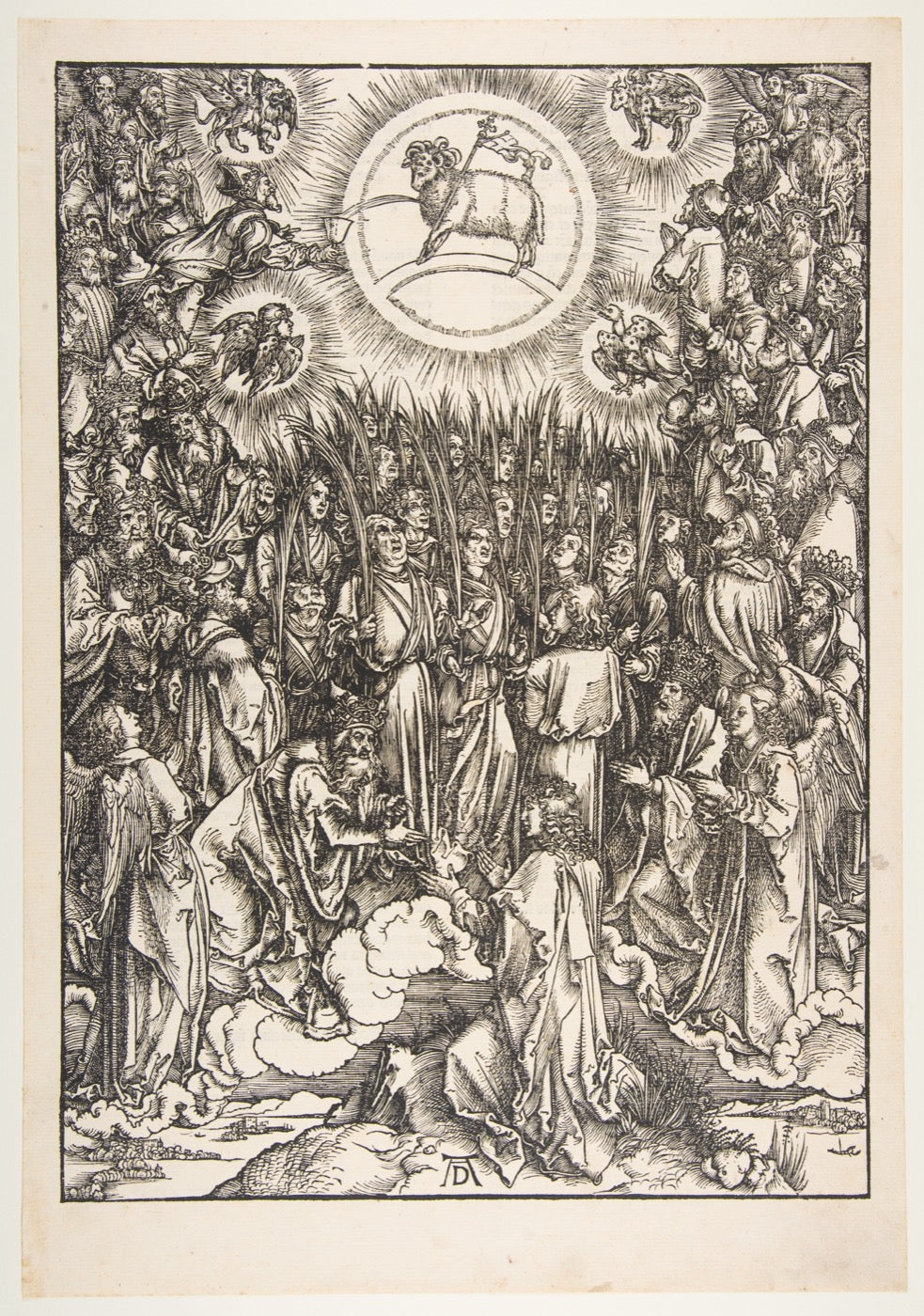
Illustration: Fra Angelico, The Last Judgment (15th century), public-domain work.










